Thursday
03 September, 2026
News Flash
News Flash
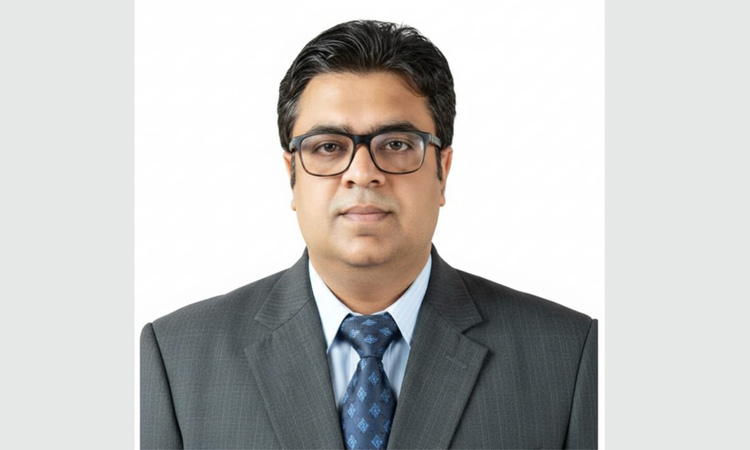
DHAKA, Sept 3, 2026 (BSS) - Bangladesh plans to install at least three new submarine cables over the next three to five years to meet rising data demand, while data from 29 key government installations is being routed through Bangladesh Submarine Cables PLC rather than ITC, said Rehan Asif Asad.
The Prime Minister's Adviser on Posts, Telecommunications and Information Technology said the country's total traffic currently stands at 12.1 terabytes, of which 5.2 terabytes is carried through submarine cables against a total capacity of 6.1 terabytes, while the remaining traffic flows through international terrestrial cables (ITC) of India.
"Every two and a half years, our data will double," Rehan Asif Asad said at a press conference at the ICT Division Conference Room marking 180 days of the BNP government.
He said traffic is projected to reach 20 terabytes by the end of 2027 and 50 terabytes by the end of 2030, making expansion of submarine cable infrastructure a priority.
The adviser said the government plans to install at least three new submarine cables through coordination between the public and private sectors within the next three to five years to meet the projected 50-terabyte demand by 2030.
He observed Bangladesh would probably need three submarine cables and geographical diversity in connectivity, while ensuring that data encapsulation does not take place through any foreign entity.
The adviser said a submarine cable connection takes at least two years to establish, making it necessary to start work through "back-calculation" to meet the 2030 target.
The government is also considering establishing alternative connectivity through Payra beyond Chattogram to provide geographical diversity and prevent network disruption during natural disasters, he added.
Rehan Asif Asad said the cost of direct routing is about US$ 0.10, while routing through Singapore raises the cost to US$ 0.37.
He said discussions are under way with Google and Meta to establish their own POP and CDN in Bangladesh within the next year, which would reduce internet costs and increase speed.
The adviser said the government has identified 29 highly sensitive "key installations", whose data is kept secure through submarine cable connectivity.
Replying to a query, the adviser also outlined the government's plan for a "One Citizen One ID" system, under which a digital identity will be developed for everyone from newborns to elderly people.
The system will provide both physical and virtual mobile smart cards, with 10 built-in virtual wallets for specific services, he said.