Thursday
10 September, 2026
News Flash
News Flash
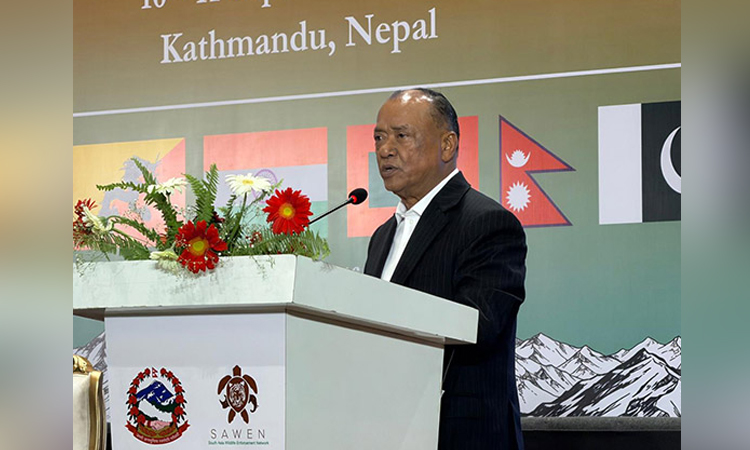
DHAKA, Sept 10, 2026 (BSS) - Environment, Forest and Climate Change Minister Abdul Awal Mintoo today underlined the need for stronger regional cooperation to combat wildlife crime in South Asia.
He also emphasized strengthening regional intelligence-sharing, coordinated law enforcement, and joint operations to address the growing transnational and organized wildlife crime in the region.
He made the remarks while speaking at the first General Assembly of the South Asia Wildlife Enforcement Network (SAWEN), held in Kathmandu, the capital of Nepal, said a press release received here today.
Noting that wildlife and ecosystems do not recognize political borders, Mintoo said criminal networks are conducting transnational wildlife trafficking by exploiting borders, transportation systems, commercial channels, online platforms, and financial systems.
He said that law-enforcement activities should not be limited merely to seizing wildlife and arresting offenders.
Authorities must also identify, investigate, and dismantle the organizers, financiers, and criminal networks behind these crimes, he said.
In his view, every seizure should be treated as an opportunity to gather intelligence—determining where the wildlife came from, the routes used, who was involved, who financed the operation, and where the wildlife was being sent, he added.
Mintoo also emphasized the importance of online monitoring, cyber investigations, and the use of digital evidence in combating online wildlife crime.
At the same time, he called for the use of financial investigations, asset tracing, and anti-money-laundering measures, in accordance with national laws, in major wildlife crime cases.
He also stressed the need to expand the use of wildlife forensics, DNA analysis, digital forensics, and geospatial technologies, alongside joint training and expert exchanges among member countries.
The minister called for stronger regional cooperation in the rescue, rehabilitation, and repatriation of seized live wildlife.
Regarding the SAWEN Strategic Plan 2026–2030, he said that the proposed strategic plan provides an important opportunity to translate these priorities into a specific and practical regional programme of action.
Bangladesh supports a plan that gives priority to intelligence-sharing, law enforcement, criminal justice, digital and financial investigations, science and forensics, capacity development, and reducing demand for wildlife, he said.
The minister said SAWEN’s first General Assembly has created a unique opportunity to turn political commitments into concrete action.
He expressed the hope that member countries would leave Kathmandu with a shared commitment to establish stronger intelligence-sharing mechanisms, carry out practical joint operations, and dismantle criminal networks that threaten wildlife.
He reiterated that Bangladesh is ready to work with all SAWEN member countries, international organizations, and development partners to build a strong, interconnected, and effective regional wildlife law-enforcement system.
Nepal’s House of Representatives Speaker Dol Prasad Aryal, Nepal’s Minister for Agriculture, Forest and Environment Gita Chaudhary, Secretary General of SAWEN Dr. Krisna Prasad Acharya and representatives from different organizations, Nepal, Sri Lanka, Bhutan, Pakistan, the Maldives, and Bangladesh attended the conference.