Wednesday
05 August, 2026
News Flash
News Flash
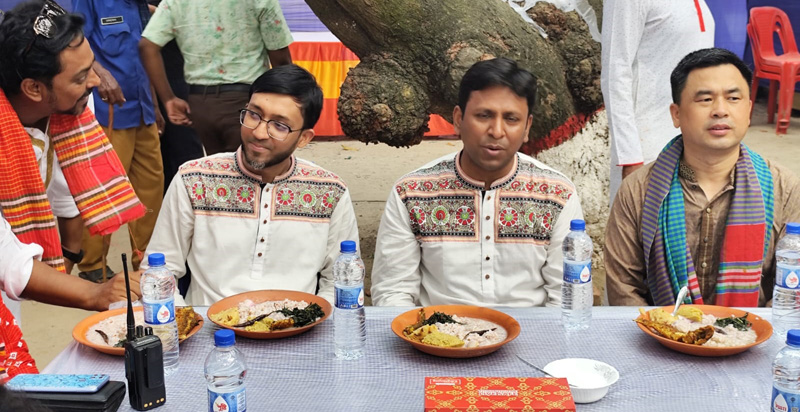
RAJSHAHI, April 14, 2026 (BSS) - The celebration of Bangla New Year 1433 in Godagari, Rajshahi added a new dimension to the heritage of Bengali culture as alongside locals, the participation of Chinese nationals made this year's Pahela Baishakh festival even more lively and colorful.
Several Chinese nationals this morning attended the New Year celebration organized at the Godagari Upazila premises.
They familiarized themselves with traditional Bengali food by tasting panta-hilsa.
Locals said these Chinese nationals are working on Rajshahi WASA’s Surface Water Treatment Plant project in Godagari.
The project is being implemented by China’s Hunan Construction Engineering Group Company.
Deputy Manager of the project, Yasir Arafat, who accompanied the Chinese nationals at the event, said they had been interested in observing Bangla New Year celebrations up close from the beginning. That interest led them to take part in the event.
By around 9:15 am, before the 'Baishakhi Shobhajatra' began, they had already immersed themselves in the festive spirit.
Some enjoyed dancing with ethnic minority people, some took photos, and others were busy recording videos. Their excitement to the rhythm of dhak-dhol and ektara caught everyone’s attention.
Xu, director of the WASA project, said, “This festival is extremely vibrant. The people of Bangladesh are very friendly and hospitable.”
He added that New Year is also celebrated in China, but there are differences between their festival and the Bengali New Year. In particular, fireworks are more common in China, whereas in Bangladesh the New Year features a stronger presence of folk culture.
The Godagari Upazila administration had invited the foreign nationals to the event. Assistant Commissioner (Land) Shamsul Islam said the Chinese nationals participated in the event out of interest in learning about Bangladeshi culture.
He said the 'Baishakhi Shobhajatra' highlighted folk art, cultural spirit, and the values of independence. The procession featured symbolic masks, various elements of rural life, and folk items. The Chinese nationals enjoyed it all.
The Chinese nationals who participated have been working in Rajshahi for the past three years. They had been curious about Bangla New Year from the start. This year, they got the opportunity to directly experience the Pahela Baishakh festivities.
Upazila Nirbahi Officer (UNO) Nazmus Sadat Ratno said, “Pahela Baishakh is a festival of the Bengali heart. Regardless of religion or caste, the core spirit of this festival is non-communalism. The participation of foreign nationals will play a positive role in presenting our culture to the world.”