Wednesday
05 August, 2026
News Flash
News Flash
By Md Mamun Islam
RANGPUR, March 28, 2026 (BSS) - Deep tributes were paid today to the martyrs
who sacrificed their lives while encircling the Rangpur Cantonment in an
attempt to capture it from Pakistani occupation forces on March 28, 1971.
Just three days after the start of the great Liberation War, on this day in
1971, fearless brave people surrounded the Cantonment with indigenous weapons
like bamboo sticks, bows and arrows, axes and spears, creating a unique
history.
While participating in this uneven battle, at least 500 to 600 independence-
seeker Bengali Muslims, Hindus and Buddhists, Oraon, Santal and other ethnic
communities laid down lives setting up a unique example of national unity,
heroism and bravery.
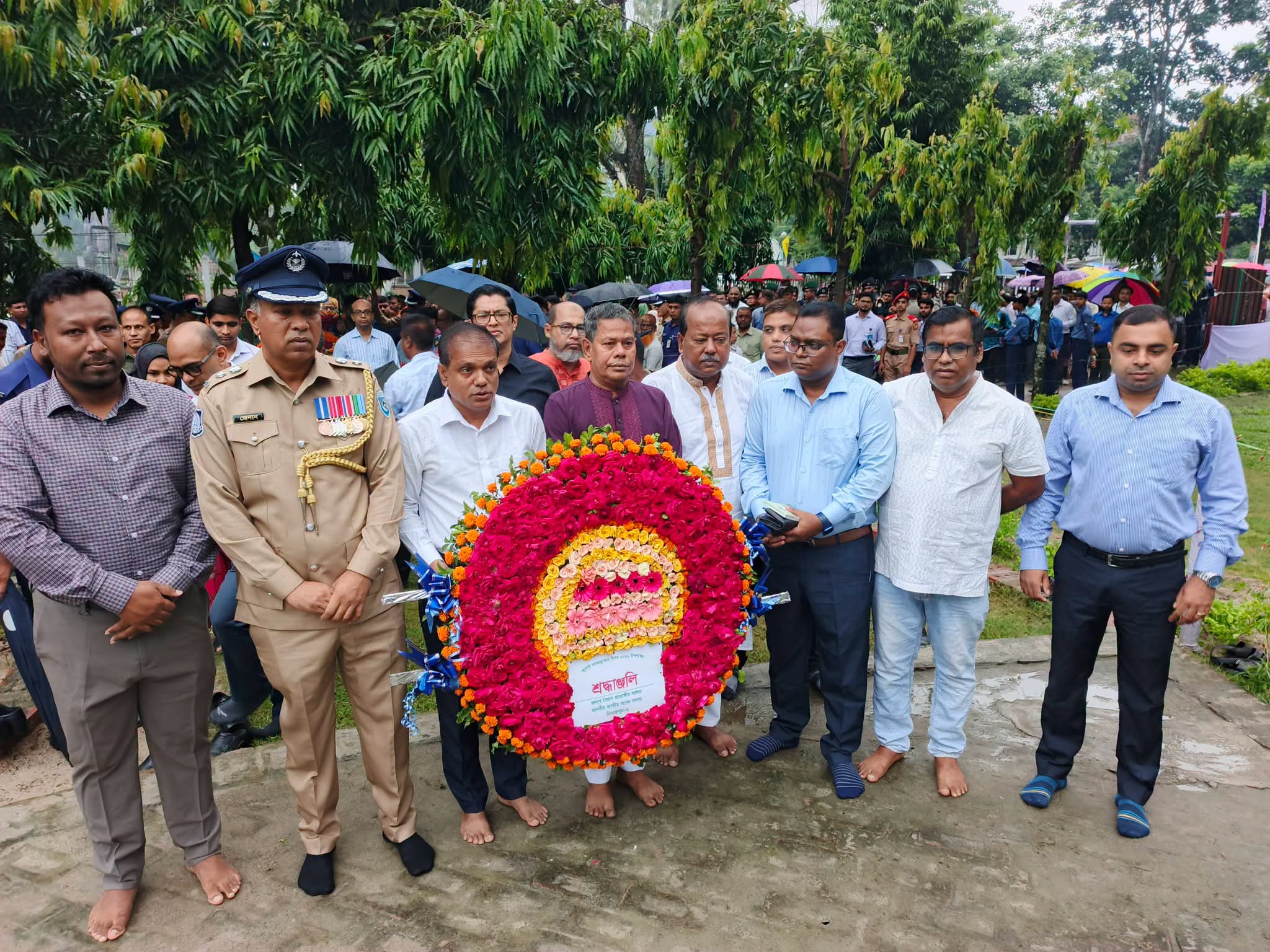
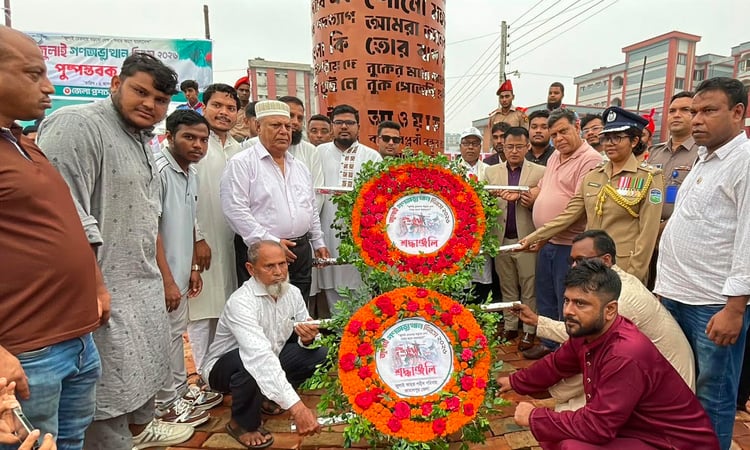
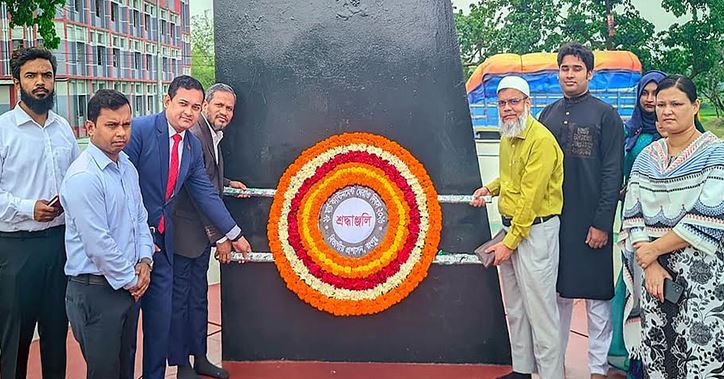
Today, high officials of the administrations and freedom fighters placed
wreaths at "Rakta Gaurab" memorial at Nishbetganj by in the morning paying
rich tribute to the heroic Bengalese who embraced martyrdom on that day.
Additional Divisional Commissioner (General) Md Abdul Motaleb Sarkar with
high-ranking officials of the divisional administration first placed wreaths
there.
Later, Rangpur Range DIG Aminul Islam, Rangpur Metropolitan Police
Commissioner Md Majid Ali, Deputy Commissioner Md Enamul Ahsan, Additional
Superintendent of Police Md Joynal Abedin, Rangpur Sadar Upazila Executive
Officer Md Saiful Islam, Rangpur Metropolitan Muktijoddha Sangsad Command
Unit Convener Bir Muktijoddha Nur Mohammad Mia and Member-Secretary Bir
Muktijoddha Mohammad Abdus Sattar, along with representatives of various
government departments, educational institutions and social organisations,
placed wreaths.
Later, teachers and students of 'Bir Muktijoddha Tayebur Rahman High School',
Jamison Nesa High School, Nisbetganj Government Primary School and other
institutions placed wreaths at the "Rakta Gaurab" memorial.
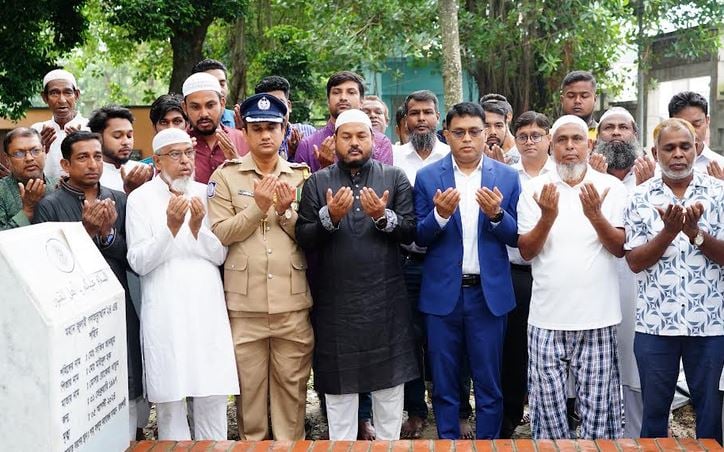
After placing wreaths, they offered special munajats seeking divine
forgiveness of the souls of the martyrs who laid down their lives there on
March 28, 1971.
Talking to BSS today, former Rangpur District Commander of Bangladesh
Muktijoddha Sangsad and heroic freedom fighter Md Manjurul Islam described
the Cantonment encirclement as an infinite heroic story of bravery of Rangpur
people.
From that morning, thousands of students, farmers, daily wage workers, and
people of all professions, regardless of religion or caste, from different
areas including Rangpur Sadar, Gangachara, Badarganj and Mithapukur upazila
areas gathered in the Nisbetganj area with indigenous weapons.
"Especially the brave indigenous Santal and Oraon community people came to
surround the cantonment with bows and arrows," said Manjurul Islam.
In the afternoon, thousands of people started moving towards the cantonment
from the Nishbetganj area on the Ghagot river bank when the Pakistani army
opened fire with machine guns in the afternoon.
"In just 5 minutes, the area was paralyzed. Hundreds of bodies were lying on
the banks of the Ghagot River there. Those who were still alive were stabbed
to death with bayonets," he said.
Major Nasir Uddin of the 29th Cavalry Regiment, who was an eyewitness to the
incident and was working in Rangpur Cantonment at that time, has narrated
these facts in his historic book 'Juddhe Juddhe Swadhinota' (Freedom in War).
He describes, "The sky and air of the entire area became heavy with the cries
of the wounded. Before evening that day, as ordered, hundreds of bodies were
doused with petrol and set on fire."
The fire burned brightly. This fire was much redder than any other fire. This
flame burns much more intensely.
"I saw that fire from very close quarters. I saw how helpless freedom-loving
human beings were burning," he wrote.
"The independence-seeker Bengali Muslims, Hindus and Buddhists, Oraon, Santal
and other ethnic communities equipped with sharp weapons, spears, arrows and
bows attempted to capture the Cantonment," the book wrote.
"It was about 4 to 5 pm when thousands of independence-seeker Bangalees had
been assembling from the south and southwestern areas to capture the
cantonment at any cost," the book says.
"The 23rd Brigade Headquarters of the Pakistani Army was then stationed at
Rangpur cantonment and the 3rd Bengal, 26th Regiment at Saidpur, 23rd Cavalry
Regiment and its associate forces and 29th Tank Bahini were under its
command," the book wrote.
Brigadier General Abdullah Malik was the then Brigade Commander and the
cantonment was equipped with modern automatic heavy arms, artillery, tanks
and ammunition with huge Pakistani forces and non-Bengali Beharis.
The Pakistani forces and the Beharis soon showered automatic gunfire towards
the independence-seeker Bangalees killing over 600 of them in the most
heinous genocide there and injuring hundreds more.
"The vast green grass fields on the Ghagot river bank turned into a blood-
sea. The war criminals Brigadier General Malik, Colonel Sagir and non-Bengali
Bihari soldiers and officers, committed the fearful genocide," the book
mentioned.