Wednesday
05 August, 2026
News Flash
News Flash
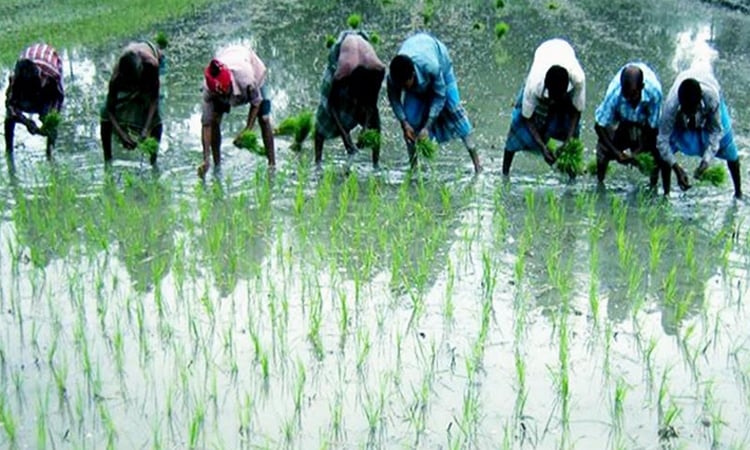
RANGPUR, March 27, 2026 (BSS) – The Department of Agricultural Extension (DAE) has set a target of producing 179,161 tonnes of clean Aush rice (268,742 tonnes of paddy) from 59,195 hectares of land during the current Kharif-1 season in the Rangpur agricultural region.
Deputy Director of the DAE for Rangpur region, Agriculturist Md Shirajul Islam, said transplantation of Aush rice seedlings will begin soon and continue until the first week of June across all five districts of the region.
Farmers have already prepared Aush rice seedbeds on 558 hectares of land against a target of 2,791 hectares in Rangpur, Gaibandha, Kurigram, Lalmonirhat and Nilphamari districts.
In view of the adverse effects of climate change on agriculture, the government has taken various practical steps to increase rice production and ensure national food security, leading to the expansion of Aush rice cultivation.
These steps include distributing special incentives to small and marginal farmers, conducting motivational publicity campaigns, and providing technical assistance to expand Aush rice cultivation and increase production.
“In the off-season between the harvest of Boro rice and the planting of Aman seedlings, when the land mostly remains fallow, the cultivation of short-duration Aush rice is expanding as a supplementary crop using less irrigation water,” Islam said.
During the last Kharif-1 season, farmers produced 184,603 tonnes of clean Aush rice (276,905 tonnes in terms of paddy) by cultivating the crop on 61,163 hectares in the Rangpur agricultural region.
In 2024, farmers produced 184,617 tonnes of clean Aush rice (276,925 tonnes in terms of paddy) from 61,782 hectares of land in the region.
Besides, farmers produced 184,600 tonnes of clean Aush rice from 61,782 hectares in 2023 and 178,777 tonnes from 63,680 hectares in 2022.
“Aush rice cultivation has already become popular among farmers following various effective government initiatives,” Agriculturist Md Shirajul Islam said.
“After harvesting Aush paddy by mid-August, farmers can easily cultivate Aman paddy on the same land, increasing overall rice production and contributing to sustainable national food security,” he added.
PhD Fellow at the Department of Agricultural Extension of Dinajpur Haji Mohammad Danesh University of Science and Technology, Md Mamunur Rashid, said expanding Aush rice farming can boost food production amid the adverse effects of climate change.
An expert in environmentally friendly and stress-tolerant crops, Rashid advised farmers to expand Aush cultivation as an off-season crop using modern technology to increase production and ensure food security.
He said, “To increase rice yield without affecting Aman cultivation, Aush farming should be expanded by utilising seasonal rainwater in May, June and July during the off-season as an alternative to costly Boro cultivation.”
Dr Md Abdul Majid, a prominent rice scientist and recipient of the Swadhinata Puraskar-2018 (Food Security), expressed satisfaction over the annual expansion of Aush rice cultivation in the country’s northern region.
He also praised the government’s initiative to promote Aush cultivation, which requires less irrigation and helps produce additional rice under adverse climatic conditions.
Talking to BSS, farmers Aminur Rahman, Iqbal Mahmud, Ariful Haque and Munir Hossain from different villages in Rangpur said they have already prepared seedbeds and are now getting their land ready for transplanting Aush seedlings.