Tuesday
30 June, 2026
News Flash
News Flash
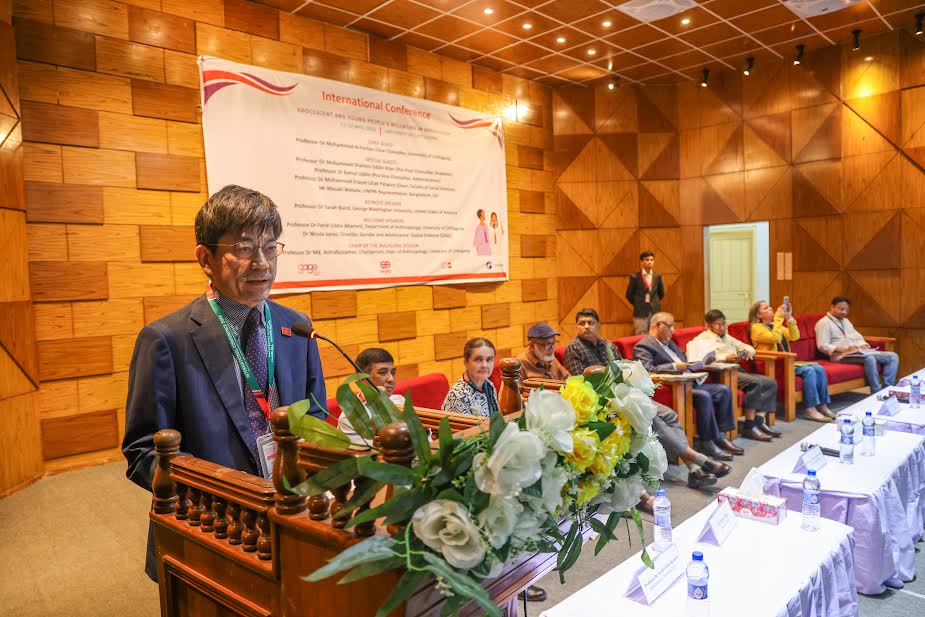
DHAKA, May 14, 2026 (BSS) — The Gender and Adolescence: Global Evidence (GAGE) research programme has held a week-long event series on adolescent wellbeing in Bangladesh.
Supported by the UK Government’s Foreign, Commonwealth and Development Office (FCDO) and implemented by a global consortium, the United Nations Population Fund (UNFPA) and the University of Chittagong partnered this event to advance evidence-informed policy and programming to improve adolescent and young people’s wellbeing in Bangladesh.
The week-long event series included an International Academic Conference in Chattogram, community feedback sessions with Rohingya adolescents and youth in Cox’s Bazar, and United Nations briefings focused on strengthening adolescent-responsive policy and practice, an UNFPA press release said.
Bangladesh is home to about 36 million adolescents aged 10–19, representing nearly a quarter of the country’s population. Adolescence is a critical stage of life where targeted investments can generate long-term benefits across their life-courses, especially in their future transitions into adulthood and the next generation.
Despite significant social and educational progress in recent decades, challenges surrounding adolescents and youth remain, including school dropout among both adolescent girls and boys, persistently high child marriage rates, and stigma surrounding sexual and reproductive health.
Bangladesh also houses around 1.2 million Rohingya refugees, and many of them are young people, who struggle to sustain meaningful pathways to adulthood amid this protracted displacement.
Held on 11–12 May 2026, the International Conference on Adolescent and Young People’s Wellbeing in Bangladesh co-hosted by the Department of Anthropology at the University of Chittagong, the GAGE programme and UNFPA brought together over 300 national and international scholars, students, and development practitioners.
The conference presented new empirical research, strengthened research capacity, and fostered dialogue on adolescent wellbeing.
The conference focused on interconnected domains of education and employment; health and sexual and reproductive health; and psychosocial wellbeing and bodily autonomy, as well as cross-cutting themes including climate resilience, digital access and humanitarian crises.
Panels highlighted the importance of placing young people at the centre of national development priorities and humanitarian action.
“Let us harness the insights of researchers, practitioners and policymakers to ensure that every adolescent in our country has the opportunity to thrive,” said Professor Dr Mohammad Al-Forkan, Vice-Chancellor of the University of Chittagong.
“GAGE is the UK’s global flagship research programme generating vital evidence on what works for adolescents,” highlighted Tahera Jabeen, Social Development Adviser at the British High Commission in Dhaka, in her opening remarks.
“Strong evidence is essential to inform effective policy and practice, and through this programme and our wider work, the UK remains committed to supporting efforts in Bangladesh and globally that enable adolescents to realise their full potential,” she added.
Masaki Watabe, Officer-in-charge, UNFPA Bangladesh, underscored the importance of turning evidence into action and ensuring adolescent voices shape policy and programming.