Saturday
29 August, 2026
News Flash
News Flash
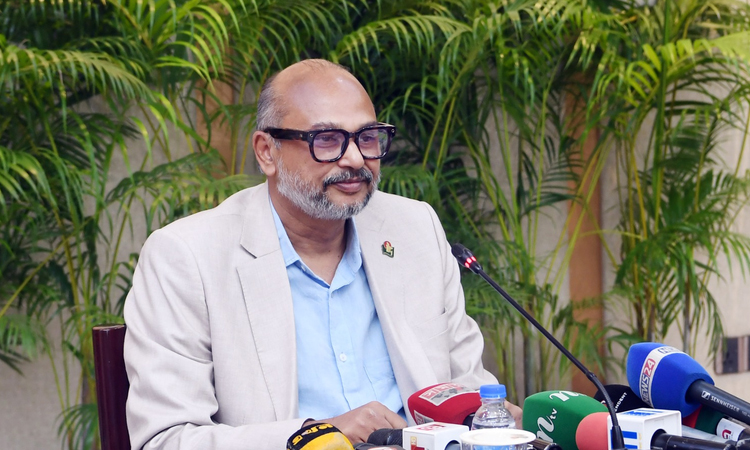
DHAKA, Aug 29, 2026 (BSS) - Foundations attached to different ministries will work under a five-cluster approach to support the government's Five-Year Strategic Framework for Reform and Development including in job creation, renewable energy, said Adviser to the Prime Minister on the Ministries of Finance and Planning Dr Rashed Al Mahmud Titumir.
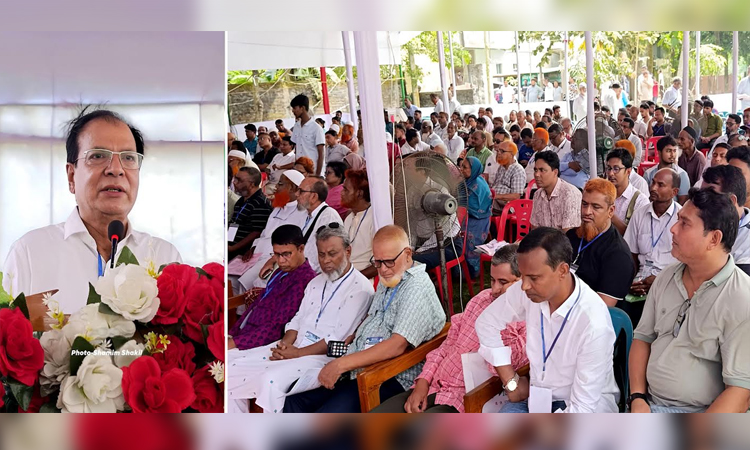
Briefing reporters after a meeting with the chiefs of 22 foundations at the NEC Conference Room, the Adviser said the initiative flows from the philosophical basis set by the Prime Minister - "Bangladesh First" - which he described as "Bangladesh with everyone, Bangladesh for everyone."
"If Bangladesh is to come first, then what is needed is everyone's participation," he said, adding that the day's meeting was without precedent. "What we discussed today has never, to our knowledge, happened in Bangladesh before."
He said the government inherited "a fractured economy" and that the Prime Minister has approved a Five-Year Economic Strategy built on three phases - recovery, transition, and restructuring for prosperity. Milestones of change had already been achieved within 180 days, he added.
The first decision in the day's meeting, he said, is a nationwide "One Village, One Product" drive through which the foundations will generate employments. The second is a shift in electricity: "Most people are now consumers of electricity. The question is how they can be turned from consumers into producers."
Third is health. "There is no health system in Bangladesh to speak of. It has broken down," he said, noting the large allocation made in the budget.
He recalled that upazila-level facilities had only 20 beds during the time of Shaheed President Ziaur Rahman and were raised to 50 beds during the tenure of the late Begum Khaleda Zia, with no addition since. The government is now moving towards 150 beds, he said, while the disease burden has shifted "from communicable diseases to lifestyle diseases."
Foundations, Titumir said, could help train nurses and technicians for kidney dialysis and coronary care units.
Fourth, he said is the move towards a universal, full-life-cycle social security programme, ensuring every person with disability is registered as a rights-holder. Alternative financing was also discussed. "Zakat can play a big role in this," he said, adding a decision was taken on how zakat can be coordinated into the programme.
Fifth is monitoring. The Implementation Monitoring and Evaluation Division (IMED) will track the pledges and report continuously, with data published on a dashboard. "The government did not impose this responsibility on them - they mentioned it voluntarily," he said.
When asked how a single foundation could match the government's own five-year target of 10 million jobs, the Adviser said: "We announced a realistic election manifesto, and that is why the people placed their trust in us. We always disclose the minimum figures. These are the presentations of the institutions themselves."
He said one foundation had committed to 10 million jobs and another to 100,000, with women's organisations, a small farmers' foundation and a rural poverty alleviation foundation also submitting figures. "That means the number is more than one crore."
Answering a question on whether "One Village, One Product" would fail like earlier district-based schemes, he pointed to the record of the ousted government: "If a social safety net programme is taken up, poverty is not supposed to rise. But, because of the ousted government, poverty rose by somewhere between 80 lakh and one crore."
Calling a question on solar power "extremely important," he said the government does not want to keep anything "under the carpet" and that the present crisis was inherited from 17 years of the ousted government. "Our effort is to create an energy mix," he said, moving from fossil fuels towards renewable.
Against the government's target of 5 GW of solar within five years, the foundations have already decided on 2 GW, he said. More than 300 pending net metering applications have been settled and 200 MW of solar has already reached the grid in six months.
Explaining the financing of the TK 2,000 crore budget allocation, he said funds would be channelled through IDCOL and BIFFL, with the producer contributing 20 percent, an aggregator such as a PKSF partner NGO 20 percent, and 60 percent as government lending. "Then the interest rate will fall a long way - to the range of 6 to 7 percent."
He contrasted generation costs: TK 4 to 5 per unit from gas against TK 64 from LNG. "If we look at one gigawatt, subsidies will fall," he said, money that could be spent elsewhere.
On investment, he listed five investor requirements - policy continuity through a five-year fixed tax structure, deregulation with a trace-and-track approval system, financing sources, energy security and seamless connectivity.
The Adviser said Bangladesh Bank has arranged TK 20,000 crore for reopening closed factories, agreements have been signed with 40 banks, and disbursement begins in September, with the interest differential to be met by the Finance Division.
Revenue-to-GDP is targeted at 10 percent by 2030 and 15 percent by 2035. "We have no targets that are not achievable," he said, adding that the government's trillion-dollar projection matches IMF estimates.