Saturday
29 August, 2026
News Flash
News Flash
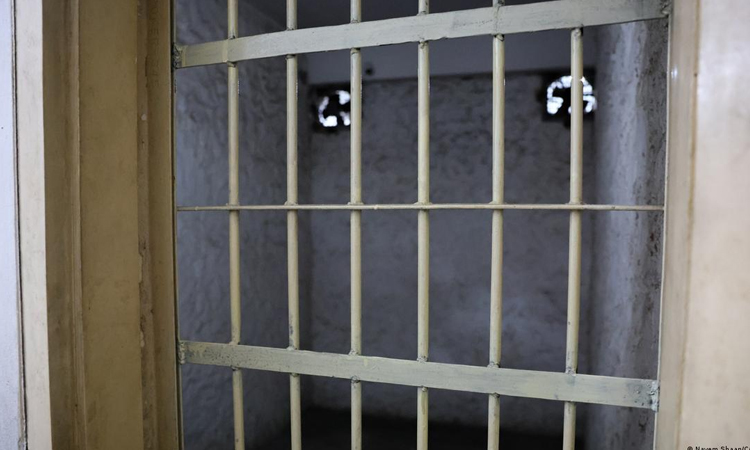
DHAKA, Aug 29, 2026 (BSS) - On January 2, 1975, the death of revolutionary leftist leader Siraj Sikder in state custody became one of the most controversial episodes in the early history of independent Bangladesh.
Sikder had been arrested in Chattogram and was subsequently subjected to extrajudicial killing after being taken into state custody.
Nearly five decades later during Awami League period under Sheikh Hasina, Bangladesh confronted a much larger and more extensively documented question: what happens when a person disappears after being taken into the custody of state security agencies, and the state refuses to acknowledge where that person is.
Deposed Sheikh Hasina established a reign of enforced disappearance between 2010 and August 5 2024 as she fled India in a stiff resistance of mass people ending her almost 16 years autocratic government.
The evolution from killing of Siraj Sikder to the cases of Sheikh Hasina's regime uncovered by the recent Commission of Inquiry on Enforced Disappearances formed during Prof Dr Muhammad Yunus led interim government illustrates a recurring concern in Bangladesh's political history.
Siraj Sikder, leader of the Purbo Bangla Sarbahara Party, was an armed revolutionary opponent of the government of Sheikh Mujibur Rahman.
His death in January 1975 became a symbol for critics of the government's treatment of political dissent.
The controversy established an early and enduring question in Bangladesh: can state authorities be held accountable when a political opponent dies after being taken into custody?
That question resurfaced repeatedly in subsequent decades.
Under international law, enforced disappearance involves deprivation of liberty by state agents or with state authorization, followed by a refusal to acknowledge the detention or concealment of the person's fate or whereabouts.
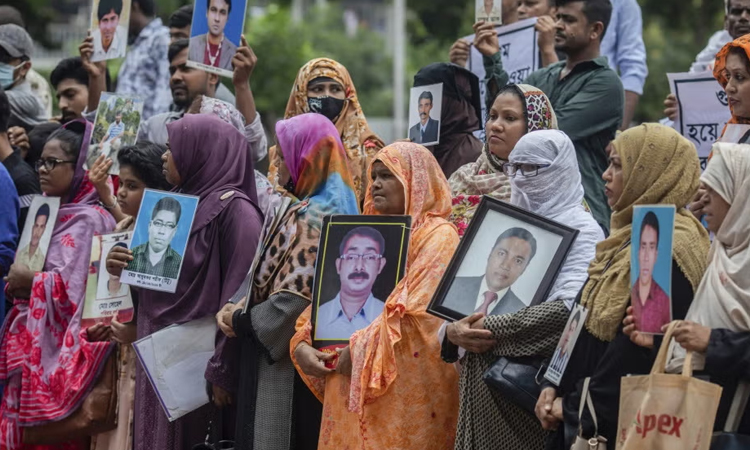
The issue became particularly prominent during the 2010s as families began publicly demanding information about relatives who had allegedly been picked up by security agencies and then disappeared.
The current official investigation focuses specifically on allegations made during the period from January 1, 2010 to August 5, 2024.
Following the mass uprising that toppled fascist Sheikh Hasina's regime in August 2024, the then interim government formed a five-member Commission of Inquiry to identify people allegedly forcibly disappeared by law-enforcement and intelligence agencies, establish their whereabouts and circumstances, and recommend measures to address the cases.
1,913 complaints, 1,569 verified cases:
The scale of the allegations became clearer as the commission collected testimony.
According to its final report submitted to the then chief adviser on January 4, 2026, some 1,913 complaints were submitted. After verification, 1,569 were identified as enforced disappearances under the commission's definition, with 287 cases falling into the category of "missing and dead."
According to commission member Nabila Idris, the actual number could be considerably higher, estimating that it might reach 4,000 to 6,000.
She explained that many victims or families had never approached the commission, some did not know about its work and others were living abroad.
The figures, therefore, represent verified complaints rather than an exhaustive count of everyone who may have disappeared.
Political character of the disappearances:
The commission concluded that the disappearances it investigated were largely politically motivated.
Its final report, titled "Unfolding the Truth: A Structural Diagnosis of Enforced Disappearance in Bangladesh," said evidence pointed to involvement at the highest levels of the government in a number of high-profile cases.
Among the cases highlighted were those involving BNP leaders Ilias Ali, Hummam Quader Chowdhury, Salahuddin Ahmed and Chowdhury Alam; Jamaat leader and former brigadier general Abdullahil Amaan Azmi; Barrister Mir Ahmed Bin Quasem; and former ambassador Maroof Zaman.
The report also said evidence indicated that some disappeared people had been secretly transferred without legal process and that such transfers were allegedly carried out on orders from senior levels of government.
The commission itself urged the authorities to continue the investigation, protect victims and ensure justice. Its members also called for the reconstitution of the National Human Rights Commission.
A major legal turning point:
Earlier, a significant development came on August 29, 2024, when Bangladesh acceded to the International Convention for the Protection of All Persons from Enforced Disappearance.
The then interim government's Chief Adviser Professor Muhammad Yunus signed the instrument of accession, calling it a historic occasion. The move came shortly after the interim government established the Commission of Inquiry.
The accession placed Bangladesh more firmly within the international legal framework dealing specifically with enforced disappearance.
The government subsequently moved toward domestic legislation. In August 2025, the Advisory Council approved in principle the draft Enforced Disappearance Prevention and Redress Ordinance 2025.
The proposed law defines enforced disappearance as a crime, criminalizes secret detention facilities and provides for investigation, victim and witness protection, compensation and legal assistance. It also proposes a special tribunal for such cases.
On August 3, 2026 after assuming office through February 12 general election, Prime Minister Tarique Rahman's cabinet gave in-principle and final approval to the draft of the Prevention and Remedies for Enforced Disappearance Act, 2026, recognising enforced disappearance as a distinct criminal offence with provisions for life imprisonment and fines.
Earlier on April 30, 2026, Law, Justice and Parliamentary Affairs Minister Md. Asaduzzaman informed the parliament that a total of 1,855 cases have been filed across the country over killings, enforced disappearances and torture committed during the previous fascist regime.
The minister informed that among the cases, 799 are murder cases while 1,056 were filed under other charges.
"So far, investigation has been completed in 158 cases (48 murder cases and 110 others) and charge sheets have been submitted to the courts. Trial proceedings in these cases are currently underway," he said.
Asaduzzaman added that investigations into the remaining 1,697 cases are ongoing.