Wednesday
28 January, 2026
News Flash
News Flash
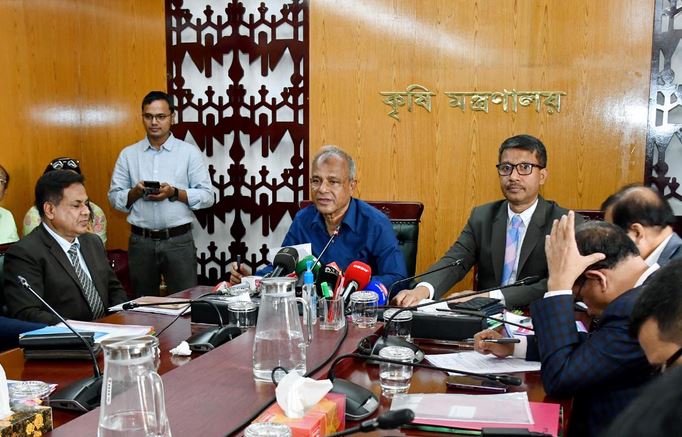
DHAKA, Jan 28, 2026 (BSS) - Agriculture Adviser Lieutenant General (Retd) Md. Jahangir Alam Chowdhury today said the country would not develop unless its farmers are economically empowered.
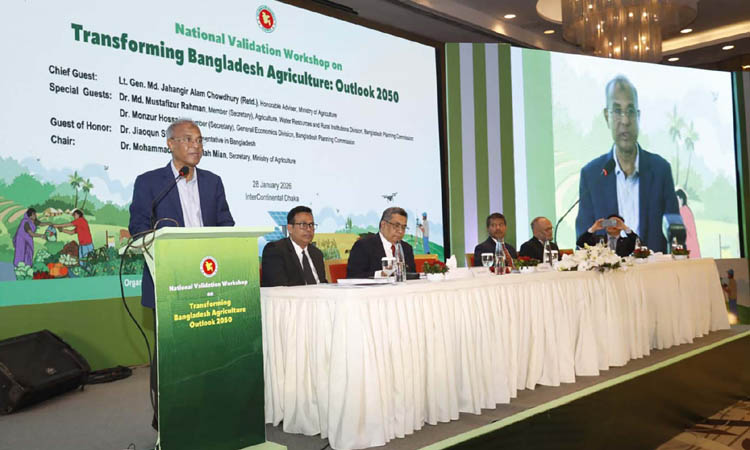
“Agriculture cannot progress if farmers continue to be neglected in practice,” he said while speaking as the chief guest at the inauguration of a national workshop titled “Transforming Bangladesh Agriculture: Outlook 2050” held at a hotel in the capital.
The adviser said that although farmers are often termed as the backbone of the nation, they do not receive fair prices for their agri produces.
As a result, he said that many are forced to throw away crops after failing to recover production costs.
“We create a fuss for a few days, but when it comes to compensating farmers through incentives, various obstacles arise. In such a situation, farmers cannot survive,” he said.
He pointed out the disparity in state support, noting that factory owners often receive loan interest waivers and incentives despite not repaying bank loans, while farmers struggle to access loans and timely assistance.
“There is a perception that if farmers do not produce, food can be imported. But even with money, products are not always available. Domestic production is essential,” he added.
Highlighting the importance of the long-term agricultural outlook, the adviser described the initiative as a historic step toward shaping the future of Bangladesh’s agriculture.
He said the plan would guide the sector’s transformation over the next 25 years, improving food security, rural development, and overall quality of life, while also contributing to national economic progress.
The workshop was chaired by Agriculture Secretary Dr. Mohammad Emdad Ullah Mian.
FAO Representative in Dhaka Dr. Dr Jiaoqun Shi, Planning Commission Member (Secretary) Dr. Md. Mustafizur Rahman and General Economics Division Member (Secretary) Dr. Manzur Hossain, among others, were present.
Additional Secretary of the Ministry of Agriculture Dr. Md. Mahmudur Rahman presented the keynote paper.
Speakers noted that agriculture remains a vital pillar of Bangladesh’s economy, ensuring food security, employment, poverty reduction, and rural livelihoods.
Despite a declining share in GDP and employment due to structural economic transformation, the sector remains crucial for inclusive and sustainable development, they said.
They emphasized that climate change, resource limitations, demographic pressures, shifting food demand, and market volatility underscore the need for an integrated, forward-looking agricultural strategy under the vision 2050 outlook.