Tuesday
25 August, 2026
News Flash
News Flash
by Mostak Ahmed
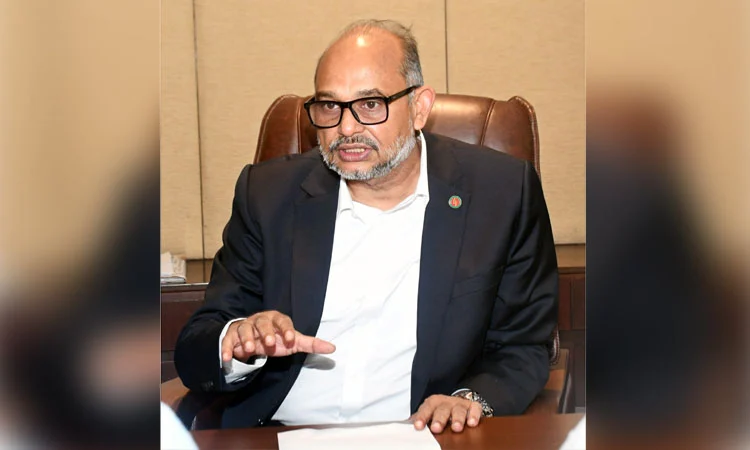
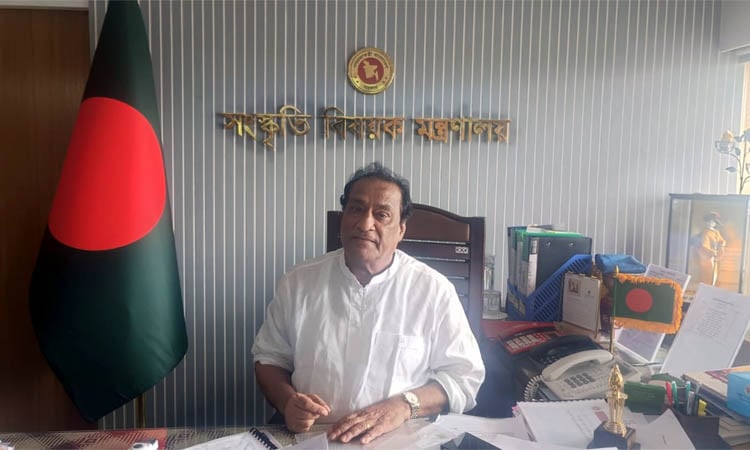
DHAKA, Aug 4, 2026 (BSS) – State Minister for Cultural Affairs Ali Newaz Mahmud Khaiyam has said that the July Uprising was not an abrupt event; rather, it was the culmination of decades of democratic movements and struggles, shaped by political realities and the active participation of the people.
“The active participation of BNP leaders and activists, along with their long-standing political struggle, played a significant role in the movement,” he said.
The State Minister made the remarks in an exclusive interview with Bangladesh Sangbad Sangstha (BSS) at his office at the Secretariat today.
"The BNP has fought for democracy for a long time. In particular, the party's role in the movement against the Ershad government is a notable chapter in Bangladesh's political history. Later, it also remained at the forefront of the long movement and struggle against the fascist government led by Sheikh Hasina," he said.
Ali Newaz further said that the July Uprising was the result of that long-standing movement and struggle.
“No mass movement emerges suddenly; it is the outcome of a long political process, the people's aspiration to secure their rights, and sacrifices and struggles made at various stages," he said.
"The July Uprising did not fall from the sky, nor did it emerge overnight. It has a historical context and political reality, and it is the culmination of a long struggle. The BNP and its leaders and activists are closely connected with that context, reality and outcome," the State Minister added.
He also said that, in the struggle to establish democracy, everyone from BNP Chairperson Begum Khaleda Zia to the party's top leaders and countless grassroots leaders and activists had faced various forms of persecution.
Many BNP leaders and activists sacrificed their lives in the movement, while many others were subjected to enforced disappearance. It is through their sacrifices that the movement for establishing democracy has advanced, he said.
Informing that the July Mass Uprising Memorial Museum will be inaugurated tomorrow, he said it is not merely a structure but a place for preserving historical documents and memories.
"Through the July Museum, we want to preserve the events of that time, the different phases of the movement, the participation of the people, and the history of sacrifice so that future generations can understand how a mass movement develops and what kind of struggle is required to establish the people's rights," he said.
The State Minister said the contributions of those who played a role behind the July Uprising must be properly evaluated.
"At the same time, it is essential to present the context and continuity of this movement to the new generation," he said.
"The history of a nation is not only the story of victory but also the story of struggle and sacrifice. The history of the July Uprising is an important chapter of that struggle. Preserving this history is our responsibility," he added.