Thursday
20 August, 2026
News Flash
News Flash
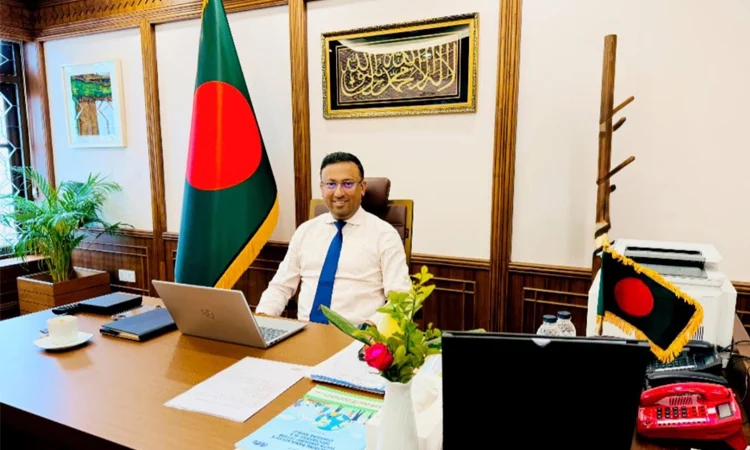
DHAKA, Aug 20, 2026 (BSS)- Prime Minister’s Foreign Affairs Adviser Humaiun Kobir has said Prime Minister Tarique Rahman’s visit to India could take place once an appropriate environment is created based on mutual trust, confidence, respect for sovereignty, diplomatic dialogue and a dignified invitation.
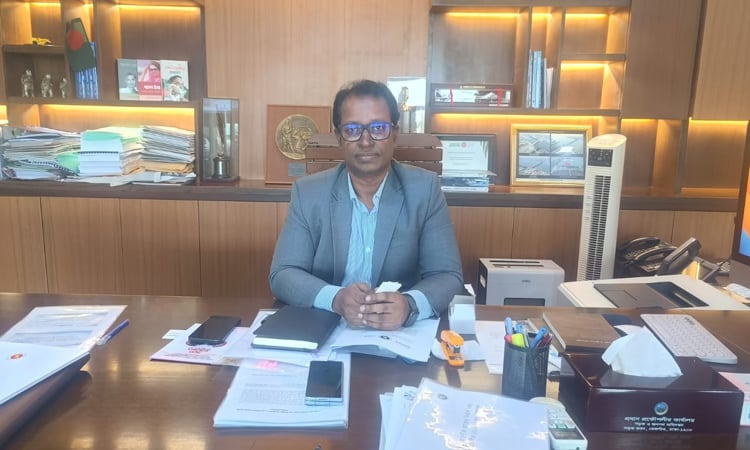
“There is no justification for rushing into a top-level visit by going beyond the national interest,” he told BSS in an interview at his official residence on Minto Road on August 17.
Kobir said although Indian media have been speculating about the Prime Minister’s possible visit ahead of the BRICS Summit scheduled to be held in New Delhi on September 12-13, Bangladesh has adopted a policy of not rushing into such a visit without clearly defined national interests.
“However, if an appropriate environment is created in the meantime on the basis of consensus between the two countries, Dhaka will express a positive attitude towards participation in the upcoming BRICS Summit,” he said.
Kobir, also Joint Secretary General of BNP’s International Affairs Committee, spoke in detail about Bangladesh-India bilateral relations, emerging international alignments, strategic relations with the United States and China, the reopening of Malaysia’s labour market and progress on the government’s key foreign policy priorities.
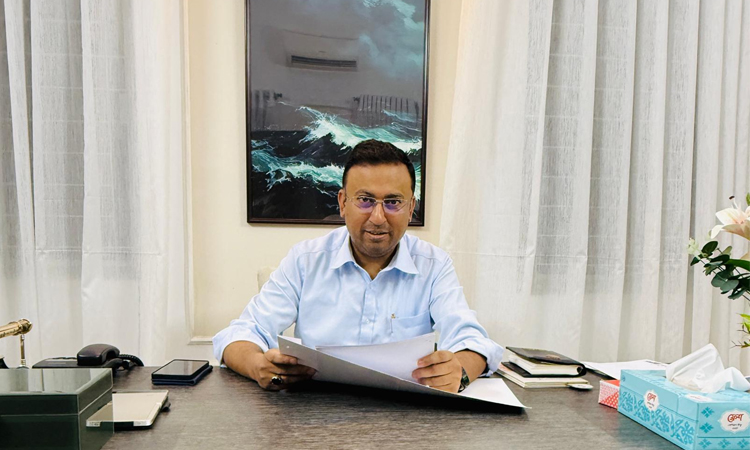
Mutual trust and India visit
Terming Indian media reports about the Prime Minister’s visit as speculation, Humaiun Kobir said reports concerning Tarique Rahman’s visit to India were “baseless and assumption-driven”.
He said the future course of bilateral relations and a top-level visit by Bangladesh’s head of government would depend on a change in the “mindset” or approach of India’s current leadership.
“The neighbouring country must properly understand the reality of Bangladesh’s July Mass Uprising, which took place through the sacrifices of more than 1,500 people,” he said.
Kobir said it was necessary to ascertain what kind of relationship India wanted to build with a government in Bangladesh elected with a two-thirds mandate. “The possibility of the Prime Minister visiting India ahead of the upcoming BRICS Summit remains slim unless an appropriate environment is created based on consensus between the two countries on specific issues and a dignified invitation,” he added.
Giving space to Sheikh Hasina not democratic etiquette
The foreign affairs adviser expressed deep resentment over convicted and fugitive individuals being allowed to use Indian territory for political activities or media exposure.
“After the fall of autocratic rule through the July Mass Uprising, in which more than 1,500 people sacrificed their lives in Bangladesh, providing political or media space in India to fascist Sheikh Hasina, who fled there and took shelter as a criminal, is contrary to India’s democratic etiquette,” he said.
The adviser said allowing Indian territory to be used for any destabilising activity against Bangladesh, or providing space to any convicted person, terrorist or murderer, had deeply angered millions of Bangladeshis.
He said New Delhi could not justify such activities under international diplomatic norms, nor could they be defended on the grounds of freedom of expression.
The government has already lodged diplomatic protests with New Delhi, reminding it of its bilateral and international legal obligations on the issue, he said, adding that diplomatic pressure would continue to prevent any future anti-Bangladesh activities.
Regional alliances and strategic balance
Referring to the government’s “Bangladesh First” policy, Kobir said the government was pursuing a balanced foreign policy in the international arena, with national interests at its core.
Bangladesh, he said, maintains a positive approach towards the possibility of joining an economic or defence framework involving Saudi Arabia, Pakistan and Türkiye, taking into account its own interests and the changing dynamics of the global economy and trade.
Kobir said Prime Minister Tarique Rahman’s visit to Riyadh, at the invitation of Saudi Crown Prince and Prime Minister Mohammed bin Salman, was likely to be finalised soon after the summer.
At the same time, Bangladesh is strengthening its working bilateral relationship with Pakistan as part of normal diplomatic engagement, with a focus on trade and bilateral people-to-people connectivity, he said.
Economic diplomacy with West, China
The Prime Minister’s foreign affairs adviser said Bangladesh was strengthening commercial relations with United States and European Union as part of its economic diplomacy.
Discussions with the US government and private sector on soybean imports and purchase of Boeing aircraft are progressing alongside efforts to increase bilateral trade volume, he said.
Bangladesh has also begun specific discussions with the European Union on a trade and partnership agreement, he added.
On strategic relations with China, Kobir said ties with Beijing had reached a new height.
Avoiding geopolitical pressure, Bangladesh is being given special priority to its engagement with China under a “Two Plus Two” mechanism and comprehensive partnership, he said.
Discussions are also progressing on attracting Chinese foreign direct investment to Bangladesh, while special diplomatic emphasis is being placed on strengthening engagement with the diaspora community in the United Kingdom and increasing remittance flows, he added.
New African markets, Malaysia labour market
Highlighting what he described as strong international confidence in Bangladesh, Kobir said 52 of Africa’s 54 countries had supported Bangladesh in the recent election for the presidency of the 81st Session of the United Nations General Assembly.
Bangladesh plans to capitalise on its close relations with the African bloc, with a high-level delegation, including the foreign minister, expected to visit Africa soon, he said.
During the visit, Bangladesh would seek to conclude several bilateral agreements aimed at promoting contract farming and opening new export markets for Bangladeshi products, he added. The adviser also expressed optimism over the long-stalled Malaysian labour market.
He said the positive chemistry between Prime Minister Tarique Rahman and his Malaysian counterpart, coupled with successful bilateral discussions, had begun to break the deadlock.
The complications are expected to be resolved soon, paving the way for Bangladeshi workers to enter the Malaysian labour market, he said.
Historic UN victory, Rohingya crisis
Kobir described Bangladesh’s historic victory in the election for the presidency of the 81st Session of the UN General Assembly as global recognition of Prime Minister Tarique Rahman’s international acceptability and leadership qualities, as well as the government’s progressive democratic image.
He expressed optimism that Bangladesh would use the UNGA presidency as a platform to project a principled and ethical foreign policy on the global stage.
At the same time, efforts would be intensified to find a sustainable and dignified solution to the Rohingya crisis by exerting specific financial and diplomatic pressure on Myanmar and mobilising international partners, he said.
The foreign affairs adviser said the government had succeeded in establishing a robust foreign policy framework over the past 180 days.
Bangladesh’s victory at the United Nations and the diplomatic policies adopted by the government demonstrate how quickly a democratic government can restore the country’s lost international image and sovereign dignity, he added.