Wednesday
19 August, 2026
News Flash
News Flash
By Mushtaq Ahmed
DHAKA, Aug 19, 2026 (BSS) – A total of 60 state-of-the-art Basic Life Support (BLS) ambulances are being introduced on the country's highways soon to quickly rescue and take injured people, who fall in road accidents, to hospitals and to utilise the important 'golden hour' after any accident.
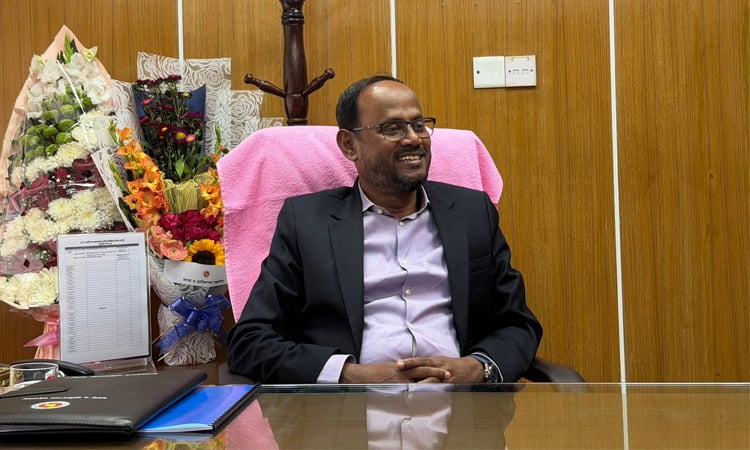
At the initial stage, the service will be started on pilot basis on some important highway corridors with these ambulances, said Chief Engineer of the Roads and Highways Department (RHD) Md Moniruzzaman in an exclusive interview with BSS at Sarak Bhaban here recently.
He said after receiving the news of any accident, the nearest ambulance will be sent to the spot through the central call centre. There are plans to place trained volunteers or 'bystander care' workers at a certain distance along highways.
Moniruzzaman said it is possible to save life to a large extent, if we can bring the injured person in a road accident at hospital immediately after the accident.
But many times, there is a delay in getting an ambulance after the accident, and the injured person does not even have the necessary first aid facilities until he/she is taken from the accident spot to the hospital, the chief engineer said.
For this reason, he said, an initiative has been taken to launch an integrated emergency ambulance service on the highways.
Moniruzzaman said the main goal of this initiative is to utilise the 'golden hour' after the accident. The ambulance will reach the spot quickly, provide basic life support to the injured person and take him/her to the nearest hospital as soon as possible, he said.
Under the entire plan, state-of-the-art basic life support facility will be ensured in ambulances, he said.
The chief engineer said instead of launching the entire system simulteniously, the ambulance service will be introduced first on pilot basis.
To this end, he said, 60 ambulances are being deployed in specific corridors of highways initially. Several important highway corridors have been selected under the pilot programme.
Those include the highway corridor from Chandra-Elenga to Rangpur, Hatikumrul-Natore-Katakhali corridor in Rajshahi and the Dhaka-Mymensingh highway, he said.
Moniruzzaman said the ambulances will be strategically located in these corridors.
“There is a plan to keep ambulances at intervals of about 10 kilometre in a specific section. In this, there will be no need to wait for an ambulance to arrive from a distant place after receiving news of an accident. The nearest ambulance will be able to reach the spot quickly,” he said.
He said there will be an ambulance every 10 kilometre on the highway corridor from Chandra-Elenga to Rangpur. Similarly, he said, there will be ambulances on the Hatikumrul-Natore-Katakhali corridor in Rajshahi and on the designated part of the Dhaka-Mymensingh highway.
A central call centre is being set up to make the ambulance service effective, he said, adding that this call centre will remain open in 24/7. “In case of a road accident, after calling the designated hotline number, the call will go directly to the central call centre.”
The chief engineer said the call centre officials will collect necessary information.
In addition to identifying the location of the caller, information will be taken about the location of the accident site and the number of injured, he said. “After that, the nearest ambulance will be sent to the scene,” he added.
Moniruzzaman said the call centre will identify the location of the caller. Based on the information received from the caller, the nearest ambulance will be deployed there, he said.
He believes that this would reduce the time it takes to dispatch an ambulance after receiving news of an accident.
The chief engineer said at the same time, information will also be sent from the call centre to local trained volunteers at the accident site.
It has been planned to have health technicians in each ambulance to ensure round-the-clock medical support, he said.
“They will remain on duty for eight hours. As a result, trained health workers will be available in the ambulance 24 hours a day. Similarly, the drivers will also have shift-based duties. As a result, the ambulance can leave for the spot after receiving news of an accident at any time of the day or night,” he said.
The chief engineer said importance is also being given to the qualifications of the health technicians.
He said they will have relevant professional training and qualifications and will meet the necessary qualifications, including registration with the Bangladesh Medical and Dental Council.
“These ambulances cannot be considered as ICU ambulances. They are basic-life-support ambulances. However, there will be necessary medical equipment, including oxygen bottles, to provide emergency basic life support to the injured patient on the way to the hospital,” he said.
Moniruzzaman said the emergency ambulance service is planned to be provided free of cost to the injured person in the accident.
The patient will first be taken to the nearest hospital - Upazila Health Complex, District General Hospital or Medical College Hospital, he said. “If it is necessary to take the patient to Dhaka as per the doctor's advice, that arrangement will also be made. The entire service is planned to be provided free of cost.”
A 'bystander care' system is being introduced to utilise the time until the ambulance arrives, he said.
Under this system, he said, local people living along the highways will be trained to provide first aid to injured people.
The chief engineer said when an accident occurs on the highway, locals are usually the first to rush to the spot.
But, due to lack of training, many times they do not know how to help the injured person and sometimes, harm can also be caused while moving the patient incorrectly, he said.
For this reason, Moniruzzaman said, an initiative has been taken to train local volunteers on specific sections of the highways.
Two volunteers have been trained in every 200 to 300 metre on the designated highway corridor and they will be trained on first aid too, he said.
“These volunteers will work without remuneration. Each of them will be given a first aid box and will have separate clothes or identification dresses,” he said.
The chief engineer said practical experience will be gained through a pilot project instead of launching the entire system on a large scale since the beginning.
“The main purpose of piloting is to identify the problems. If any management does not work in reality, it will be corrected quickly,” he said adding the first few minutes after an accident are crucial to save live.
“If trained local people can provide proper first aid to the injured persons before the ambulance arrives and at the same time the nearest ambulance can be sent to the spot through the central call centre, then it will be possible to conduct the entire rescue operation quickly,” he said.
He said if the piloting of 60 ambulances becomes successful, the service will be expanded later based on its experience.
Moniruzzaman said the department aims to operate the ambulance service across the country by gradually bringing important corridors of the highways under this system.