Tuesday
04 August, 2026
News Flash
News Flash
RAJSHAHI, June 9, 2026 (BSS) - A decision has been made to abolish the long-standing "Dholon" practice in the mango trade of the Rajshahi region and
introduce buying and selling mangoes by kilogram instead.
The decision was taken at a meeting organized by the divisional administration following years of complaints and demands from mango growers. Stakeholders believe that implementing the decision will help farmers receive fair prices for their produce.
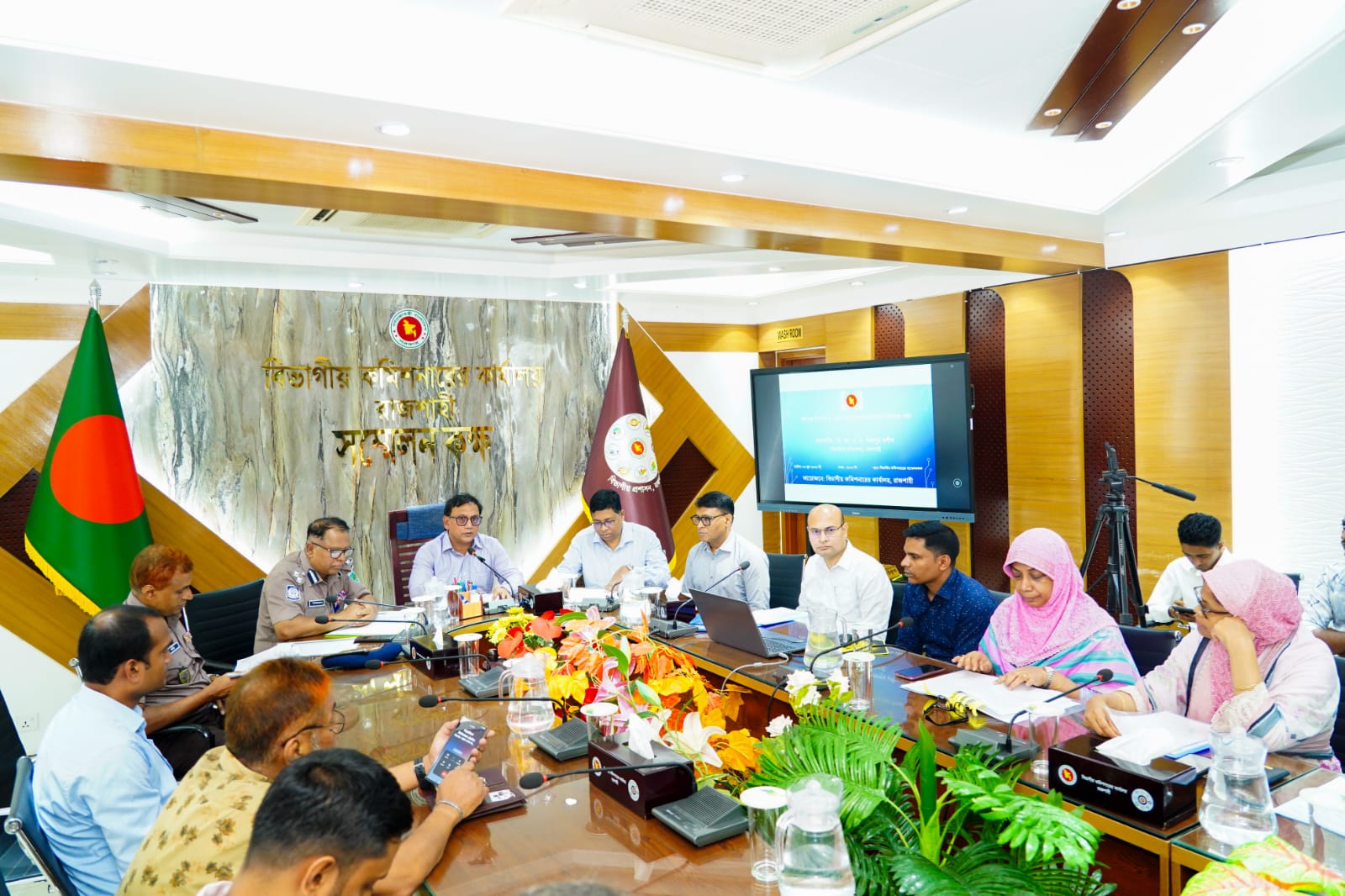
The unanimous decision was adopted at the "Meeting on Mango Marketing and Distribution Management," held today in the conference room of the Rajshahi
Divisional Commissioner's Office. The meeting was chaired by Dr. A. N. M. Bazlur Rashid, Divisional Commissioner of Rajshahi.
Administrative officials from various districts of the Rajshahi Division, mango growers, traders, commission agents, market leaseholders, and
representatives of relevant government departments attended the meeting.
Participants involved in the mango trade from Rajshahi, Naogaon, Natore, and Chapainawabganj districts presented their views.
During the meeting, it was revealed that although growers were paid for one maund (40 kilograms) of mangoes, commission agents in practice often received
between 44 and 54 kilograms. This locally practiced system is known as "Dholon."
Farmers have long complained that it results in a significant amount of mangoes being taken without payment each year, causing substantial financial
losses.
Under the new decision, mangoes will now be bought and sold strictly by kilogram. In addition, a commission of three taka per kilogram has been fixed
for commission agents. Authorities also agreed to take coordinated measures to ensure that the same marketing system is followed across all districts of the Rajshahi Division.
Omar Ali, a trader at Kansat Market in Shibganj Upazila of Chapainawabganj-known as the country's largest mango market-said that tolls are currently
charged at Taka 10 per maund and Taka 8 per crate. He called for a uniform toll collection policy.
Ahsan Habib, a mango grower from Kansat, said, "Mangoes are closely linked to our lives, culture, and economy. But because of the Dholon practice, farmers
suffer major losses every year.
In many cases, up to 54 kilograms of mangoes are taken while payment is made for only 40 kilograms. As a result, nearly one-fifth of the produce is
effectively given away without compensation."
He added that the annual mango trade in the Kansat region is worth around Taka 50 billion, and a substantial portion of that value is lost due to the
Dholon system. He thanked the administration for taking action on the issue.
Therefore, accepting a limited amount of additional weight may be reasonable, but anything beyond that is unacceptable. He also called for a standardized
weighing system in all markets.
Divisional Commissioner Dr. Bazlur Rashid stated, "Our primary objective is to ensure that mango growers receive fair prices for their produce."
There has been dissatisfaction over the Dholon practice for many years. If today's decision is implemented, farmers' financial losses will be reduced,
and transparency and accountability in market management will improve.
The administration will take the necessary measures to enforce the same rules throughout the Rajshahi Division.
The meeting was conducted by Additional Divisional Commissioner (General) Mohammad Habibur Rahman.
Among those who spoke were DIG of Police of Rajshahi Range Mohammad Shahjahan, Commissioner of Rajshahi Metropolitan Police Mohammad Faizul
Kabir, Deputy Commissioner of Rajshahi Kazi Shahidul Islam, Deputy Commissioner of Naogaon Mohammad Saiful Islam and Deputy Commissioner of
Chapainawabganj Abu Saleh Musa Jangi.
Director of Department of Agricultural Marketing Shahana Akhtar Jahan, Chief Scientific Officer of Fruit Research Centre Dr. Md. Shafiqul Islam and
Assistant General Manager of Sundarban Courier Service Mahmudul Alam Swajal were also present.
Stakeholders expressed hope that the implementation of the new policy will fulfill one of the mango growers' most important long-standing demands.