Tuesday
04 August, 2026
News Flash
News Flash
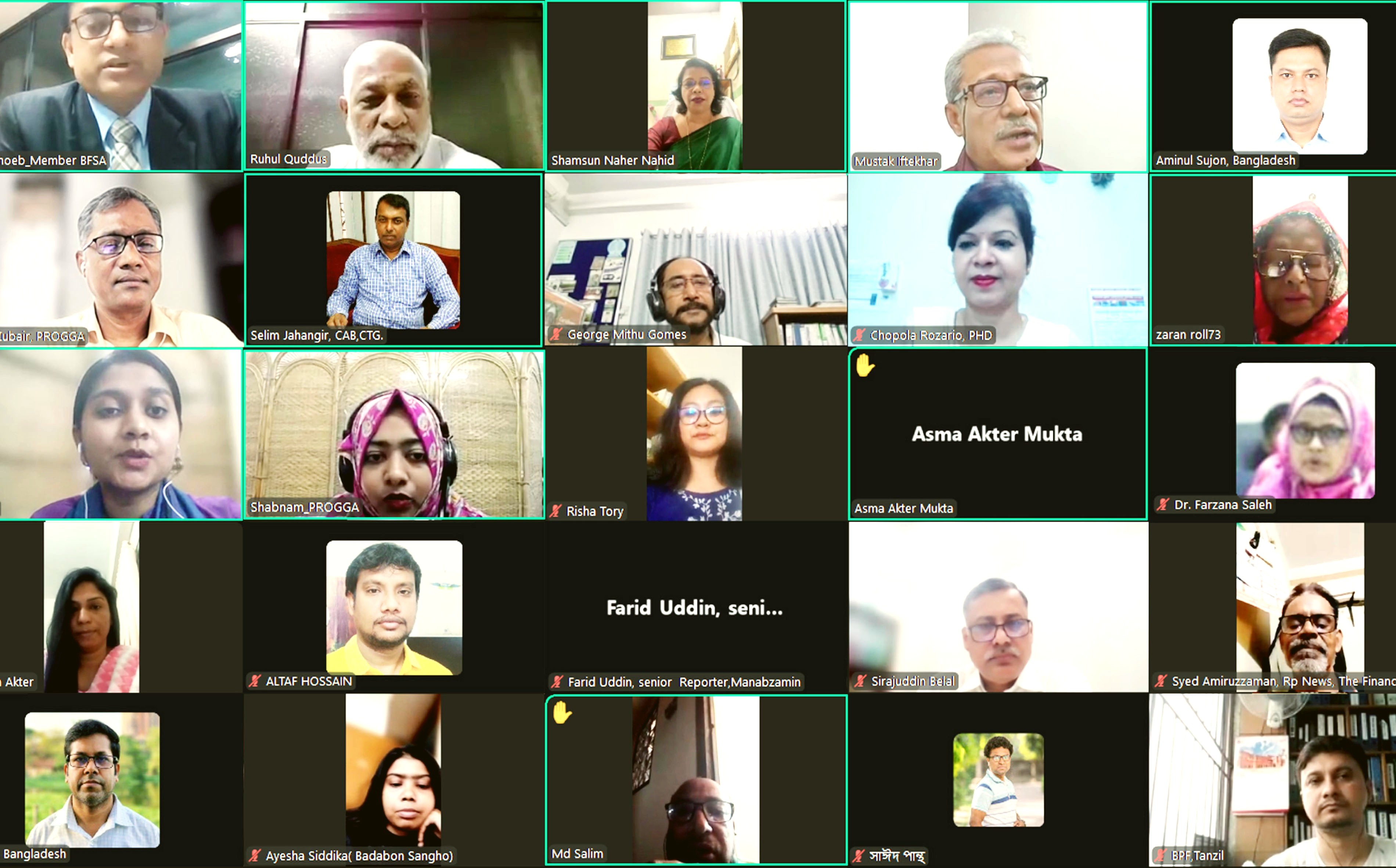
RANGPUR, June 7, 2026 (BSS) – Experts warned in a webinar today that ultra-processed foods rich in sugar, salt, saturated fats, and trans-fats are increasing the risk of various non-communicable diseases (NCDs), diabetes, hypertension, obesity, cancer, and other health problems in Bangladesh.
They viewed this at the webinar, titled “Health risks of ultra-processed foods and the way forward: Bangladesh perspective”, organized by PROGGA, with support from the Global Health Advocacy Incubator (GHAI), marking the World Food Safety Day 2026.
Representatives from civil society organizations, NGOs and youth groups, along with journalists and people from different professional backgrounds across the country, including Rangpur, participated in the webinar.
The webinar noted that, according to the World Health Organization, NCDs are responsible for around 570,263 deaths in Bangladesh every year, accounting for nearly 71 percent of total deaths.
Excessive sugar, salt, saturated fat and trans-fat in ultra-processed foods are further increasing the risk of these diseases.
The complex nutrition information at the back of ultra-processed food packages is difficult for most consumers to understand.
As a result, consumers choose food items without having a clear idea of their actual nutritional value or possible health risks.
However the very simple, clear and mandatory warning-based front-of-package labeling (FOPL) is an effective measure to reduce these risks.
If mandatory FOPL is introduced, consumers will be able to identify foods high in sugar, salt and saturated fat through clear warning messages on the front of the package.
This will help consumers make more informed, healthier and safer food choices.
The WHO has recommended FOPL as an effective and best-buy public health intervention.
Addressing the webinar, Member of the Bangladesh Food Safety Authority Professor Dr Mohammad Shoeb said that 44 countries around the world have already introduced FOPL, and these countries have seen positive changes in consumers’ food choices.
“Bangladesh is also working on this issue, and we hope to introduce it soon,” he said.
Bangladesh Country Lead of the Global Health Advocacy Incubator Muhammad Ruhul Quddus said, “If FOPL is implemented in Bangladesh, it will help accelerate progress towards achieving SDG Target 3.4, which focuses on reducing NCDs.”
Chief Nutritionist of the Food and Nutrition Department at BIRDEM General Hospital Shamsun Naher Nahid said, “FOPL should be introduced to raise public awareness about the levels of harmful ingredients in packaged foods.”
Founding Chairman of the Bangladesh Food Safety Authority Mustak Hassan Md Iftekhar and Consultant at Vital Strategies Aminul Islam Sujon also delivered remarks at the webinar.
With PROGGA’s Executive Director ABM Zubair in the chair, Program Officer Shabnam Mostofa delivered the keynote presentation and Coordinator Mashiat Abedin moderated the webinar.