Monday
07 September, 2026
News Flash
News Flash
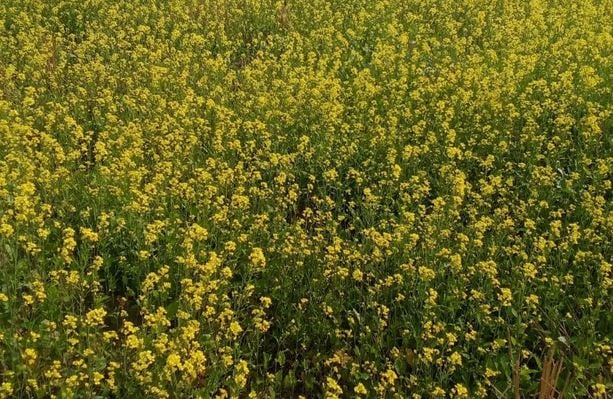
BARGUNA, Jan 14, 2026 (BSS) – Farmers of the district are celebrating higher mustard yields this season, as vast tracts of land have transformed into yellow canvas attracting both growers and nature-lover alike.
From Barguna Sadar to Patharghata, Amtali, Taltali, and Betagi upazilas, the sight of dew-kissed yellow blooms is drawing people from all walks of life to witness the beauty of the crop.
The District Department of Agricultural Extension (DAE) reports that mustard cultivation has increased this season on fallow and single-crop lands after harvesting Aman paddy. Farmers are increasingly attracted to mustard due to its low cultivation cost and quick, high yield. High-yielding varieties such as Bari-14, 17, 18, 19, and Tori-7 are being widely grown across the district.
Officials highlight that after harvesting mustard, Boro paddy can be sown on the same land, allowing farmers to cultivate two crops in a year and maximize their profits.
In the 2025-26 fiscal year, mustard was grown on 145 hectares in Sadar upazila, five hectares more than the previous year. Nalotona and Burirchar unions reported the highest cultivation, with popular varieties including Bari Sarisha-17, Bina Sarisha-9, and Bina Sarisha-11.
Farmers expressed satisfaction with the returns. Hamed Mridhar, 60, from Burirchar union, cultivated mustard on 40 decimal of land at a cost of Taka 14,000 and earned Taka 42,000 from the harvest. Rabiul, 55, of Dhalua Nalotona union, cultivated mustard on 20 decimal of land with an investment of Taka 7,000, making a threefold profit, while Gendu Mia, 62, from Fultala village in Bibichini union, doubled his income with a 20 decimal of land mustard crop costing Taka 6,500.
Local mustard oil traders are also benefiting from the demand. Qayyum Hossain, a trader from Barguna town, said that he purchases mustard from Pabna due to limited local production, producing mustard oil sold at Taka 240 per liter.
Similarly, Mujibar, a trader from Lakurtala area, earns a profit of Taka 30 per kg of mustard sold locally.
Both traders emphasized that local production for 12 months could meet the district’s edible oil demand and stabilize prices.
Deputy Assistant Agriculture Officer Mizanur Rahman said farmers received incentives this year, especially in Nalotona union, which contributed to increased harvests in Gazimahmud village.
Barguna Sadar upazila Agriculture Officer Md. Sakhawat Hossain said that efforts, including seed support, exhibitions, and training, are being made to promote mustard cultivation.
Deputy Director of DAE Rathindranath Biswas stated that if no natural disasters occur, the district can expect a good mustard harvest. Mustard fields, beyond their scenic beauty, have become a symbol of Barguna farmers’ economic potential.
Agricultural experts suggest that with proper support, Barguna could cultivate mustard year-round, meeting local edible oil needs and reducing dependence on outside sources while keeping prices affordable for consumers.