Monday
20 July, 2026
News Flash
News Flash
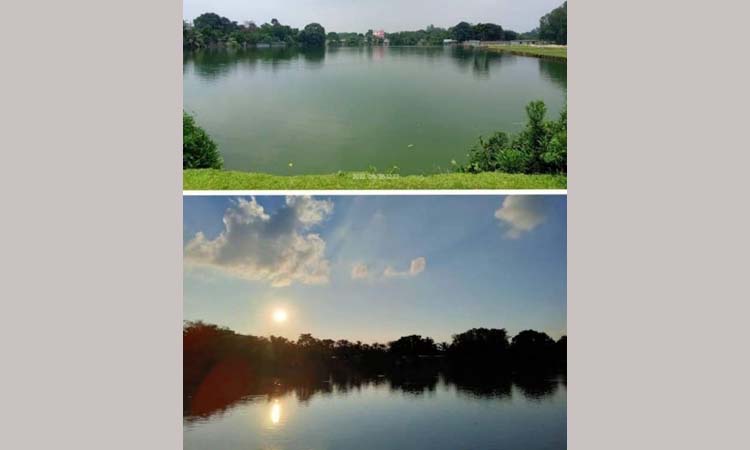
DINAJPUR, April 7, 2026 (BSS) - Five traditional lakes-locally known as
Rajdighi-in Dinajpur district town and Sadar upazila continue to attract
visitors throughout the year, standing as enduring witnesses to the region's
rich history.
However, concerns are mounting among residents and experts that these
historic water bodies are gradually losing their heritage value due to lack
of proper maintenance and government oversight.
Among them, Julumsagar carries a particularly tragic legacy. During the 1971
Liberation War, many innocent men, women, and children were killed by
Pakistani forces, and their bodies were reportedly dumped into this lake.
Locals have long demanded the construction of a memorial on its banks to
honor the martyrs, but no such initiative has yet been implemented.
Historically, the region was part of a prominent Pargana during the Mughal
period, with nearby Ghoraghat serving as an important administrative and
military center. The once-significant Ghoraghat Fort area, known for its vast
horse stables used to train cavalry for imperial service, is also reportedly
on the verge of extinction due to neglect.
According to Professor Md. Ruhul Amin, a freedom fighter and former Vice-
Chancellor of Hajee Mohammad Danesh Science and Technology University, these
lakes were excavated during the Mughal period by local rulers to meet the
water needs of the population. They served multiple purposes, including
drinking, bathing, and livestock use, and were equipped with well-designed
ghats and stairways for public access.
Over time, modernization has reduced their traditional usage. While fish
farming is now common, some visitors still use the lakes for recreation,
particularly during picnic seasons. Experts believe that with proper
development, these lakes could become significant tourist attractions and
generate substantial revenue.
Prominent local figures, including Advocate Md. Anisur Rahman Chowdhury,
former mayor Bir Muktijoddha Md. Shafiqul Haque Chutu, and others, have
emphasized the urgent need to incorporate these sites into the tourism sector
through conservation and infrastructure development.
Historically, the region is also home to several notable dighis. Ramsagar, a
77-acre man-made lake excavated by Maharaja Ramnath in the mid-18th century,
remains one of the largest of its kind in Bangladesh.
Nearby, Sukhsagar and Matasagar, attributed to Maharaja Sukhdev, reflect the
architectural and environmental aesthetics of the Mughal-influenced era.
While Sukhsagar has been developed into an eco-park, Matasagar faces severe
erosion and neglect.
Another lake, Anandasagar, once connected to Sukhsagar by a canal, is now
threatened by pollution and encroachment. The canal itself has degraded into
a drainage channel due to urban waste.
Adding to the historical narrative, Pransagar, excavated by Raja Prannath,
now falls within the territory of Kumarganj in South Dinajpur, West Bengal,
following geopolitical changes.
Locals and cultural activists warn that without immediate government
intervention, these historically significant water bodies and associated
heritage sites may be lost forever. They stress that proper preservation,
restoration, and tourism integration could not only protect history but also
contribute economically.
The demand remains clear: conserve Dinajpur's heritage before it disappears,
and honor the memories embedded in its waters-especially those of the martyrs
of 1971.