Wednesday
19 August, 2026
News Flash
News Flash
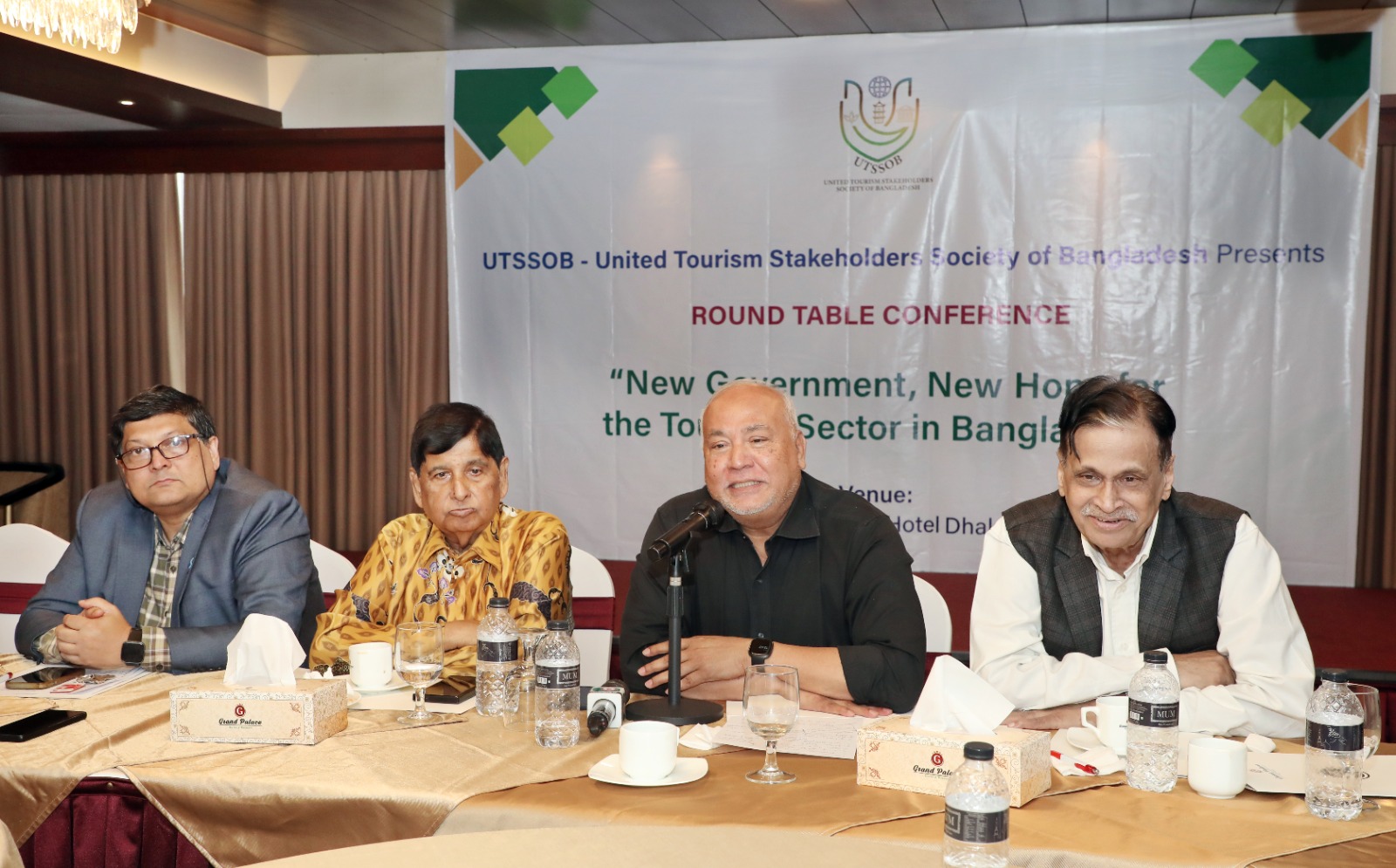
DHAKA, May 14, 2026 (BSS)- Tourism industry stakeholders today said Bangladesh’s tourism sector is struggling to realise its full economic potential due to weak research, unreliable statistics, budget constraints and policy fragmentation, urging coordinated reforms to build a competitive and sustainable tourism industry.
The observations came at a roundtable titled “New Government, New Hope for Bangladesh’s Tourism Sector,” organised by the United Tourism Stakeholders Society of Bangladesh (UTSSOB) in a city hotel.
Government officials, aviation leaders, tourism experts, academics, private entrepreneurs and media professionals attended the roundtable chaired by H M Hakim Ali, President of United Tourism Stakeholders Society of Bangladesh.
General Secretary of UTSSOB Rezaul Ekram gave welcome address while the session was moderated by Vice President Toufiq Rahman.
Speaking at the event, Mofizur Rahman, Managing Director of Novoair and Secretary General of the Aviation Operators Association of Bangladesh, said Bangladesh remains significantly behind in research-based tourism planning despite possessing enormous natural and cultural potential.
“Without credible data, market intelligence and proper research, it is impossible to formulate sustainable tourism policies,” he said, adding that aviation and tourism are deeply interconnected, but both continue to suffer from policy inconsistency and lack of institutional coordination.
He stressed the need for a united voice among tourism stakeholders and urged policymakers to include industry professionals in decision-making process.
Deputy Director of the Bangladesh Tourism Board, Borhanuddin said, Despite limited manpower and budget the Tourism Board continues to work on innovative destination branding by integrating local heritage, indigenous products and rural cultural experiences into tourism development.
He dismissed the perceptions of rivalry between the Tourism Board and Bangladesh Parjatan Corporation, saying both institutions share the same goal of advancing the national tourism industry.
Pointing out the extremely limited research on tourism sector, former DU professor and tourism expert Badruzzaman Bhuiyan said universities, researchers and students should be involved in destination planning.
Director of the Tour Operators Association of Bangladesh (TOAB) Taslim Amin Shovon called for stronger public-private coordination, international standard tourism fairs, road shows, digital marketing, simplified visa systems and tourist-friendly infrastructure to promote country’s tourism.
Aviation and Tourism Journalists Forum of Bangladesh (ATJFB) president Tanzim Anwar said Bangladesh has failed to transform many of its tourism assets into globally marketable products due to inadequate research and lack of reliable statistics.
“Destinations like Bali have built million-dollar attractions around simple cultural experiences, while many of Bangladesh’s rural traditions and natural assets remain commercially underutilised,” he said.
Speakers also warned that exaggerated or misleading destination branding could damage Bangladesh’s credibility in the international tourism market and called for research-driven, realistic and data-based strategies to make a position of the on the global tourism map.