Monday
07 September, 2026
News Flash
News Flash
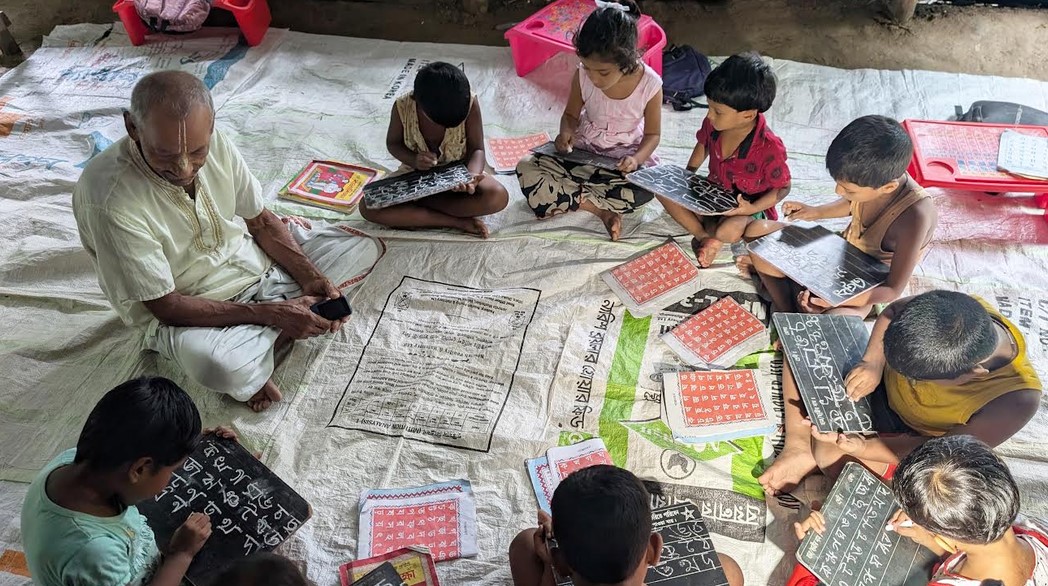
BARISHAL, Sept 7, 2026 (BSS) - Septuagenarian Ramanikanta Bepari has been providing free education to children in a remote village in Agailjhara upazila of the district for more than five decades, spreading the light of education among underprivileged children.
Although his advancing age is clearly visible, Bepari remains tireless in his passion for teaching. For the past 55 years, he has been teaching children in Rangta village under Rajihar Union of the upazila without charging any fees.
Several generations of local residents began their education under his guidance. He has devoted a major part of his life to teaching children from poor and disadvantaged families.
Ramanikanta, son of Rakhal Bepari of Rangta village, began teaching children from poor families while he was still a school student. Although he does not remember the exact year, he said he started spreading the light of education even before Bangladesh's independence.
Over the years, the education system has changed, village life has transformed, and modern schools and technology-based education have emerged. Yet, the sound of children studying can still be heard every day at the small village school run by Bepari.
After passing the matriculation examination (SSC) from Chandshi Ishwar Chandra Secondary School in 1973, Bepari enrolled at Government Gournadi College. However, he could not complete his higher secondary education due to his family's financial hardship.
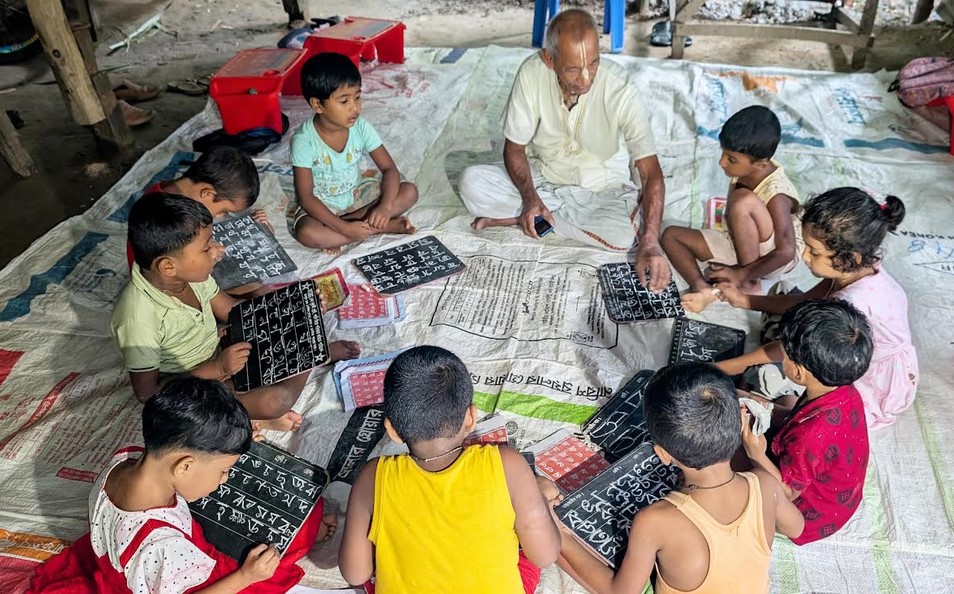
Despite being a meritorious student, he had the opportunity at the time to join a primary school as a teacher. But out of affection and love for young learners, he chose not to take up a formal teaching job. Instead, he decided to continue teaching children in his village.
The courtyard of Rangta Sarbojanin Durga Temple has become his classroom. Every day except Friday, he teaches there from 10am to 12:30pm. Currently, 15 to 20 children regularly attend his classes. After the lessons, Bepari personally accompanies the young students to a nearby primary school.
Over the decades, countless people who studied under him have gone on to establish themselves in life. Some are working in different parts of the country, while others are serving in important positions.
Perhaps the most remarkable aspect of his long teaching career is that three generations of some families have learned from him. Fathers who once came to Ramanikanta as children later sent their own children to the same teacher. Today, the grandchildren of those families are also learning from him.
There is no monthly tuition fee at Bepari's school. His sole objective is to ensure that children from poor families do not miss out on education because of financial difficulties.
His own life is equally simple. He lives with his wife, Rumpa, in a modest two-room, tin-roofed house. Their only son, Tapas Bepari, works for a private organisation. Bepari also owns a small amount of agricultural land.
Talking to BSS, Ramanikanta said, "I have been sitting here and teaching the young children of the area since before independence. As long as I am alive, I want to continue giving these children whatever education I can."
Students who attend his classes, including Shamim, Orko, Bijoy and Akleema, said they greatly enjoy studying at his school. "Sir recites rhymes, tells stories and shows us a lot of affection. We learn many things from him," Orko said. The children's parents are also highly satisfied with his teaching.
Guardians Kalam Sikder, Prashanta Kumar and Gopal said their fathers had studied under Ramanikanta Sir and that they themselves had also received education from him during their childhood. Now their children are studying under him.
"Three generations of our families have studied with him. We regularly bring our children to Sir. He teaches very well and takes great care of the children. If our child misses classes for a day or two, he comes to our home to find out why," they said. "In this age, finding such a good person is truly a matter of good fortune."
Ranjit Baidya, president of the Rangta Sarbojanin Durga Temple Committee, said, "Because of him, children from poor and disadvantaged families in the area are getting the opportunity to study. He has no expectation of payment and no desire for publicity."
By spending almost his entire life educating children, Ramanikanta is quietly demonstrating that education is not merely a profession but also a noble responsibility to transform people's lives. Villagers said that if he receives official assistance, Ramanikanta would be able to spread the light of education among the children of the village on a larger scale.