Wednesday
26 August, 2026
News Flash
News Flash

By Mahadi Hasan
DHAKA, July 16, 2026 (BSS) – The government has announced a series of initiatives to develop Bangladesh's creative economy, aiming to unlock the sector's economic potential, generate employment and promote entrepreneurship across the country.
The initiatives, unveiled in the national budget for fiscal year (FY) 2026-27, include the establishment of Creative Hubs at the national and regional levels, the identification and development of creative economy-based products, design support, and dedicated financial assistance.
Experts believe the move will create new employment opportunities for hundreds of thousands of people, particularly youths, artists, artisans and creative entrepreneurs.
The government has set a target of increasing the creative economy's contribution to the country's gross domestic product (GDP) to 1.5 percent while creating around 500,000 new jobs.
An initial allocation of Tk 300 crore has been earmarked in the FY2026-27 budget for the development of the sector.
In addition, another Tk 500 crore is expected to be mobilised from Bangladesh Bank's Corporate Social Responsibility (CSR) fund.
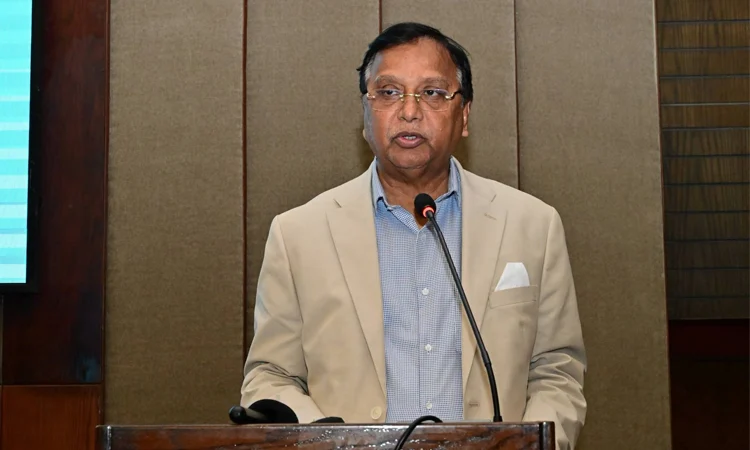
In his budget speech, Finance Minister Amir Khosru Mahmud Chowdhury said the government is attaching special importance to the creative economy to harness the vast economic potential of the country's creative industries and integrate them into the mainstream economy.
He said Creative Hubs would be established at the divisional, district and upazila levels, as well as on the premises of the Bangladesh Shishu Academy and the Bangladesh Shilpakala Academy.
The hubs will feature cultural stages, bookstores with reading facilities, cineplexes, small cafeterias, and dedicated spaces for displaying and marketing local specialty products, he added.
The government also plans to identify and promote creative economy-based products under its "One Village, One Product" initiative.
These include handloom products, pottery, weaving, shital pati, shataranji, wooden toys, handmade jewellery, terracotta, and other traditional crafts.
Director General of the Bangladesh Shilpakala Academy, poet Rezauddin Stalin, told BSS that the initiative would create significant employment opportunities for artists, performers, and people involved in production and event management.
“If cultural programmes such as theatre, music concerts, circus performances, folk theatre, puppet shows and exhibitions are organised regularly at the Creative Hubs, many people will find employment, while artists will also earn through ticket sales,” he said, adding that online ticketing systems could further strengthen the sector's sustainability.
Professor Dr Sayema Haque Bidisha of the Department of Economics at Dhaka University said Bangladesh already possesses a strong foundation for a creative economy through its rich cultural heritage, handicrafts and artistic traditions.
She said previous budgets had neither recognised the sector as a separate economic area nor focused on employment generation through creative industries.
“If regional Creative Hubs can be developed by utilising the skills and innovative capacity of rural youths, they will create both employment and entrepreneurship opportunities,” she said.
She also stressed the need to prioritise employment generation over GDP contribution, saying the sector's success would depend on proper planning, adequate infrastructure, easier access to finance and effective implementation.
Graphic designer Imran Hossain, a graduate of Dhaka University's Faculty of Fine Arts, said many talented young professionals are unable to start businesses due to a lack of capital.
“If the government provides collateral-free loans, I can establish a small design firm that will create employment not only for myself but also for many others,” he told BSS.
Ahsan Habib, who runs a small theatre group in the capital, said modern cultural venues and auditoriums at divisional Creative Hubs would enable theatre groups to stage performances regularly and generate a steady income.
Similarly, Nakshi Kantha entrepreneur Asia Khatun said demand for her handcrafted quilts is increasing, but financial constraints prevent her from expanding production and hiring additional workers.
She expressed hope that access to low-interest loans would enable her to expand her business and create more jobs.
Economists and cultural experts believe that, if implemented effectively, the government's creative economy initiatives could emerge as a new engine of employment, entrepreneurship and inclusive economic growth while preserving Bangladesh's rich cultural heritage.