Wednesday
05 August, 2026
News Flash
News Flash
DHAKA, Aug 5, 2026 (BSS) - August 5 has become one of the most consequential dates in Bangladesh's political history as a massive student-led and public uprising ended after the resignation and departure of Prime Minister Sheikh Hasina, bringing an end to her nearly 16-year fascist rule.
The dramatic political change came after weeks of nationwide protests, hundreds of reported deaths, thousands of injuries and an unprecedented public mobilization that transformed a movement for quota reform in government jobs into a nationwide campaign demanding Hasina's resignation.
The day marked both victory and tragedy. While millions of people celebrated the fall of the Awami League government, August 5 also witnessed some of the bloodiest violence of the movement as clashes and police action reportedly left hundreds dead and many more injured across the country.
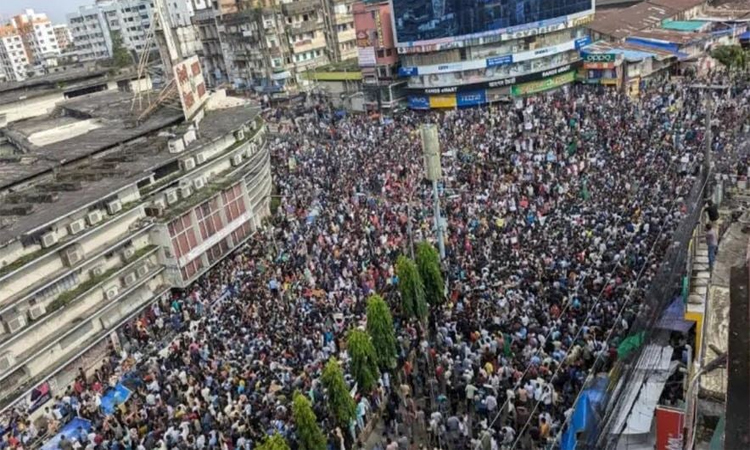
Sheikh Hasina resigned and left Bangladesh as hundreds of thousands of protesters marched toward Dhaka from different parts of the country, defying an indefinite curfew, security barricades and heavy rainfall. Her departure contrasted sharply with earlier public remarks in which she had insisted she would not flee the country.
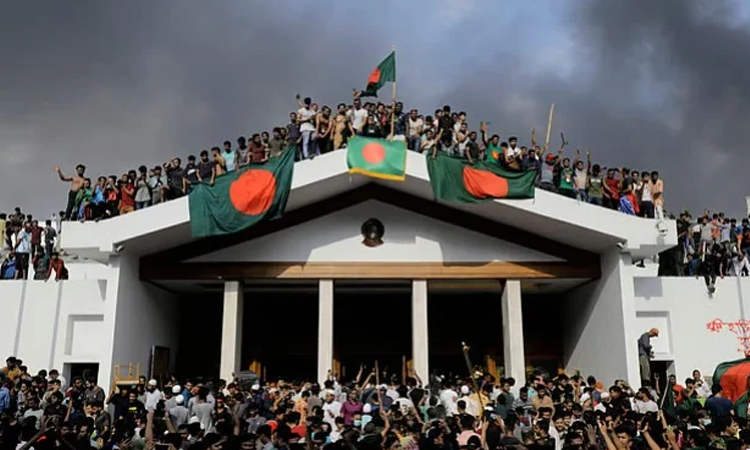
Celebrations erupted nationwide after Army Chief General Waker-Uz-Zaman announced Hasina's resignation. Crowds flooded streets across the country, while thousands entered the prime minister's official residence Ganabhaban following her departure. Many also gathered at the Prime Minister's Office and the Jatiya Sangsad complex as people from all walks of life celebrated what they viewed as the end of a prolonged period of authoritarian rule.
Even after Hasina's departure, violence continued in several parts of the country. According to media reports, law enforcement personnel opened fire at different locations as protesters continued advancing toward Dhaka and other district headquarters. The unrest also saw attacks on Awami League offices, police stations and other establishments by agitated crowds following the collapse of the government.
The political upheaval was the conclusion of weeks of escalating unrest that began with a student movement demanding reform of the quota system in government recruitment.
The protests gained momentum after a High Court verdict declared invalid the government's 2018 circular abolishing quotas in first and second-class government jobs, effectively restoring the previous quota system. Students argued that the reinstatement would deprive meritorious candidates of fair opportunities and launched demonstrations demanding a merit-based recruitment system.
Initially centered on quota reform, the movement rapidly expanded after repeated confrontations between protesters, law enforcement agencies and activists of the Awami League and its associate organizations.
Allegations of excessive use of force and mounting casualties intensified public anger, transforming the campaign into a nationwide anti-government movement.
According to a United Nations estimate, around 1,400 people were killed and approximately 20,000 injured during the violence surrounding the July uprising and its aftermath.
As tensions escalated, student leaders announced a series of protest programmes, including a nine-point demand that called for accountability over the killings during the demonstrations. Authorities later detained several key coordinators of the Anti-Discrimination Student Movement, including Nahid Islam, Sarjis Alam, Hasnat Abdullah, Asif Mahmud, Nusrat Tabassum and Abu Baker Mojumder.
Following their release, the movement shifted to a single-point demand - Sheikh Hasina's resignation. At a mass rally at the Central Shaheed Minar on August 3, coordinator Nahid Islam formally announced the one-point programme.
Violence intensified further over the following days. Media reports said at least 93 people were killed on August 3 and another 66 on August 4 in clashes across the country. In response, student leaders brought forward their previously announced "March to Dhaka" programme from August 6 to August 5.
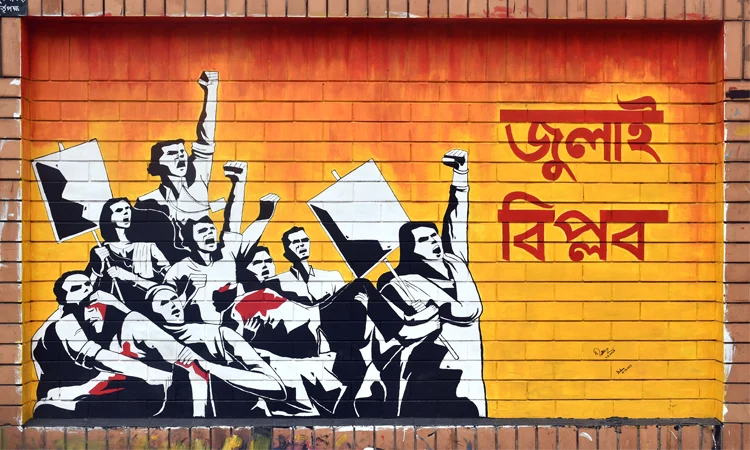
From early on August 5, hundreds of thousands of protesters from Dhaka and districts across the country began converging on the capital despite curfew restrictions and security checkpoints. The protesters described the day as "36 July," symbolically asserting that the spirit of the July uprising would continue until the government's fall.
As crowds advanced toward Ganabhaban, the situation became increasingly volatile. Facing mounting public pressure and an unprecedented mass mobilization, Sheikh Hasina resigned as prime minister and left the country by military helicopter along with her younger sister Sheikh Rehana, reportedly travelling to India.
Her departure brought an end to Awami League's uninterrupted tenure in office since 2009 and concluded one of the most turbulent chapters in Bangladesh's contemporary political history.