Tuesday
30 June, 2026
News Flash
News Flash
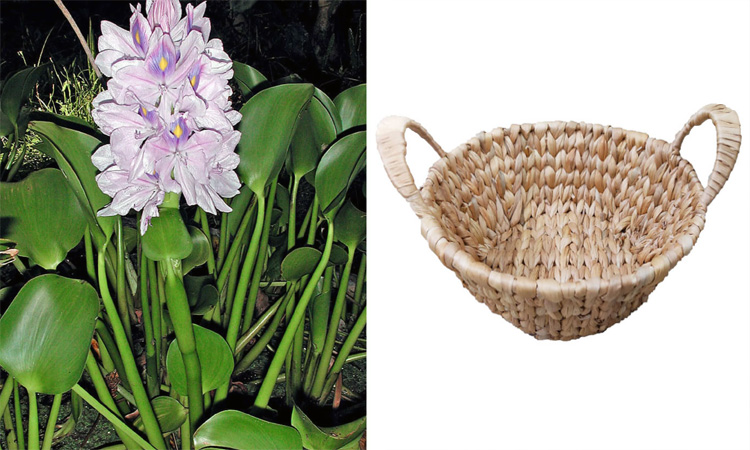
DHAKA, May 14, 2026 (BSS) - Water hyacinth, once considered an unwanted aquatic weed in canals and wetlands, is now being transformed into attractive household products by rural women in Jhenaidah, with the eco-friendly items being exported to 82 countries worldwide.
Hundreds of women in villages across Jhenaidah are making doormats, trays and baskets from water hyacinth, rice straw and date palm leaves during their spare time alongside household chores.
The products, crafted by rural women, are now decorating kitchens and living rooms of affluent families abroad, while nearly 800 women have become financially self-reliant through home-based work.
The products are being manufactured under the supervision of an organisation named ‘BD Creation’.
Officials of the organisation said they mainly use three discarded natural materials- date palm leaves, rice straw and water hyacinth- to produce the items.
While date palm leaves and rice straw had limited alternative uses, water hyacinth was previously considered waste and had to be cleared from rivers, canals, ponds and water bodies through hired labour. That weed has now turned into a valuable resource.
Assistant General Manager (AGM) of BD Creation’s Jhenaidah region Abdul Hamid said the initiative began in different districts across Bangladesh, but he first introduced it in Jhenaidah.
Initially, he started working with a small number of women. Later, from 2018 onward, BD Creation extended support through prior connections.
Currently, around 800 women divided into 40 groups are working from their homes in Barobazar and Kashima areas of Kaliganj upazila; Kaluhati and Kamarkundu areas of Sadr upazila; and Bolabaria, Solemanpur, Baluhar, Harindia and Mamunshia areas of Kotchandpur upazila.
Abdul Hamid said due to expansion of production, the company is now purchasing dried water hyacinth at Taka 40 per kilogram. Local people collect water hyacinth from rivers, dry it and sell it to the company. Rice straw and date palm leaves are also collected in the same way, he added.
After drying, the raw materials are delivered to women workers at their homes. Once the products are completed, they are collected and sent to the company’s headquarters. Final finishing work is then completed according to buyers’ preferences before export to the respective countries.
He said that they first provide training to the women and later deliver raw materials to their homes. No additional formalities are required. The finished goods are collected directly after completion, he added.
A visit to Baluhar village in the district found women working in the balcony of their homes while water hyacinth was being dried in courtyards in sun light.
Khadiza Begum was seen weaving doormats from water hyacinth. Her husband works as a day labour.
Khadiza said her family had long struggled with poverty, but over the past year, their situation improved after she began making products from water hyacinth. She now produces doormats, trays and baskets.
She said that she performs the work during her spare time after completing household chores. She can produce 12 to 15 items a day and earns Taka 20 for each item. On average, she earns around Taka 3,000 a month, which contributes to family expenses, she added.
“There is no longer the same hardship in the family as before. Company representatives deliver the raw materials and later collect the finished products. We only need to make them,” she said.
AGM Abdul Hamid said many decorative products can be produced from discarded raw materials. However, trays, cosmetic baskets and doormats are currently the most commonly produced items in Jhenaidah.
At present, around 35,000 to 40,000 pieces of products are being exported every month to 82 countries around the world, he added.
He said the company considers the initiative an industry involving women mostly from poor rural families.