Friday
03 April, 2026
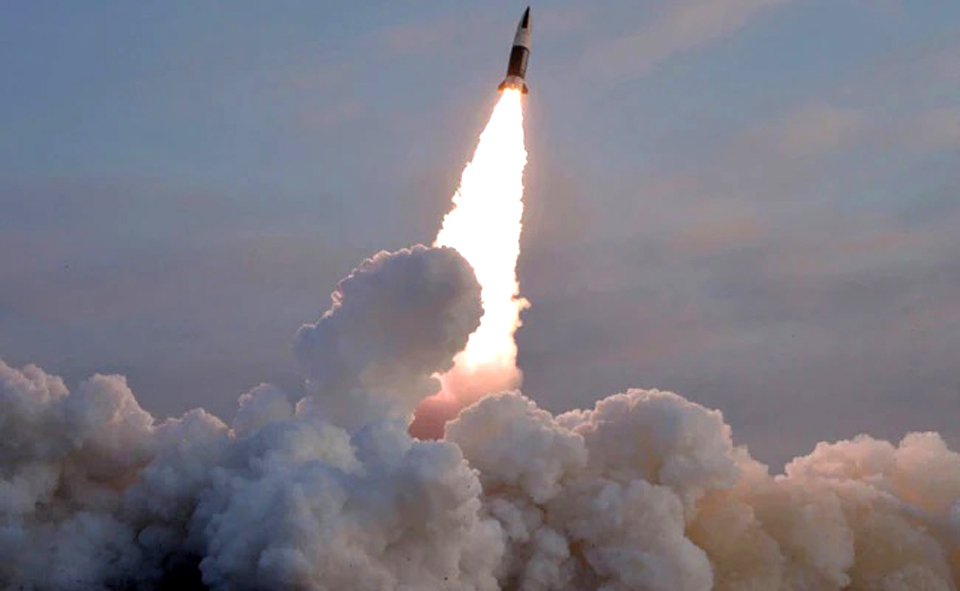
SEOUL, Feb 27, 2022 (BSS/AFP) - North Korea fired a ballistic missile
Sunday, Seoul said, resuming a weapons-testing blitz following a month of
relative calm during the Beijing Winter Olympics, and while the world focuses
on Ukraine.
The Sunday launch is Pyongyang's eighth so far this year, including test-
firing its most powerful missile since high-profile negotiations between
leader Kim Jong Un and then US president Donald Trump collapsed in 2017.
Diplomacy has languished ever since.
Despite biting international sanctions, Pyongyang has doubled down on
military development and last month threatened to abandon a self-imposed
moratorium on firing long-range and nuclear weapons.
Analysts had widely predicted Pyongyang would seek to capitalise on US
distraction over Russia's invasion of Ukraine on Thursday with new tests.
South Korea's military said Sunday it had detected a ballistic missile
fired towards the Sea of Japan at 07:52 local time (2252 GMT Saturday) from
Pyongyang.
"The latest ballistic missile has a range of around 300 kilometres and an
altitude of around 620 kilometres and details are under close analysis by
South Korean and US intelligence," it added. Japan also confirmed the launch.
South Korea's presidential Blue House expressed "deep concern and grave
regret", and criticised the timing "when the world is making efforts to
resolve the Ukraine war".
"With the US interest shifted to Europe over the Ukraine crisis and the UN
Security Council unable to function, Pyongyang is seizing the opportunity,"
Shin Beom-chul, a researcher at the Korea Research Institute for National
Strategy, told AFP.
North Korea sees this as a perfect moment to "continue its development of
necessary weapons and to strengthen its nuclear arsenal", with a view to
being recognised as a nuclear power, he added.
The recent pause in testing during the Beijing Winter Olympics was seen as
a mark of deference to key diplomatic ally and economic benefactor China.
The latest launch also comes as South Korea gears up to elect its next
president on March 9.
- Missiles 'top priority' -
Japan's Defence Minister Nobuo Kishi said the "recent and rapid development
of North Korea's missile related technology cannot be overlooked from the
view of security of our country and this region".
North Korea is reeling economically from biting sanctions over its weapons
programs and a lengthy coronavirus blockade, but continuing its "ambitious
schedule of military modernisation" is a top priority, said Leif-Eric Easley,
a professor at Ewha Womans University in Seoul.
"The Kim regime's strength and legitimacy have become tied to testing ever
better missiles," he added in emailed comments.
Outgoing South Korean President Moon Jae-in, who repeatedly pursued peace
talks with the North during his five-year term, has warned that the situation
could easily escalate.
"If North Korea's series of missile launches goes as far as scrapping a
moratorium on long-range missile tests, the Korean Peninsula may instantly
fall back into the state of crisis we faced five years ago," he said in a
written interview with international press, including AFP, this month.
Under Trump's successor Joe Biden, the United States has repeatedly
declared its willingness to meet North Korean representatives, while saying
it will seek denuclearisation.
But Pyongyang has so far dismissed the offer, accusing Washington of
pursuing "hostile" policies.
Domestically, North Korea is preparing to celebrate the 110th anniversary
of the birth of late founder Kim Il Sung in April, which experts say
Pyongyang could use to carry out a major weapons test.
Recent satellite images suggest that the North may be preparing a military
parade to showcase its weapons to mark the key anniversary.
"North Korea will be prudent about testing an intercontinental ballistic
missile since it's the last remaining card that can put pressure on the
United States," Park Won-gon, a professor of North Korean Studies at Ewha
Womans University, told AFP.
"Such a card is only meaningful when you're holding it in your hand."