Saturday
04 April, 2026
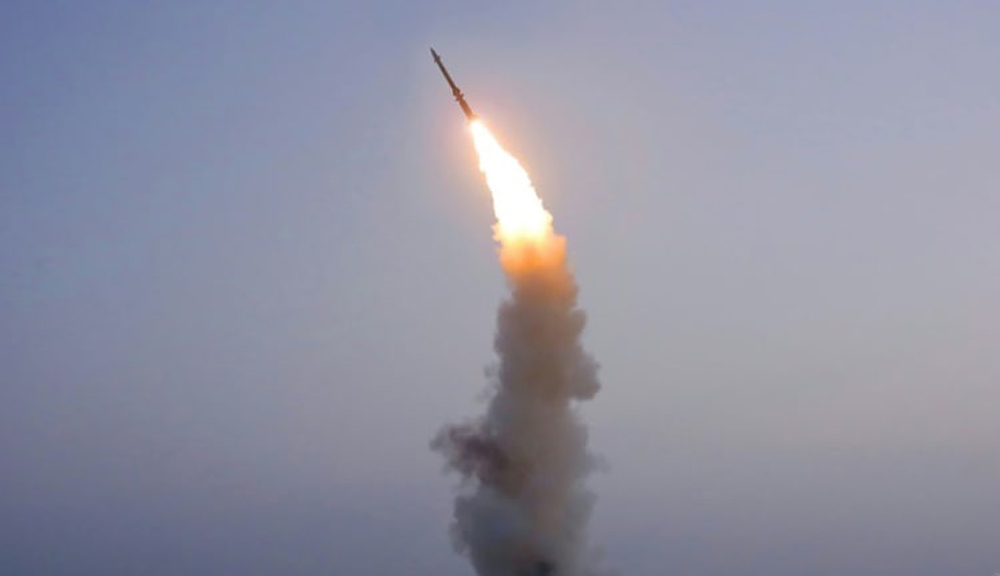
SEOUL, Jan 5, 2022 (BSS/AFP) - North Korea fired what appeared to be a
ballistic missile into the sea on Wednesday, South Korea and Japan said, in
the first such launch by Pyongyang this year.
In the decade since Kim Jong Un took power, North Korea has seen rapid
progress in its military technology at the cost of international sanctions.
The nuclear-armed nation's first apparent weapons launch of 2022 followed
a year of major arms tests despite the severe economic hardship during the
coronavirus pandemic.
The South Korean military said the North fired what is "presumed to be a
ballistic missile" towards the sea east of the peninsula at around 8:10 am
(2310 GMT Tuesday).
After an emergency meeting, South Korea's national security council
"expressed concerns over the launch", according to a statement by the
president's office.
Japanese Prime Minister Fumio Kishida described it as a "possible
ballistic missile launch".
"It is truly regrettable that North Korea has continuously launched
missiles since last year," he told reporters.
Kishida said the Japanese government was analysing details, including how
many missiles may have been launched.
"There have been no reports of damage to Japanese aircraft and vessels so
far," Japan's top government spokesman Hirokazu Matsuno told reporters.
"We are continuing analysis, but if it took a normal orbit, it is expected
to have travelled about 500 kilometres and fallen outside Japan's exclusive
economic zone."
The launch followed a speech by Kim last week in which he said North Korea
would continue to build up its military capabilities.
"I expect North Korea to continue refining its arsenal as a way to improve
its strategic position at a time of political change in the region," Jean
Lee, a senior fellow at the Washington-based Woodrow Wilson International
Center, told AFP.
In 2021, North Korea said it successfully tested a new type of submarine-
launched ballistic missile, a long-range cruise missile, a train-launched
weapon, and what it described as a hypersonic warhead.
- Stalled dialogue -
The dialogue between Washington and Pyongyang remains stalled, following
the collapse of talks between Kim and then-president Donald Trump in 2019.
Under Trump's successor Joe Biden, the United States has repeatedly
declared its willingness to meet North Korean representatives, while saying
it will seek denuclearisation.
But Pyongyang has so far dismissed the offer, accusing Washington of
pursuing "hostile" policies.
At the end of a key meeting of the ruling Workers' Party last week, he did
not mention the United States at all.
Instead of the policy positions on diplomacy for which Kim's New Year
statements have been closely watched in recent years, he focused on food
security and development in an extensive speech.
But he said Pyongyang would continue to boost its capabilities keeping in
mind "the military environment of the Korean peninsula" and the changing
international situation.
"Pyongyang is sending the message to the US that it will not change and
therefore Washington must give in," Shin Beom-chul, a researcher at the Korea
Research Institute for National Strategy, told AFP.
North Korea is under multiple sets of international sanctions over its
nuclear and ballistic missile programmes.
The impoverished nation has also been under a rigid self-imposed
coronavirus blockade that has hammered its economy.
The worsening economic situation during the pandemic, however, has not
blunted those programmes, and North Korea has continued to pursue weapons
development, a UN report said in October.
Concerns have grown about a full-blown food crisis in North Korea, and a
United Nations human rights expert warned in October that the most vulnerable
were "at risk of starvation".