Tuesday
04 August, 2026
News Flash
News Flash
By Md Manikul Azad
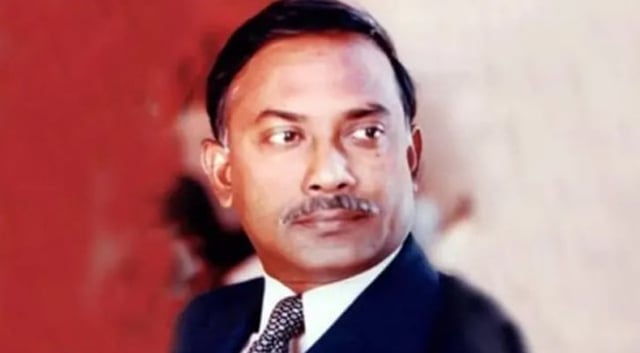
DHAKA, Jan 18, 2026 (BSS) - Amid a gentle winter veiled in drifting clouds and soft mist, nature rested in quiet serenity. In that tranquil, almost poetic setting at Bagbari in Bogura, Ziaur Rahman was born on January 19, 1936, destined to rise as one of history's greatest sons of the soil.
He is the great proclaimer of the country's independence, commander of the Liberation War time Z Force, army chief, architect of multiparty democracy and modern Bangladesh, and founder chairman of the Bangladesh Nationalist Party (BNP).
His leadership shaped the nation's political destiny.
Tomorrow (January 19) is the 90th birth anniversary of the greatest and visionary leader of the history.
The nation is remembering the great son of the soil with due respect for his historic and unforgettable contribution, who later emerged as a seasoned and popular statesman.
His uncompromised patriotism, steadfast commitment to democratic norms and values and profound love and respect for the country and its people endeared him to the nation, elevating him into a truly beloved and iconic figure.
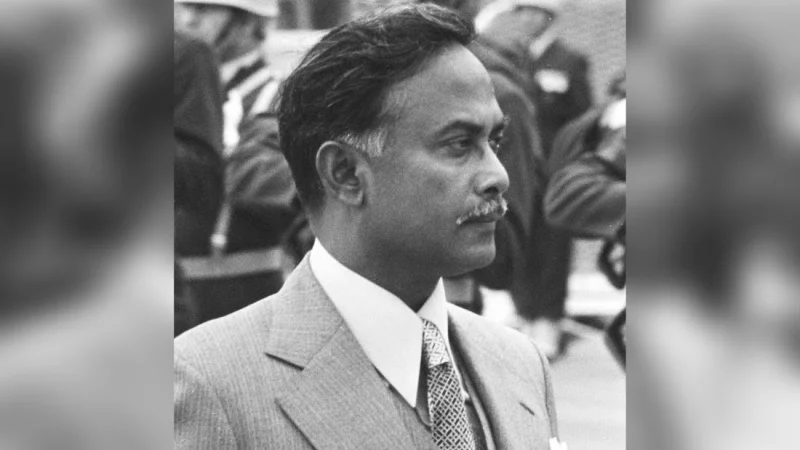
He spent his childhood in Kolkata, where his father, Mansur Rahman, served as a scientific officer of the then British government. He studied up to class seven at Hare School, one of the oldest and most prestigious educational institutions, located at 87 College Street and founded by renowned educational reformer David Hare.
After the Partition in 1947, Ziaur Rahman moved to Karachi with his family, where he continued his studies at DJ Sindh Government Science College, a historic institution, established in 1887.
While studying at the college, he joined the Pakistan Military Academy as an officer cadet in 1953 and received commando training as a second lieutenant in 1955.
Ziaur Rahman joined the second batch of the East Bengal Regiment at Joydebpur Sub-Cantonment, near Dhaka as second-in-command in April 1967 and in the same year, he proceeded to West Germany for advanced military training.
In September 1970, he was posted to Chittagong (now Chattogram), with his base at Sholoshahar Bazar.
On March 25, 1971 the Pakistani occupation forces swooped on the armless people of the East Pakistan and soon he joined the Liberation War. On the nation's darkest day in 1971, his unforgettable voice -- I, Major Zia, do hereby declare -- infused among countless hearts the hope and courage to wage the Liberation War.
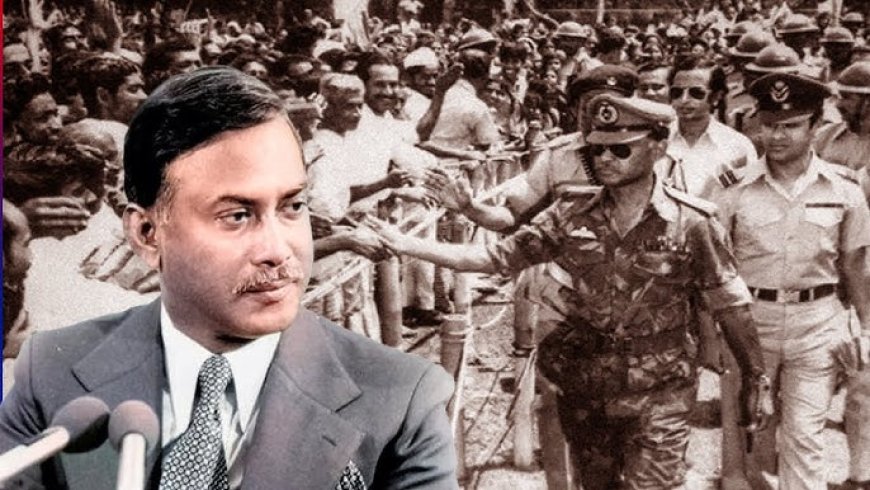
Keeping aside the love and affection for his wife and sons, he devoted himself in mobilising the armed resistance against the occupation forces raising the Z Force dutifully served as the commander of Sector No. 1, established in initial period of the war.
In recognition of his extraordinary valor, he was later awarded the gallantry Bir Uttam title.
Despite the multiple changes of power following the August 1975 change of political landscape, Ziaur Rahman remained steadfast in carrying out professional duties which he was entrusted with by the state amid the turbulences in the military forces.
Amidst the turbulence within the army on November 3, 1975, a group imprisoned him at his house but on November 7, he was freed in the historic revolution of sepoys-people and eventually entrusted with the charge of leading the state.
After taking the charge as the President, he introduced multiparty democracy, ending the one-party BAKSAL rule imposed by Sheikh Mujibur Rahman through the Fourth Amendment to the constitution on January 25 in 1975, which restricted all newspapers except four.
Ziaur Rahman later restored freedom of the press and expression by lifting the ban through the Fifth Amendment to the constitution.
He assumed the Office of President on April 21, 1977 and was subsequently elected to presidency as the head of the state and government on June 23, 1978, defeating Awami League-backed candidate Liberation War Commander-in-Chief General MAG Osmani, by a wide margin in a free, fair and competitive election.
Ziaur Rahman also revitalised political parties to restore democracy, founded the Bangladesh Nationalist Party (BNP) in 1978 and introduced the 19-point programme, a new development framework, reflecting his party's political philosophy.
He immediately set an example by restoring law and order across the country, decisively curbing corruption and all forms of crime, including theft, robbery, mugging, and hijacking restoring a sense of security public confidence in a short time.
Zia is called as a workaholic, while his tenure witnessed several landmark initiatives that transformed the nation's socio-economic landscape.
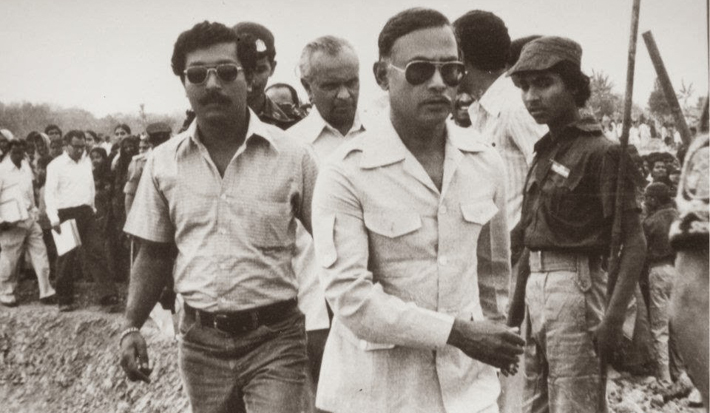
In late 1975, he launched the Self-Reliance Movement from Ulshi village in Jessore, aiming to make every rural citizen self-sufficient. This ambitious programme integrated agriculture, irrigation, tree planting, housing, electrification, healthcare, family planning and law enforcement into each of Bangladesh's 68,000 villages as self-reliant units.
He also prioritised food self-sufficiency, introducing nationwide canal-digging projects to ensure irrigation during dry seasons, promote multi-cropping and cultivate fallow land. Nearly 900 miles of canals were dug to secure year-round agricultural productivity.
To boost literacy, he initiated the Mass Literacy Programme on February 21, 1980, inspired by the spirit of the Language Movement, educating nearly four million previously illiterate citizens in a short period.
Recognising population growth as a national challenge, he promoted the "one son, one daughter" policy and recruited 38,000 family planning workers in 1976 at the village and ward level.
Ziaur Rahman strengthened local governance by formalising the Village Government system on May 30, 1980 so local issues were resolved within communities.
He also focused on youth development, establishing the Ministry of Youth in 1978, organising national youth conferences and creating youth complexes at all districts across the country to promote self-employment.
For internal security, he formed the Village Defense Party (VDP) in 1976.
He advocated for education and culture, founding the Children's Academy in 1977, launching the "Notun Kuri" competition, establishing a separate ministry of Science and Technology and founding the Islamic University to integrate general and religious education.
Realising the importance of women in development, Ziaur Rahman established the Ministry of Women's Affairs to empower women economically and socially.
Internationally, he promoted Bangladesh's garments, frozen food, handicrafts and leather products, laying the foundation for the export sector.
Through these transformative initiatives, Ziaur Rahman left an ineradicable mark on Bangladesh's overall development and nation-building.
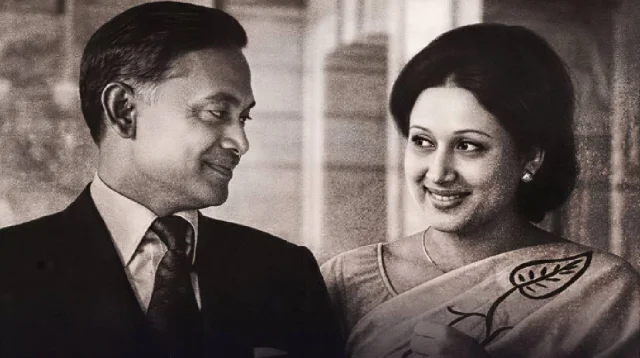
Ziaur Rahman, by pursuing an independent and balanced foreign policy, quickly earned global attention. He moved away from the Indo-Soviet block and extended friendship toward the United States and China.
His bold, smart and visionary diplomatic policies earned the trust of the Muslim world, as, during his short tenure, he played a key mediatory role in the Iran-Iraq war.
Ziaur Rahman was elected to the Al-Quds Committee, steadfastly supported the Palestinian people and helped transform the OIC into an effective organisation, the achievement still being honoured by the Muslim world today. He was the key proponent of South Asian Association for Regional Cooperation (SAARC).
As Bangladesh advances rapidly, the political and personal philosophy of Shaheed President Ziaur Rahman will continue to inspire the nation, fostering unity and a shared sense of humanity among the people, irrespective of political affiliation, religious faith and caste, or creed.
On May 30 in 1981, Ziaur Rahman was assassinated in an abortive military coup.
The course of history handed over Zia's mantle to Begum Khaleda Zia and gained a nationwide following for her uncompromising stance against autocratic rule while she became Bangladesh's first and Muslim World's second prime minister.
After her demise on December 30, 2025, BNP entrusted the couple's elder son Tarique Rahman with the charge of the party president while he took up the mantle in a changed political landscape, creating expectation for a better future.