Sunday
23 August, 2026
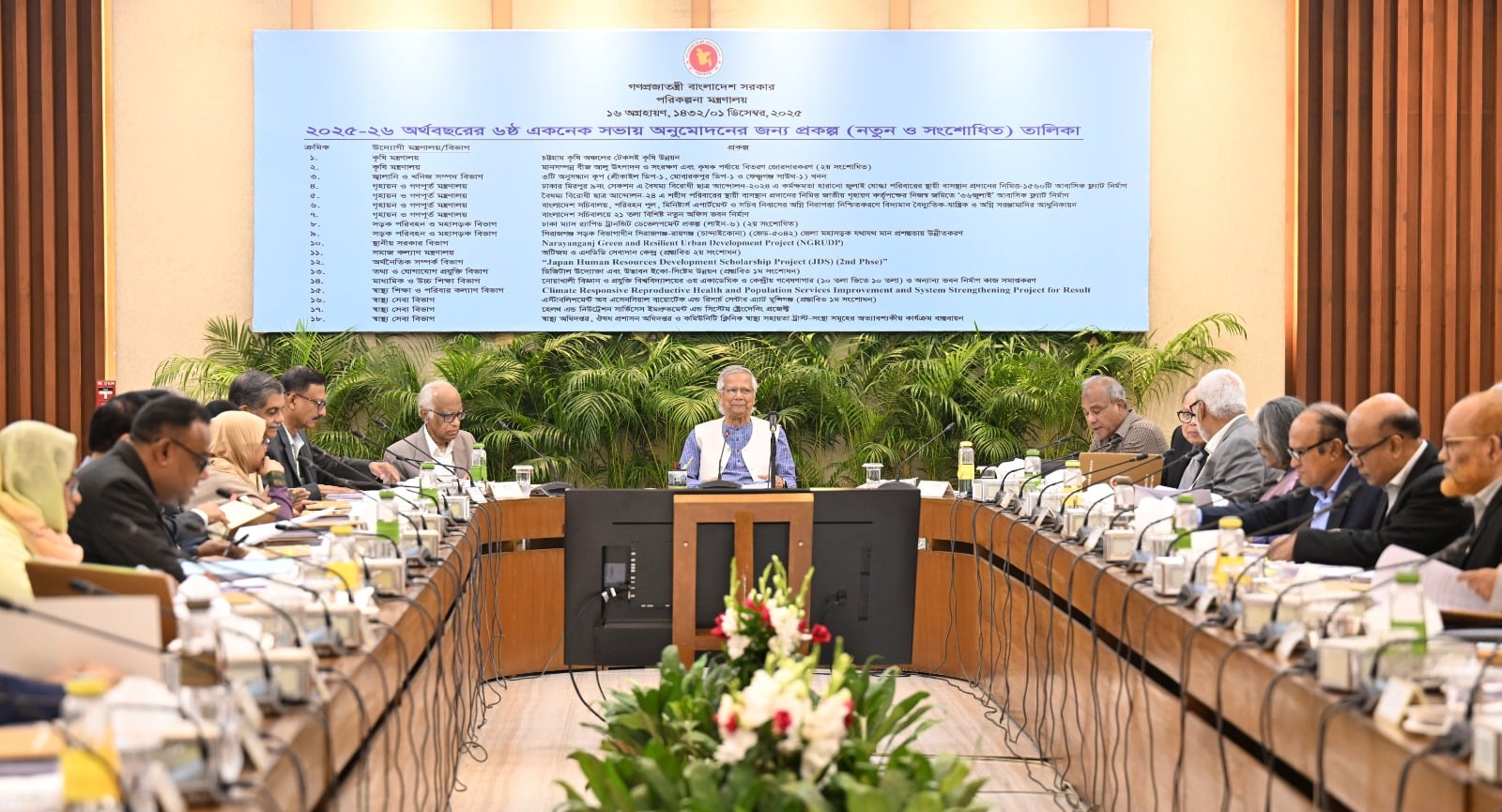
DHAKA, Dec 1, 2025 (BSS) - The Executive Committee of the National Economic
Council (ECNEC) today approved 17 development projects in different sectors
like health, power and energy, agriculture, road communication,
infrastructures involving a total estimated cost of Taka 15,383.51 crore to
infuse dynamism in the country's development initiatives.
Of this, Taka 9,451.84 crore will come from the government's own funds, while
Taka 5,609.70 crore from project loans, and Taka 379.31 crore from the
concerned organisation's own resources.
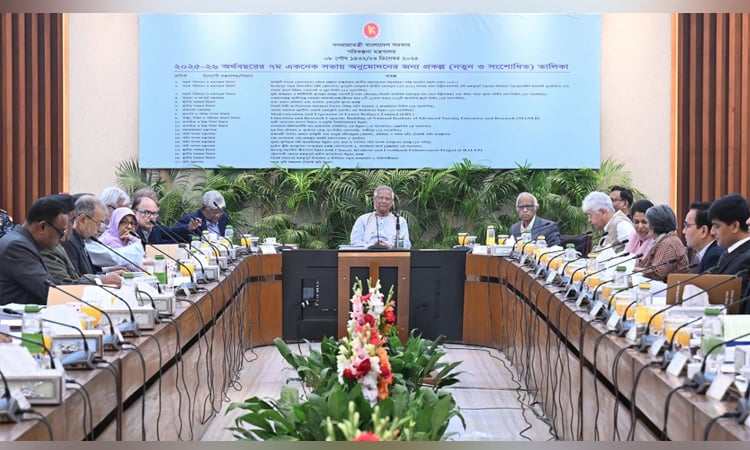
The approval came at a meeting of the ECNEC held today at the NEC Conference
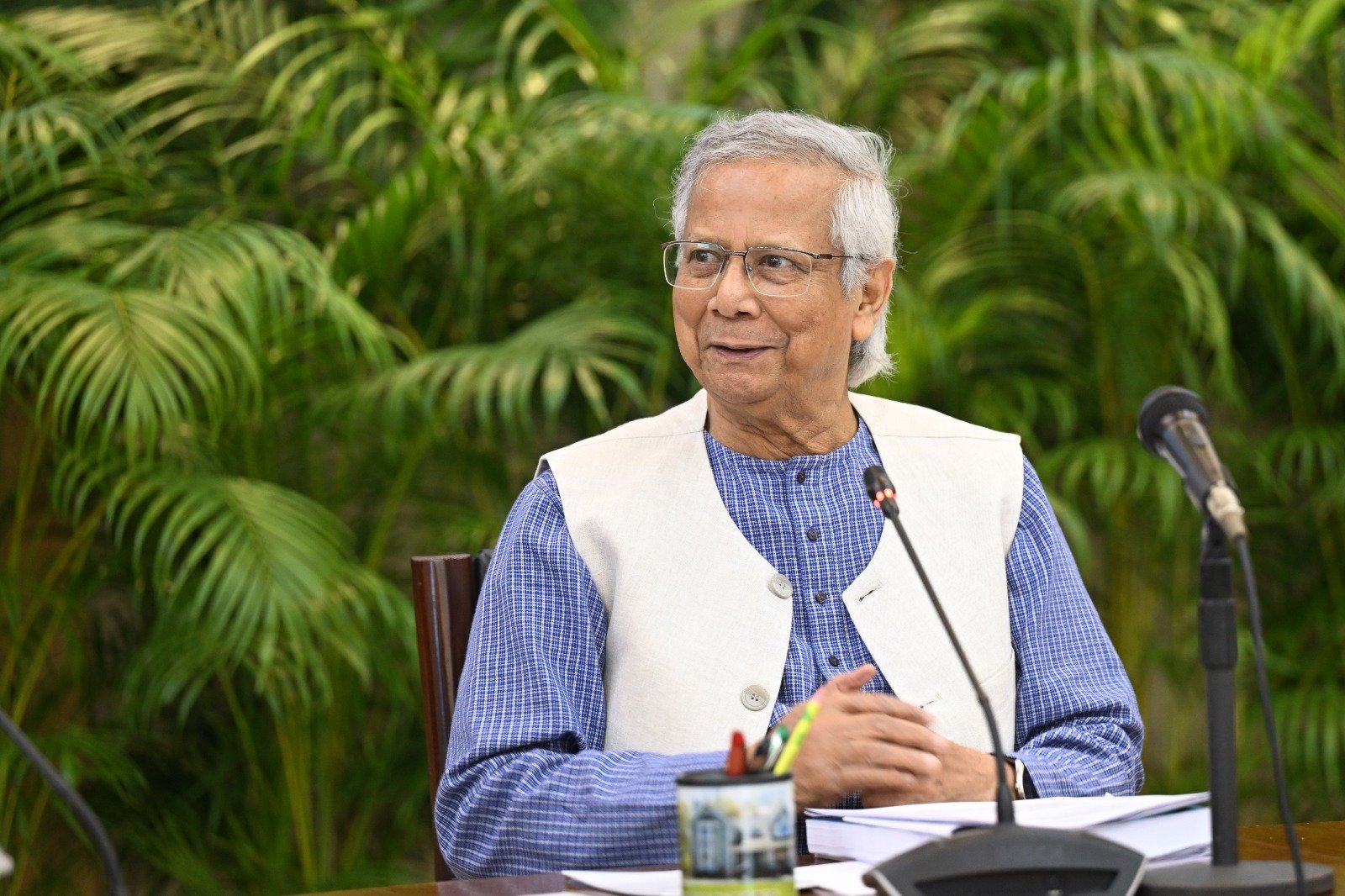
Room in the city's Sher-e-Bangla Nagar area chaired by Chief Adviser and
ECNEC Chairperson Professor Dr Muhammad Yunus.
Of the approved projects, 12 are new and five are revised projects.
Briefing reporters after the meeting, Planning Adviser Dr Wahiduddin Mahmud
said although the government's ambitious reforms to the public procurement
system are temporarily slowing down the implementation of the Annual
Development Programme (ADP), but the overhaul is essential to dismantle long-
standing contractor monopolies and ensure greater transparency in project
execution.
Dr Mahmud admitted that ADP implementation has not become dynamic despite
continual efforts.
"The old problems are still there. The biggest challenge is that people are
now reluctant to take up the role of project director, and contractors are no
longer showing the same level of enthusiasm as before," he said.
According to him, this hesitation stems mainly from the introduction of the
new Public Procurement Policy 2025, which has brought in far stricter
transparency standards.
"For years, a handful of powerful contractors controlled major national
infrastructure works-highways, railways, everything. The evaluation system
was shaped in a way that ensured that only those who previously secured the
contracts would get them again," he continued.
He emphasised that the 2025 policy is a "major reform", making it impossible
for any party to secure contracts anonymously or through proxy arrangements.
"One can't take a contract under someone else's name. Anyone winning a
contract must disclose full information about their businesses, tax status,
and any affiliated enterprises. Everything must be open," he explained.
Dr Mahmud stated that this transparency requirement has made the contracting
environment stricter and has somewhat discouraged habitual contractors.
At the same time, the government has incorporated provisions allowing new and
young entrepreneurs-even those without previous contracting experience-to
participate as minor partners in large tenders.
"We can't let the same contractors dominate forever. Those who run their
businesses honestly and pay taxes should have the opportunity to enter this
sector. Particularly the younger generation must be given space," he noted.
He added that the new digital and fully online evaluation system-from the
upazila level to the highest purchase committees-is also taking time to
adjust to, especially for large purchases. "They will have to learn. That's
why there is some delay," he said.
The Planning Adviser also pointed to structural challenges at the local
level. Upazila and district councils, now run entirely by government
officials until elected representatives return under a future political
government, are saddled with numerous projects but lack the time to supervise
them adequately.
To address this, ECNEC has recently attached a set of mandatory conditions to
all newly approved locally implemented projects, especially those under the
Local Government Engineering Department (LGED).
One key requirement is institutionalised community monitoring, ensuring that
beneficiaries and local residents are involved in project oversight. "This is
logical. People living in the area know best whether the road, bridge, or
construction work is being done with quality materials. They should be able
to resist poor-quality work," he said.
He added that although such conditions existed before, they were rarely
enforced. ECNEC is now making these obligations binding.
In addition, project locations must display publicly accessible information-
including total cost, progress, contractor identity, and details of materials
used.
Dr Mahmud noted that similar disclosure rules had been introduced during the
late 1990s when he previously served in government, "but after some time
everyone forgets".
The adviser stressed that transparency, local involvement, and strict
monitoring are essential as the country seeks to boost employment through
community-level development works.
The 17 projects approved today are as follows:
Sustainable Agricultural Development in Chattogram Agricultural Region with
Taka 255.96 crore; Quality Seed Potato Production, Storage and Distribution
to Farmers (Second Revised) with an additional cost of Taka 411.31 crore;
Drilling of Three Exploration Wells (Shrikail Deep-1, Mobarakpur Deep-1,
Fenchuganj South-1) with Taka 1,136.25 crore; Construction of Sonagazi 220 MW
Solar Power Plant with Taka 1,888.10 crore; Construction of 1,560 Residential
Flats for Families of July warriors Disabled During the Anti-Discrimination
Student Movement 2024 at Mirpur Section 9 with Taka 1,344.41 crore;
Construction of '36 July' Residential Flats for Families of Martyrs of the
Anti-Discrimination Student Movement 2024 on NHA-Owned Land with Taka 761.16
crore; Modernization of Existing Electrical, Mechanical and Fire Safety
Equipment at Bangladesh Secretariat, Transport Pool, Ministers' Apartments
and Secretary Residences with Taka 112.87 crore; Dhaka Mass Rapid Transit
Development Project (Line 6) (Third Revised) with a reduced cost of Taka
754.26 crore; Upgrading of Sirajganj-Raiganj (Chandaikona) (Z-5042) District
Highway to Standard Width with Taka 283.24 crore.
The other projects approved in the meeting are: Narayanganj Green and
Resilient Urban Development Project (NGRUDP) with Taka 1,694.75 crore; Autism
and NDD Service Center (2nd Revised) with an additional cost of Taka 50.45
crore; Japan Human Resources Development Scholarship Project (JDS) (Second
Phase) with Taka 251.59 crore; Digital Entrepreneurship and Innovation
Ecosystem Development (First Revised) with an additional cost of Taka 178.12
crore; Completion of Construction of 10-Storey Academic and Central Research
Laboratory Building and Other Facilities at Noakhali Science and Technology
University with Taka 334.46 crore; Climate Responsive Reproductive Health and
Population Services Improvement and System Strengthening for Results with
Taka 4,062.07 crore; Establishment of Essential Biotech and Research Center,
Munshiganj (1st Revised) with an additional cost of Taka 385 crore;
Implementation of Essential Activities of DGHS, DGDA and Community Clinic
Health Support Trust with Taka 2,987.99 crore.
The meeting was also informed about 15 projects costing less than Taka 50
crore that were previously approved by the Planning Adviser.
The meeting was attended by Planning Adviser Dr Wahiduddin Mahmud; Foreign
Affairs Adviser Md Touhid Hossain; Food and Land Adviser Ali Imam Majumder;
Social Welfare and Women and Children Affairs Adviser Sharmin S. Murshid;
Home and Agriculture Adviser Lt Gen Md Jahangir Alam Chowdhury (Retd);
Industries and Housing and Public Works Adviser Adilur Rahman Khan; Power,
Energy and Mineral Resources, Road Transport and Bridges and Railways Adviser
Muhammad Fouzul Kabir Khan; Environment, Forest and Climate Change and Water
Resources Adviser Syeda Rizwana Hasan; Health and Family Welfare Adviser
Nurjahan Begum; Education Adviser Prof Dr Chowdhury Rafiqul Abrar, as well as
senior government officials.