Monday
24 August, 2026
News Flash
News Flash
By Rumana Jaman
DHAKA, May 30, 2026 (BSS)- BNP Standing Committee Member Dr. Khandaker Mosharraf Hossain has said that Shaheed President Ziaur Rahman's profound patriotism, farsightedness and self-confidence were the driving force behind Bangladesh's victory in the Liberation War and his statesmanlike leadership in the years that followed.
Dr. Khandaker Mosharraf said: from declaring rebellion against Pakistan in 1971 to the Sipahi-Janata uprising of 1975, Ziaur Rahman demonstrated unwavering self-confidence at every decisive moment of his life.
He said that by establishing Bangladeshi nationalism, Ziaur Rahman set a remarkable example of uniting people from all walks of life under a single thread of identity.
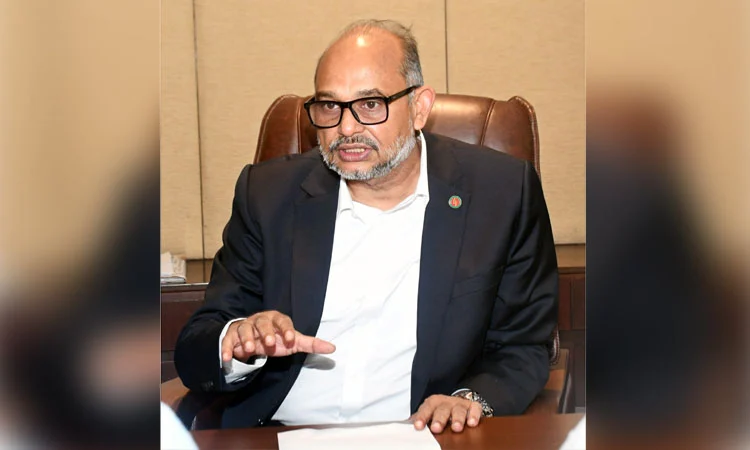
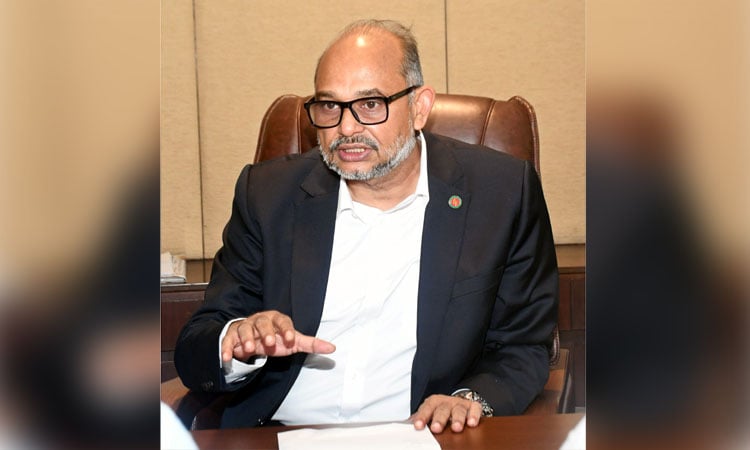
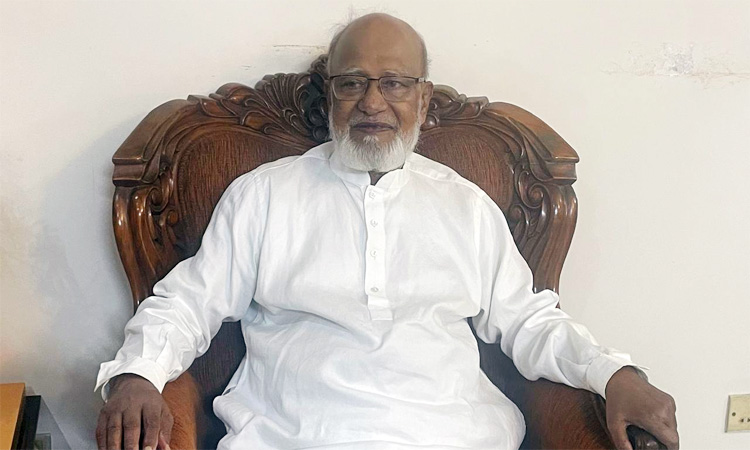
The BNP's former Member of Parliament made these remarks in an exclusive interview with BSS on the occasion of the 45th martyrdom anniversary of Shaheed President Ziaur Rahman.
"Ziaur Rahman's entire life was wrapped in success. From his military career to the declaration of independence, his service as a Sector Commander during the Liberation War, his return to the cantonment, and ultimately his emergence through the Sipahi-Janata revolution of November 7 amid the successive coups and counter-coups, all are the stories of achievements," he noted
In navigating the nation through its most turbulent times, Shaheed Zia stood as a true guiding light, he said.
Recalling the post-liberation period, he said, “Between August 15 and November 7, several pivotal events unfolded in the country. On November 3, a military coup led by Brigadier Khaled Mosharraf brought down the Khandaker Mostaq government and placed Major General Ziaur Rahman under arrest. Within just five days, another military uprising took place- which the nation came to embrace as the Sipahi-Janata revolution.
Following this uprising, Shaheed Zia delivered a historic address to the nation and called upon the people to remain calm and stand firm in defence of Bangladesh.
He was subsequently appointed Chief Martial Law Administrator by the President.
"By that point, former Chief Justice Abu Sadat Mohammad Sayem had assumed the presidency in place of Khandaker Mostaq. Later, Justice Sayem, citing deteriorating health, expressed his inability to continue in the role and urged Major General Ziaur Rahman to take over as President," he said, commenting that this transition was historically significant because it marked the country's return from one-party rule to a multiparty democratic system.
Dr. Mosharraf said, "After assuming the presidency, Ziaur Rahman did not choose to hold power without a popular mandate. Instead, he organised a 'Yes-No' referendum, in which the people expressed their overwhelming support for him.
"Armed with that mandate, he then called a presidential election. In that election, the Awami League fielded General M.A.G. Osmani under the National Democratic Unity Front banner against Ziaur Rahman, who contested as the candidate of the Bangladesh Nationalist Front. Ziaur Rahman won that election by a landslide as well," he said.
He noted that Ziaur Rahman launched an extensive programme of work immediately upon assuming the presidency.
“Ziaur Rahman was an insightful politician and a nationalist leader of rare vision. He understood that steering a newly independent country forward required not only long-term planning but also coordinated national effort. To that end, he presented a 19-point political philosophy and drew talented professionals and intellectuals into active politics to implement it," he added.
Noting Ziaur Rahman's moves to empower women for strengthening national progress, the BNP leader said, "He also recognised that women constituted half the national population and that genuine development was impossible if they remained marginalised. He therefore introduced a range of initiatives to bring women into the productive workforce."
Dr. Mosharraf said Ziaur Rahman gave people a distinct identity through Bangladeshi nationalism.
“After Ziaur Rahman came to power, Bangladesh moved from one-party rule back to multiparty politics which resulted in a shift that brought about a fundamental transformation in the country's political landscape," he said.
Arguing in favour of the Bangladeshi nationalism introduced by Ziaur Rahman, Dr. Mosharraf said Bangladesh is home to communities of varying beliefs, religions and ways of life. Their cultures and lifestyles differ considerably.
"Ziaur Rahman therefore believed that nationalism should be grounded not in language or culture alone, but in shared territorial identity," he noted.
He restored press freedom, curbed corruption and lawlessness, and steered the country towards food self-sufficiency. He revolutionised agriculture through canal-excavation programmes and established BADC to ensure the proper distribution of fertilisers, seeds and pesticides among farmers," Dr Mosharraf said.
"He revived closed industries, established new ones, and transformed the unemployed into a productive workforce," the BNP leader further said.
He said, “It was under Ziaur Rahman who laid the foundation of the garments industry in this country. He was also the first to initiate rural electrification to drive development through cottage industries, and he established BAPEX.
“Zia pursued a politics of production and welfare for farmers and workers so and empowered youth and women as engines of national progress," he said.
Noting that Ziaur Rahman founded the BNP with development and productive politics at its core, Dr. Mosharraf said, "After Ziaur Rahman was killed, many expected the BNP to collapse but it did not happen. In his absence, Begum Khaleda Zia took charge of the party and waged a relentless struggle for nine years to oust the autocratic government.”
"She is no longer with us today. But there has been no leader in Bangladesh quite like her. She was a leader of such popularity and such absolute refusal to compromise," he said.
He called on the young generation to follow the path shown by Shaheed President Ziaur Rahman and Prime Minister Begum Khaleda Zia to turn Bangladesh into a nation of dignity and as one of the most respected nations in the world.