Tuesday
25 August, 2026
News Flash
News Flash
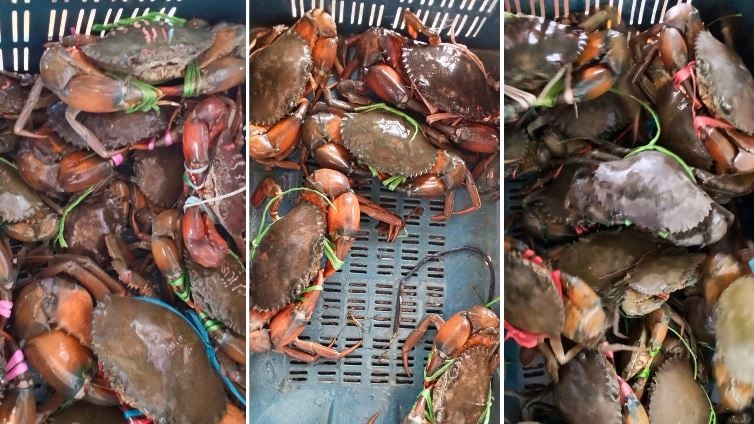
KHULNA, July 19, 2026 (BSS) – Commercial crab farming has emerged as a profitable alternative to traditional rice and fish cultivation in Dumuria upazila of Khulna, transforming the livelihoods of hundreds of farmers while creating new opportunities for export earnings.
Favourable climatic conditions, easy access to saline water and strong international demand have encouraged many unemployed youths and small farmers to engage in crab fattening, making the sector one of the region's fastest-growing aquaculture industries.
Commercial farms across several unions of the upazila are producing high-quality crabs for both domestic consumption and export markets.
Farmers said crab farming requires comparatively lower investment, is less vulnerable to disease outbreaks than conventional fish farming and yields market-ready crabs within three to four months.
Both soft-shell and hard-shell crab fattening methods are widely practised, ensuring attractive returns.
Crabs, depending on the species, breed in both freshwater and saltwater. However, freshwater crabs are smaller, while saltwater crabs are larger.
Of the 15 crab species found in the country, four are freshwater species and 11 are saltwater species. The red crab is the most commercially important species and is the largest among them.
During visits to different villages in Dumuria on Saturday, BSS found that crab farming has become highly popular. Farmers attributed this to two main reasons: it is economically profitable, and crabs are an affordable source of food.
Local farmers said they used to cultivate paddy during the cropping season a few years ago. Before Cyclone Aila, farmers in the region cultivated only one crop annually. After the cyclone, however, many shifted to crab farming on land that had previously been used for double-cropping.
More than 5,000 farmers, including many women, have become self-reliant through crab farming in the upazila. Although Dumuria is known as the "kingdom of agriculture and fish" in the coastal belt, it is now also emerging as a major hub for crab farming.
According to the Department of Fisheries in Khulna Division, nearly 28,000 farmers, including 9,000 women, have become self-reliant through training and marketing support provided by the department.
Talking to BSS, Dumuria Senior Fisheries Officer Sohel Md. Zillur Rahman Rigan said the area's soil and water are highly suitable for crab farming.
"The Department of Fisheries is providing farmers with regular technical support, guidance on quality seed selection and proper farm management. As crab farming involves lower risks and higher profits, more entrepreneurs are entering the sector, contributing significantly to the rural economy," he said.
Khulna District Fisheries Officer Md. Badruzzaman said crabs produced in the region enjoy strong demand in international markets, including China, Singapore, Malaysia, Hong Kong, Thailand, South Korea, Taiwan, Australia, Japan and the United Arab Emirates.
He said the government is working to strengthen market linkages to ensure fair prices for farmers, reduce the role of middlemen and expand environmentally sustainable crab farming.
Ashutosh Ghosh, 35, a crab farmer from Tipna village in Dumuria upazila, spends most of his day catching crabs.
The father of four said his family became interested in crab farming because it is more profitable than fish or paddy cultivation.
Crab farmer Monali Saha said crab farming has become their main source of livelihood.
"We have been engaged in crab farming for the past five years," she said.
"My husband and I cultivate crabs on one acre of land, but middlemen earn more than we do because we cannot market our products directly," she added.
Salman Sheikh, Swapan Mondal and Rishikesh Das, farmers from Madartala, Magurkhali, Sahos and Shovna unions of the upazila, said many families that once struggled with debt have achieved financial stability through crab farming, with some building permanent houses and purchasing land.
They also urged the government to provide easier access to credit and expand hatchery facilities for artificial seed production, saying such support could help crab farming emerge as a major export-earning sector alongside the country's shrimp industry.