Wednesday
05 August, 2026
News Flash
News Flash
By Md Aynal Haque
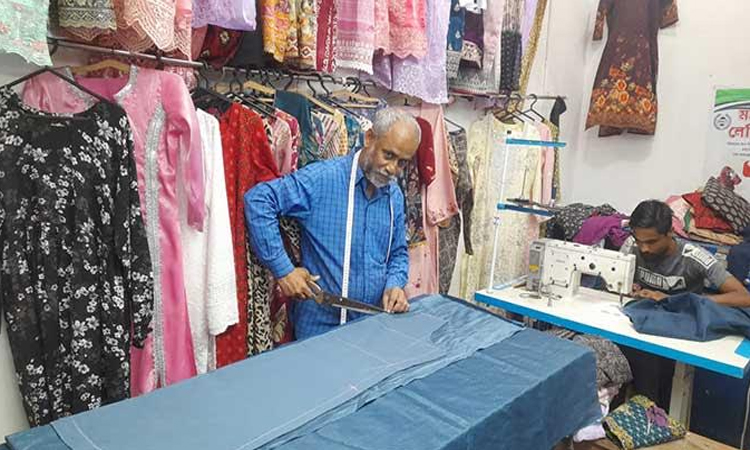
RAJSHAHI, Mar 14, 2026 (BSS): With the holy festival of Eid-ul-Fitr fast approaching, tailor shops and clothing neighborhoods across Rajshahi have turned into bustling hubs of activity, as artisans race against time to complete a surge of clothing orders from eager customers.
From early morning until late at night-and in some cases even until sehri-the rhythmic hum of sewing machines fills markets and neighborhoods in the city and its surrounding upazilas. Tailors say that although orders started coming in during the first week of Ramadan, the pressure has increased significantly in recent days as Eid draws closer.
Small and large tailor shops in Rajshahi city as well as in different upazila markets are now crowded with customers bringing fabrics for new outfits. Men, women, children and the elderly are visiting shops to provide measurements, while many customers remain anxious about receiving their garments before the festival.
Tailor shop owners say they are struggling to cope with the heavy workload despite hiring additional workers.
They said demand has increased sharply for three-piece suits, gowns, kurtis, panjabis, pajamas, fatua, sherwanis and children's dresses ahead of Eid. Customized designs have become especially popular among young women, many of whom bring photos from social media platforms and request similar styles.
As a result, making a single garment now takes longer than before.
Tailors said that while a simple salwar-kameez previously took about one to one and a half hours to stitch, the time has nearly doubled due to additional design work, lace attachments, hand embroidery and detailed finishing.
A tailor from Ranibazar, who has been in the profession for around 15 years, said such pressure before Eid is common every year, but the volume of orders appears higher this season.
Abdur Razzaq, proprietor of New Riden Tailors at Saheb Bazar Cloth Market, said they stopped taking new orders after the 10th of Ramadan to manage existing work.
"We remain busy every year during Eid. Now we are focusing on delivering the orders already placed so that customers can receive their clothes on time," he said.
Visits to local markets show that people are now more conscious about their clothing choices. While ready-made garments remain popular, many customers still prefer tailor-made outfits for better comfort and fitting.
However, due to the overwhelming workload, many shops have already stopped accepting new orders. Notices reading "Eid orders closed" are hanging in front of several shops, though some still accept limited work from regular customers.
Artisans say working long hours while fasting is physically demanding. Despite the fatigue, they continue working late into the night to meet delivery deadlines. Shop owners are also paying overtime wages to employees during the busy period.
Customers, meanwhile, say stitching costs have increased compared to last year.
Earlier, stitching a three-piece outfit cost between Tk 800 and Tk 1,000, but now the price ranges from Tk 1,200 to Tk 1,800. Similar increases have been reported for panjabi and pajama stitching.
Suraiya Akhtar, a resident of the Bhadra area, said she placed her order at the beginning of Ramadan to avoid the last-minute rush.
"There is always a crowd at tailor shops before Eid. I came today to collect the dress, but the stitching cost is higher than before," she said.
Samrat Hossain from Naodapara said many people still prefer tailor-made clothes for comfort.
"For Eid outfits we usually go to tailors because ready-made clothes often do not fit perfectly. Knowing that shops become very busy before Eid, I placed my order even before Ramadan," he said.
Tailors attribute the higher stitching charges to increased prices of fabric, thread, buttons, lace and other accessories. Rising electricity bills and shop rents have also added to operational costs.
Rajshahi city has several hundred small and large tailor shops. During the Eid season, these shops create temporary employment opportunities for many students and unemployed youths who assist in cutting, attaching buttons and finishing garments.
Local traders say the Eid season also boosts sales in fabric markets and accessory businesses such as lace, ribbon and button shops. Many traders claim that more than half of their monthly sales occur during the final days leading up to Eid.
Sajjad Hossain, director of Modern Monika Ladies Tailors in the city, said they are working hard to complete all orders before the festival.
"Everyone wants new clothes during Eid. Our workload increases significantly at this time, but we are trying our best to deliver quality work and satisfy our customers," he said.