Wednesday
03 June, 2026
News Flash
News Flash
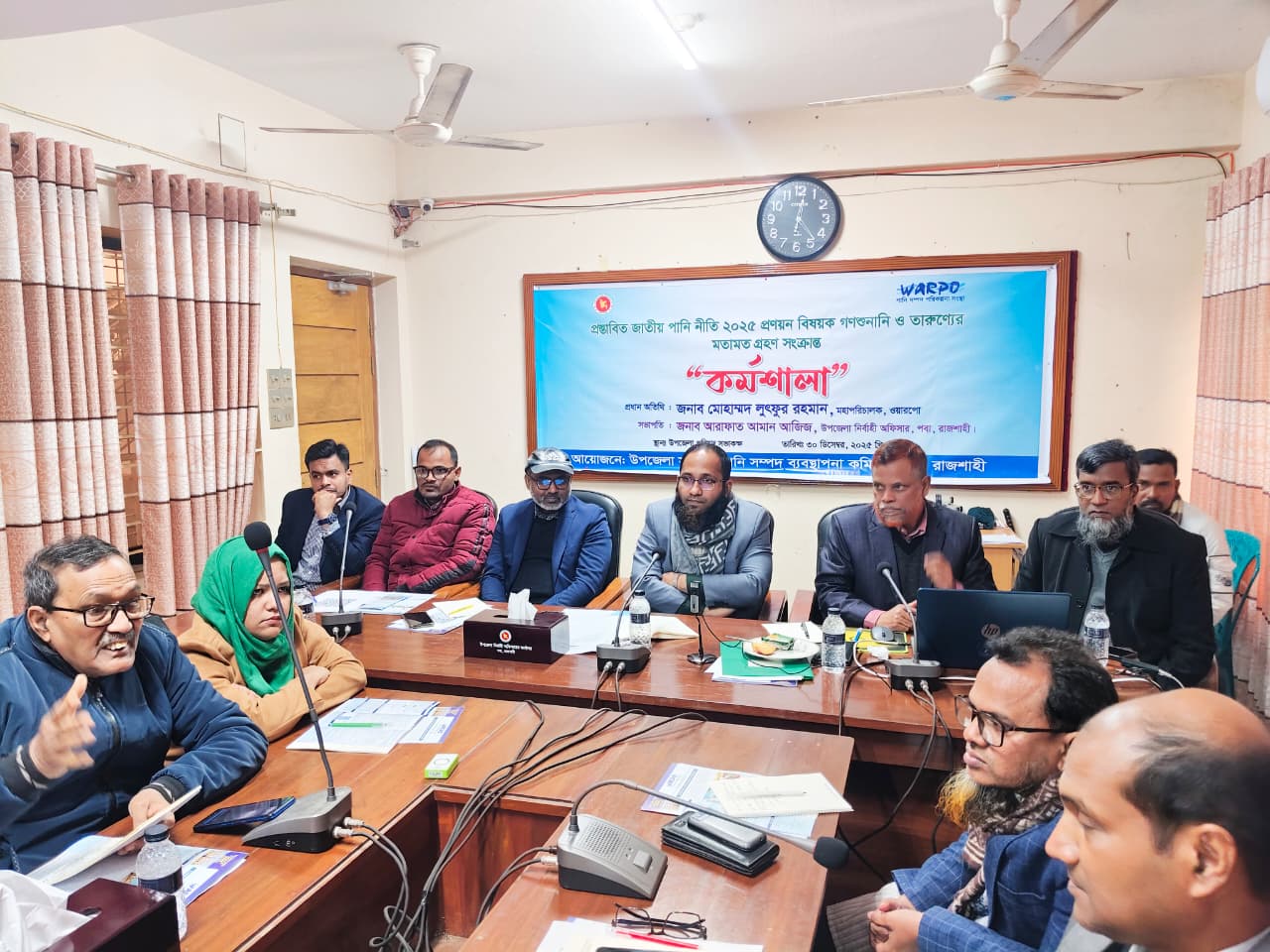
RAJSHAHI, Dec 30, 2025 (BSS) - Water experts at a workshop here today unanimously termed formulation of the proposed national water policy 2025 as time-fitting and essential to face the gradually mounting underground water crisis in the region.
They observed the gradually declining underground water level has been posing a serious threat to the agriculture, drinkable water and environment in the vast areas of Rajshahi, Chapainawabganj and Naogaon districts.
In the adverse situation, the experts underscored the need for imposing strict restrictions on uplifting underground water side by side with promoting alternative water resource management.
They made the observation in a workshop titled “Proposed Water Policy-2025: Public Hearing and Youth Opinion” at Paba Upazila Hall room in the district.
The Water Resources Planning Organization (WARPO) and Upazila Integrated Water Resource Management Committee jointly organised the workshop.
WARPO Director General Muhammad Lutfor Rahman addressed the meeting as the chief guest virtually while Upazila Nirbahi Officer (UNO) Arafat Aman Aziz was in the chair.
WARPO Director Shah Muzahid Uddin welcomed the participants stressing the need for ensuring water resource management through proper implementation of water law and rules.
Assistant Commissioner (Land) Mehedi Hassan, Upazila Agriculture Officer Abdul Mannan, Upazila BMDA Engineer Mokbul Hossain and President of Heritage, Rajshahi Mahbub Siddiqui also spoke on the occasion.
The meeting was told that a gazette has recently been published declaring 4,911 villages in 25 upazilas under Rajshahi, Naogaon and Chapainawabganj districts as water-stressed.
As per the decision of the 18th meeting of the National Water Resources Council (NWRC), the area has been declared water-stressed for 10 years.
Restrictions have been imposed on the extraction of underground water for any other purposes, excluding only drinking water.
According to the gazette notification, no more extracted water will be used for irrigation and other industrial purposes in the restricted area.
In his remarks, WARPO Director General Muhammad Lutfor Rahman said the over-extraction of groundwater for irrigation is a major issue, leading to declining water tables. Droughts and erratic rainfall patterns due to climate change are intensifying water scarcity.
Water resource management in the Barind region is crucial due to declining groundwater levels, exacerbated by climate change and unsustainable irrigation practices.
A holistic approach is needed, focusing on surface water conservation, efficient supply, demand management, and community involvement to ensure sustainable water resources for the region.