Saturday
22 August, 2026
By Md Aynal Haque
RAJSHAHI, Dec 20, 2025 (BSS) - Homestead gardening has been contributing significantly to making rural communities more self-reliant while enhancing overall food security in the region, particularly in the vast Barind tract.
According to concerned sources, homestead gardening is booming, driven by increased demand for nutritious, chemical-free food and the economic benefits it brings to rural families.
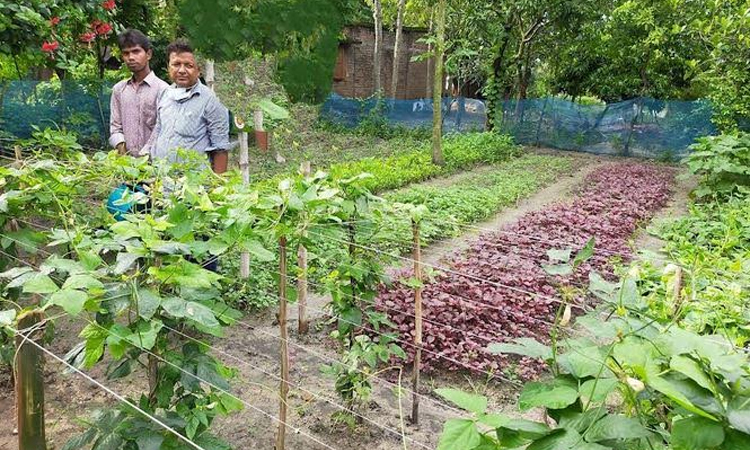
With support from the Department of Agricultural Extension (DAE), people are cultivating vegetables on rooftops and fallow land to achieve self-sufficiency and generate income.
This trend is providing fresh and safe vegetables, reducing reliance on market produce often mixed with chemicals, while creating opportunities for cash crop production and improving the livelihoods of low-income families and smallholder farmers.
Ali Hossain, a farmer of Baroipara village under Paba Upazila, cultivated bottle gourd, cucumber and coriander on 16 decimals of land at his homestead using organic fertilizer this year and achieved the expected yield.
Muhammad Shahabuddin, a resident of Palpur village under Godagari Upazila, told BSS, "I have set up a vegetable and fruit garden on two decimals of unused land around my house and now enjoy fresh produce throughout the year."
After meeting family needs, he sold produce such as papaya, banana, kulboroi (plum), kamranga (star fruit), dalim (pomegranate), bottle gourd, chili, onion and garlic, earning around Taka 8,500 over the past year.
Shahabuddin said the garden has become a major source of both income and nutrition for his family.
Piarul Islam of Phulbari village has also improved his livelihood through homestead gardening.
Similarly, Shaheda Begum of Ishwaripur village described the initiative as very helpful in improving living standards and livelihood conditions.
She said she learned about the importance of bio-fertilizer, seed conservation and seed exchange, as well as the proper and sustainable use of land to protect its productivity.
She added that her vegetables are chemical-free and most of them are sold directly from her house, reducing the need to take produce to the market.
Recalling her past hardships, she said she struggled to increase her family income and later started growing vegetables at her homestead alongside rearing poultry birds and goats.
Currently, she meets the nutritional needs of her family by consuming chemical-free vegetables, milk and meat from domestic animals.
Sub-Assistant Agriculture Officer Atanu Sarker said homestead gardening fosters self-sufficiency among people and uses less groundwater, which is crucial for the drought-prone Barind tract.
He said the initiative encourages the use of unused spaces such as rooftops and bare land around homes. "We are working together to make family gardening profitable and sustainable," he added.
DAE Additional Director Dr Azizur Rahman told BSS that promoting vegetable and fruit gardening is crucial in addressing the region's growing pressure on underground water resources, as these crops are comparatively less water-intensive.
He said homestead gardening is playing a vital role in improving socio-economic conditions in the region while helping to mitigate the water crisis.
Dr Rahman added that nutritious vegetable farming, including homestead cultivation, has achieved remarkable success in the region, known for its favorable climate and abundant vegetable production.
Farmers are now achieving good yields and profits from a wide range of winter and summer vegetables.
The promotion of sustainable and organic farming practices, especially among the urban poor and in drought-prone areas, is contributing significantly to this success.
Rajshahi, a major hub of vegetable production, produces around 2.5 lakh tonnes of vegetables in a single season.
Commonly grown varieties include cauliflower, cabbage, bottle gourd, spinach and red amaranth, along with high-value crops such as broccoli and beans, which have gained popularity due to attractive market prices.