Monday
24 August, 2026
News Flash
News Flash
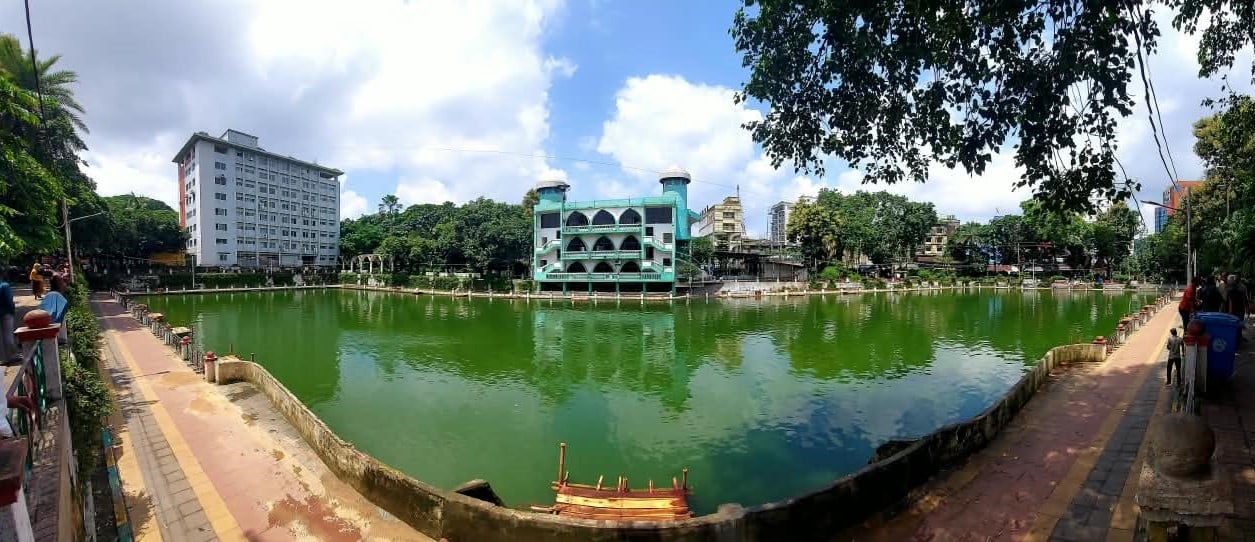
CHATTOGRAM, Aug 24, 2026 (BSS) - As rapid urbanisation has erased thousands of ponds and reservoirs in Chattogram over the past two decades, Laldighi in the heart of the city has survived as a rare exception, preserving more than 250 years of history, tradition and public memory.
Located near Andarkilla, the 2.70-acre reservoir is surrounded by some of the city's most historic landmarks. Andarkilla lies to its northwest, Chattogram Jail to the east and the Zilla Parishad building and historic Laldighi Maidan to the south.
Beyond being a waterbody, Laldighi has long been associated with the political and cultural history of Chattogram. It witnessed anti-British movements, the Language Movement of 1952, the Liberation War of 1971 and numerous public gatherings. Its name was also linked to events surrounding the mass uprising of July 2024.
Historical accounts say the East India Company took control of Chattogram in 1761, following the decline of Bengal's independence after the Battle of Plassey in 1757.
At the time, the company's land office, known as the Entekali Kachari, was painted red and became known as Lalkuthi. The nearby jail was also painted red and was called Lalghar. British guards in red turbans added to the area's association with the colour.
A small pond existed beside these buildings. According to local accounts, the afternoon sun reflected the red colour of Lalkuthi onto the pond, giving its water a reddish appearance. People began calling it Lal Pukur or Laldighi. The British authorities later enlarged the pond, turning it into the reservoir that exists today.
There are also other stories about the origin of the name. One local legend attributes it to a dramatic tale involving Lal Begum, a king and a battle near a Portuguese fort, during which the pond's water allegedly turned red. Another version says the pond was excavated during British rule at the direction of a British woman, or "Lal Memsaheb".
To the north of Laldighi stands Laldighi Shahi Jame Masjid, whose dome bears the year 1939 and the name Taqi Ismail Muhammad, a landowner from Chikdai in Raozan.
Historical accounts say he regularly spent time beside Laldighi and served as its guardian before transferring ownership of the pond to Muslim High School.
After the North-South Road was completed in the late 19th century, the Municipal Maidan was divided into two sections. The eastern portion became a public recreation area and later served as the playground of Muslim High School. It is now known as Laldighir Field.
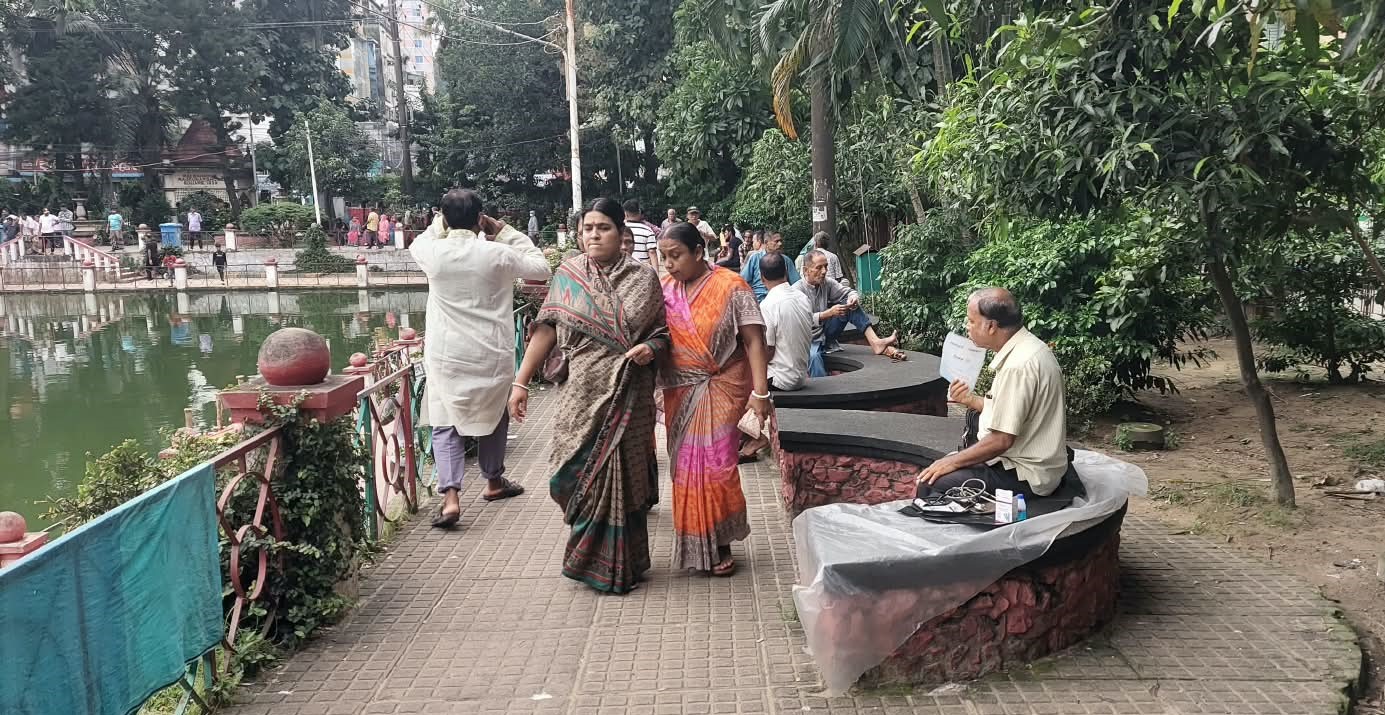
Today, the newly developed Laldighi Park, with its surrounding walls and walkways, provides one of the few open spaces in the densely built-up city centre. Residents regularly visit for walking, exercise, relaxation and socialising.
Al Mahbub Akram, who comes from Patharghata for morning exercise, told BSS that walking around Laldighi helps both his physical health and mood.
"Lack of open spaces is a major problem in the city. Laldighi Park is a great relief for us," he said, adding that he regularly spends about half an hour walking there and enjoying the fresh air.
Ruhel Md Kaikobad, a resident of the Sirajuddaula Road area, said he often visits in the afternoon after work.
"When I sit here after a day's work, my fatigue seems to disappear. Sometimes I talk with friends, and sometimes I simply enjoy the quiet," he said.
Despite the disappearance of many historic ponds across Chattogram, Laldighi has survived as both a waterbody and a living reminder of the city's past. For generations, its name has evoked political movements, cultural traditions and everyday life in the port city.
More than 250 years after its emergence, Laldighi remains not only a historic landmark but also a rare open space where Chattogram's past and present continue to meet.