Thursday
10 September, 2026
News Flash
News Flash
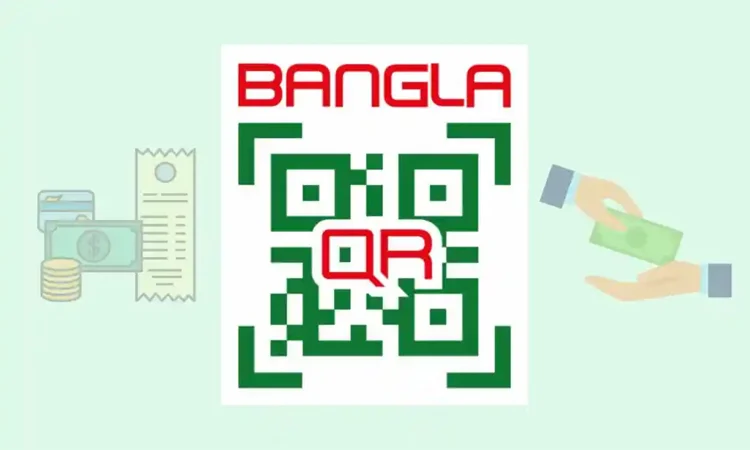
DHAKA, Sept 10, 2026 (BSS) — Digital transactions through Bangla QR are rising rapidly across the country following the introduction of the “One Country, One QR” system, with daily transactions now averaging around Tk 120 crore and weekly transactions exceeding Tk 700 crore, according to Bangladesh Bank data.
Both the number and value of transactions through Bangla QR have increased significantly in recent months.
At the beginning of July, an average of around 178,000 transactions worth Tk 37.33 crore were conducted daily through the system.
By mid-August, the average number of daily transactions had risen to around 303,000, while their value had surged nearly threefold to Tk 110.38 crore.
Bangladesh Bank decided to introduce the mandatory “One Country, One QR” system from July 1 this year as part of its efforts to expand digital and cashless transactions.
Following the central bank’s decision, banks and mobile financial service (MFS) providers started integrating their services with Bangla QR instead of using separate QR codes.
As a result, customers can now make payments at a wide range of outlets—from shopping malls and retail stores to small shops and roadside businesses—using a single QR code.
The number of merchants using Bangla QR has also increased sharply, rising from around 1.6 million to more than 3 million by August 21.
Bangladesh Bank Executive Director and spokesperson Arif Hossain Khan told BSS that transactions through Bangla QR currently average around Tk 120 crore a day, with weekly transactions exceeding Tk 700 crore.
“We want this momentum in transactions to continue,” he said.
Bangladesh Bank is also focusing on addressing concerns among small businesses to encourage wider use of Bangla QR.
Arif said some merchants had initially expressed concerns over the merchant discount rate (MDR).
“If a small trader sells a product for Tk 100 but receives Tk 99, it is natural for him to ask why he should accept one taka less,” he said, adding that increased digital and cashless transactions could help merchants increase their sales.
He said easier cashless payments could encourage customers to make more purchases.
The central bank is also considering providing subsidies to merchants, and transaction growth has accelerated following announcements in this regard, he added.
The use of a single QR code to make payments from accounts maintained with different banks and MFS providers has also reduced hassles for customers.
Tuhin Islam, a resident of Azimpur who was shopping at New Market, told BSS that previously customers had to check which service’s QR code was available at a shop before making a payment through cash, bKash or Rocket.
“I use bKash. So, I often faced problems at shops where only a bKash QR code was available,” he said.
He said customers can now scan a single QR code and make payments from any of their eligible accounts.
“As a result, I have been freed from a major hassle,” Tuhin said.
Mahin Hossain, who came to Dhaka from outside the capital to purchase wholesale fabrics, said carrying large amounts of cash while travelling to the capital was risky.
“Now I can simply scan a QR code and make the payment online. So, I no longer need to carry a large amount of cash,” he said.
Rayhanul Islam, an electronics retailer in Motijheel, said cash payments for expensive products could sometimes be cumbersome.
“Now I can receive payments easily by scanning the code,” he said.
Altaf Hossain, who sells fruit juice in Azimpur, said he often faced difficulties because customers did not have exact change.
“Now customers can pay through Bangla QR, so I no longer have to deal with the hassle of arranging change,” he said.
The Bangla QR system is aimed at making digital payments easier, reducing the risks associated with carrying cash and simplifying payment procedures for both merchants and consumers.
The recent growth in transactions indicates that the unified QR system is gradually becoming an important part of everyday commercial transactions in Bangladesh.