Friday
21 August, 2026
News Flash
News Flash
By Md Aynal Haque
RAJSHAHI, Aug 21, 2026 (BSS) - Agrobiodiversity is being enriched in the Barind region through the exchange of local banana varieties under farmer leadership.
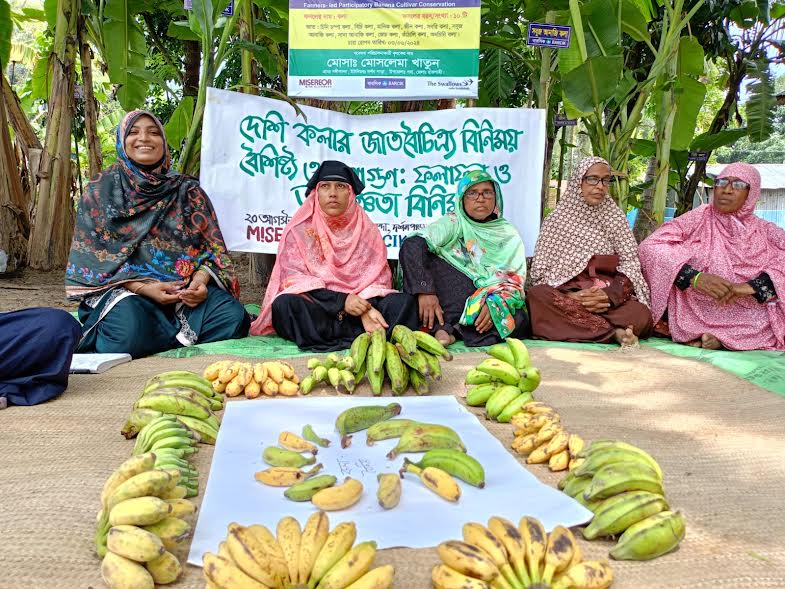
Seventeen varieties of indigenous bananas are being conserved and expanded through mutual exchange among farmers in the drought-prone Barind region. Among them, the spread of Anaji, Anachi, Bichi, Manik, Sabri, Jeen and Chini Champa is comparatively higher.
Field-level research conducted over the past three years has found information on the exchange of these banana varieties among 901 families in 14 villages of Paba and Tanore upazilas and Nachole upazila of Chapainawabganj.
The findings were presented on Thursday at a farmer-led research findings and experience-sharing event on indigenous banana varietal diversity, organised at the initiative of BARCIK and Green Coalition in Nadikanda village of Darshanpara Union under Paba Upazila.
BARCIK Regional Coordinator Shahidul Islam presented the research report.
At the event, farmers said that through mutual exchange of saplings, banana varieties that were on the verge of disappearing from one area are spreading to other areas.
Agroecology Learning Centers and Model Shatabari [hundred-house homesteads] are playing an important role in this regard.
Speakers said the diversity of indigenous banana varieties is linked to local agricultural knowledge, food culture and agrobiodiversity.
In the face of climate change and drought, conservation of local varieties is important for safe and climate-resilient agriculture in the future. To this end, they called for strengthening the farmer-led varietal exchange system and creating a community register of local varieties.
An important picture of the conservation and expansion of indigenous banana varietal diversity through farmers' own knowledge, experience and mutual exchange has emerged in the drought-prone Barind region.
There was also discussion on linking the varietal diversity of indigenous bananas with broader agrobiodiversity and agroecological farming systems.
Field data show that some varieties were previously limited to a few families, while some varieties that were not present in certain areas before have expanded to new areas through mutual exchange among farmers.
Assistance has been provided in exchanging saplings or planting materials to help interested farmers obtain indigenous banana varieties from farmers in other villages.
As a result, variety conservation has not remained confined to a central or single location; rather, the varieties have been conserved and expanded in farmers' fields and homesteads.
Kabuljan, a woman farmer from Haridebpur in Tanore, said, "Our own heritage is hidden with indigenous bananas, there are some Hindu pujas that are performed with Jeen banana."
Mahmuda Begum, a woman farmer from Bil Dharmapur village of Paba upazila, said each indigenous banana has a distinct taste, aroma and quality characteristics, adding that banana is useful to them not only as a fruit but also as a vegetable.
Speakers at the event said the varietal diversity of indigenous bananas is not just diversity of fruit; it is intertwined with farmers' local knowledge, food culture, family food security, homestead-based production, social cooperation and agrobiodiversity.
When a variety reaches from one farmer to another, not just a sapling is transferred, but also knowledge of identifying the variety, cultivation experience and local usage.
The speakers further said that amid climate change, drought and mono-cropping systems in agriculture, local varieties in the hands of farmers are an important resource for future agriculture.
Therefore, conservation of indigenous varieties should be seen not just as preserving the heritage of the past, but as a strategy for building safe, diverse and climate-resilient agriculture for the future.
The event was attended by BARCIK Programme Officers Amrita Kumar Sarkar and Touhidul Islam, Barendra Youth Forum President Atiqur Rahman Atik and 65 farmers from three upazilas.