Thursday
20 August, 2026
News Flash
News Flash
BARISHAL, Aug 20, 2026 (BSS) - The use of modern mulching technology in crop cultivation has opened up new prospects for agriculture in Barishal region enabling the farmers to achieve better yields and making the production more efficient and profitable than conventional farming methods.
Farmers in the region face various challenges in every year, including excessive or insufficient rainfall, water-logging, weeds, pest and disease attacks and rising labor costs.
Against this backdrop, mulching technology is creating new opportunities. Its benefits including retaining soil moisture, controlling weeds, saving irrigation water and reducing labor requirements are encouraging more farmers across the region to adopt the method for growing vegetables and other crops.
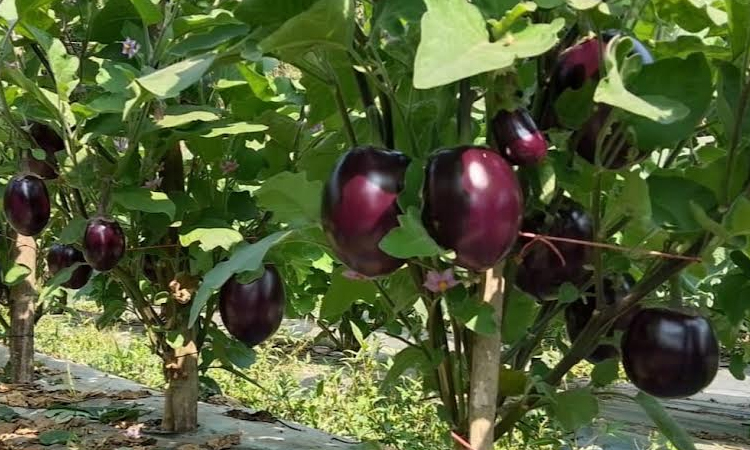
According to the Department of Agricultural Extension (DAE) and farmers at the field level, mulching technology is being used to cultivate cucumber, tomato, chili, eggplant, snake gourd, bitter gourd, bottle gourd, watermelon and other vegetables and high-value crops.
The technology is proving particularly effective for early vegetable production and seasonal crops, leading to its gradual expansion.
Under the mulching method, raised beds are prepared at specified intervals and covered with special mulching paper or environment friendly plastic sheets. Holes are then made at appropriate locations and seedlings are planted through them. As sunlight cannot directly reach the soil, weed growth is reduced.
At the same time, soil moisture is retained for a longer period, reducing the need for frequent irrigation. Stable soil temperature and moisture levels also have a positive impact on crop growth.
Farmers said that although preparing the land and installing mulching paper involved some additional initial costs, overall production expenses decline later because of reduced costs for weeding, irrigation and labor. As crop maintenance becomes easier, farmers can also devote more time to work on other plots.
Anwar, a farmer from Hijla Sadar upazila, said he cultivated tomato, bitter gourd, eggplant and bottle gourd on one acre of land using the mulching method. Although the initial cost was somewhat higher, expenses for weeding and irrigation subsequently declined considerably. The need for laborers was also reduced.
“Compared with conventional farming, maintaining the land has become easier and I am getting better yields and profits,” he said.
Rakib Hossain, owner of Akaid Agro at Lakutia Bazar under Barishal Sadar, said farmers in the area are showing interest in mulching than before. Alongside encouraging farmers to adopt the technology, training is also being provided.
He said demand for mulching paper is increasing. A piece of mulching paper about four feet wide and 1,685 feet long costs around Taka 6,500 for use on 20 decimals of land.
Although this involves an initial expense, farmers are able to recover the cost through savings on irrigation, fertilizer and labor, he added. Rakib said he is also cultivating vegetables using the mulching method.
Suruj, a farmer from Uzirpur upazila, said he is cultivating bottle gourd, bitter gourd, eggplant and snake gourd using the technology. Although he has been engaged in farming for many years, the method has reduced both the time and labor required for crop maintenance.
“Costs are lower and yields are better than before,” he said, adding that many farmers have started adopting mulching after seeing his success.
Farmers said modern technology has created an opportunity to obtain better yields from the same land using less labor and comparatively less water. As a result, mulching is emerging not only as a technology for increasing production but also as an effective means of saving farmers’ time and expenses.
Agriculture officials said irregular rainfall, fluctuations in temperature and water shortages caused by climate change could pose greater challenges to agriculture in the future. In such circumstances, technologies such as mulching will become increasingly important for retaining soil moisture and ensuring efficient use of water.
However, they said ensuring quality mulching paper, proper application techniques and adequate training for farmers is essential to fully realize the benefits of the technology.
Md Mamunur Rahman, Additional Deputy Director (Plant Protection) of the Barishal DAE office, told BSS that vegetable and fruit cultivation using mulching technology is increasing in Barishal region.
“Farmers are being encouraged to use the technology. Environment-friendly mulching paper can help conserve soil moisture, control weeds and save irrigation water,” he said.
However, he noted that the agriculture department has yet to compile separate statistics on the number of farmers currently using the method in the southern region.
He further said that expanding field-level training, ensuring easy availability of quality agricultural inputs and increasing public-private initiatives could further expand the use of mulching technology.
“This will reduce farmers’ production costs, save water and labor and create opportunities to make the agriculture more profitable and sustainable while addressing the risks posed by climate change,” he said.