Friday
14 August, 2026
News Flash
News Flash
By Rustom Ali Mondol
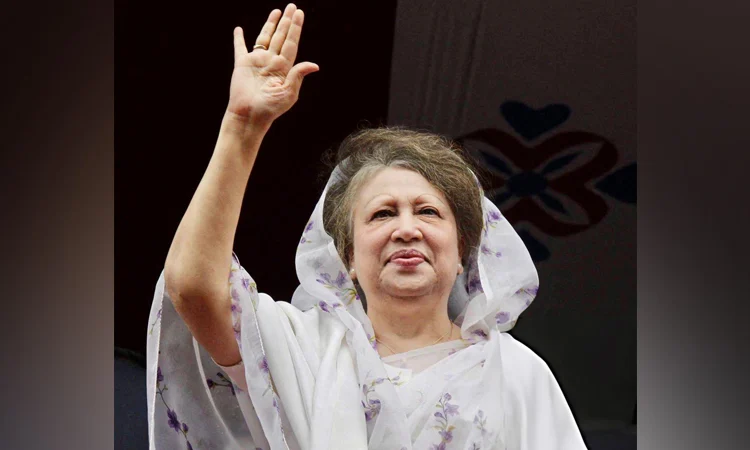
DINAJPUR, Aug 14, 2026 (BSS) - Khaleda Khanam Putul, who spent her childhood and adolescence in Dinajpur, later became one of the most influential political leaders in Bangladesh, known as Begum Khaleda Zia.
From being an ordinary housewife to becoming the country’s first female prime minister, she emerged through a long political struggle as a political figure known as the “Leader of the Nation” and the “Uncompromising Leader.”
Ahead of her 82nd birthday which will be celebrated tomorrow, District BNP President and Zila Parishad administrator Advocate Md. Mofazzal Hossain Dulal told BSS that after the partisan of British India in 1947, Begum Khaleda Zia’s father, businessman Iskandar Majumder, moved with his family from Jalpaiguri, India, and settled in Dinajpur.
According to him and other leaders of the district unit of BNP, Initially, Begum Zia’s family lived in Mudipara in the city and later moved to Taiba Villa near Shahid Minar intersection in South Balubari.
Khaleda Khanam Putul was the third of the five children of Iskandar Majumder and Taiba Majumder. Because of her calm and gentle nature, family members, neighbors, relatives and friends affectionately called her “Putul” from childhood.
Beginning of Her Education in Dinajpur
Born on August 15, 1945, Khaleda Khanam Putul spent her childhood and adolescence in Dinajpur. At the age of five, she began her education at St. Joseph School in the city. Later, in 1954, she was admitted to the fourth grade at Dinajpur Government Girls’ High School. She passed the matriculation examination from that school in 1960. She subsequently completed her higher secondary education at Dinajpur Surendranath College.
On August 5, 1960, she married Captain Ziaur Rahman, then a young army officer, at her family home in Mudipara, Dinajpur. After marriage, she adopted the surname “Zia” from her husband and became known as Khaleda Zia.
Entering politics after her husband’s death
After President and BNP founder Ziaur Rahman was assassinated in 1981, a new chapter began in Begum Khaleda Zia’s political life.
Responding to the call of party leaders and activists, she joined the BNP as an ordinary member on January 2, 1982.
She became the party’s vice-chairman in March 1983 and was elected chairperson of the BNP in August 1984.
She subsequently played an important role in the movement against military rule. Alongside building a movement with political parties demanding the restoration of democracy, she led street protests against the autocratic HM Ershad regime. During this period, she was arrested and detained several times.
She did not participate in the 1986 general election. Later, her role in the mass uprising of 1990, which led to the fall of the Ershad regime and the restoration of democracy, further strengthened her position in national politics.
The country’s first female prime minister
After the BNP won the February 27, 1991 national election, Begum Khaleda Zia became the country’s first female prime minister. Under her leadership, BNP again formed government after wining 2001 general election.
During her political career, she achieved the unique distinction of being elected from multiple parliamentary constituencies. Because of her long political struggle and leadership in the movement for democracy, she became widely known as the “Uncompromising Leader.”
At a public rally at Laldighi Maidan in Chattogram attended by hundreds of thousands of people, she was given the title “Leader of the Nation.” The name “Leader of the Nation Begum Khaleda Zia” subsequently became widely used in political circles.
Initiatives in the economy and women’s education
As prime minister, Begum Khaleda Zia’s government undertook policy measures in various areas, including a market-oriented economy, expansion of the private sector, reforms in the revenue system and social security.
Various programmes introduced by her government also played a significant role in women’s education and empowerment.
Initiatives included stipends for girls’ education, expansion of female education and measures to keep female students enrolled in primary schools.
At the same time, steps were taken to increase women’s participation in both government and private-sector employment.
Women’s participation in local government was expanded, and arrangements for reserved seats for women were further strengthened during her government. A decision was also taken to increase the age limit for entry into government employment.
A difficult political chapter during 1/11
One of the most difficult periods in Begum Khaleda Zia’s political life came during the military-backed caretaker government of 2007.
She was arrested and imprisoned at that time. Despite facing various adversities, imprisonment and pressure throughout her long political career, she did not withdraw from politics.
She remained imprisoned for a prolonged period in subsequent years as well. Even amid serious health problems, the issues of her medical treatment and release generated extensive discussion in the country’s political arena. To her supporters, these events became symbols of her political struggle.
For her long struggle and political efforts for democracy, she also received several honors at home and abroad.
In 2011, the New Jersey State Senate honored her as a “Fighter for Democracy”. Later, in 2018, a Canada-based organization conferred her with “Mother of Democracy” award.
Deep roots in Dinajpur
Although she established herself as a national political leader through a long political journey, Khaleda Zia maintained a deep connection with Dinajpur through memories of her childhood. Various places in the city—including Mudipara, South Balubari and locations associated with her education—still carry memories of her early life.
For the people of Dinajpur, the childhood stories of Khaleda Khanam Putul remain a source of emotion and cherished memories.
Over time, that “Putul” went on to become established in Bangladesh’s political arena as Begum Khaleda Zia.
After a long political life marked by power, movements, imprisonment, illness and numerous adversities, Begum Khaleda Zia died on the morning of December 30, 2025, while undergoing treatment at Evercare Hospital in Dhaka.
Her death created an atmosphere of profound grief in the country’s political arena.
The long journey of Dinajpur’s daughter, Khaleda Khanam Putul, therefore represents not only the history of one individual’s political rise but is also deeply intertwined with the history of political change and the democratic movements of Bangladesh.
Marking the birthday, Dinajpur district BNP and its affiliated organizations have undertaken various programmes, similar to those being held across the country.