Friday
14 August, 2026
News Flash
News Flash
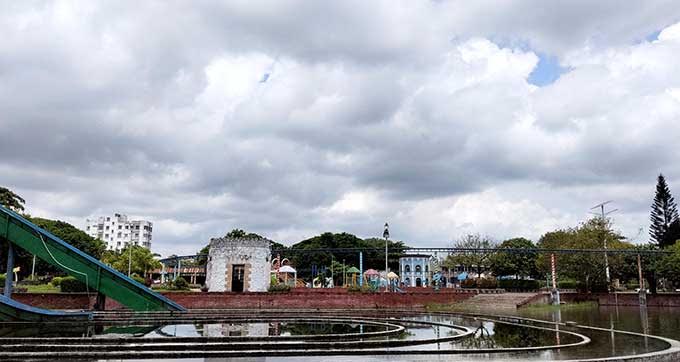
CHATTOGRAM, Aug 14, 2026 (BSS) - The Tree Fair is currently taking place at the historic Laldighi Maidan in Chattogram. Upon entering the fair, the proprietor of the first stall was inquired, ‘What type of sapling is in high demand at the fair this time?’ He responded, ‘Indigenous species of fruit trees.
In addition to mango, jam, amla, ata, guava, plum, and lemon, there is also a significant demand for amla seedlings known for their medicinal properties. Numerous school and college teachers are visiting to purchase saplings—they are particularly interested in trees such as Haritaki, Bahera, and Arbarai.
“What is the reason for the influx of teachers to the fair?” When asked, he explained, “They intend to plant them around the school and college or in their courtyards.” From this discussion, it became evident that there is considerable enthusiasm for the initiative launched by the current government to plant 250 million trees nationwide over a span of 5 years to maintain environmental balance.
Officials from various organizations and departments are attending the fair to acquire saplings of indigenous fruit trees, and they are also expressing interest in saplings of medicinal plants that are “nearly extinct” in the country.
In response to this demand, nursery owners are bringing saplings of these trees to the fair. Stakeholders indicate that previously, the tree plantation program was regarded as a ‘seasonal program’—involving the planting of a few saplings, taking photographs, and subsequently losing most of them due to inadequate care.
The situation is evolving. The government's genuine and steadfast commitment to executing the initiative of planting 25 crore trees across the nation was prominently showcased during the inaugural ceremony of the Laldighi Tree Fair on Tuesday, August 11.
On that occasion, Barrister Mir Mohammad Helal Uddin, the State Minister for Land and Chattogram Hill Tracts Affairs, stated, "To achieve the goal of planting 25 crores trees within the next five years, as set by the government to enhance the country's greenery, all stakeholders must engage with integrity and dedication.
It is essential to recognize that this government is not comprised of I-Dummies; it is a government of public representatives elected through the direct vote of the people. So, evasion will not be tolerated. The locations and quantities of trees being planted will be meticulously documented."
Those involved assert that, owing to government initiatives, ongoing campaigns, rigorous monitoring, and heightened environmental awareness, tree planting is increasingly becoming a personal habit and a social endeavor, transcending the confines of formal programs.
This transformation is vividly illustrated in this year's tree fair, which has undergone a complete metamorphosis - 'The Story of Trees.' Md. Abdur Rahim, the proprietor of 'Islamabad Nursery,' informed BSS, "There has been a significant rise in public interest regarding seedlings of indigenous fruits and medicinal plants. Due to limited space for planting trees in urban areas, many individuals are now cultivating gardens on their rooftops.
They are planting seedlings of mango, jam, amla, kamaranga, guava, litchi, olive, safeda, pineapple, or pomegranate in their roof gardens. Additionally, they are also planting seedlings of various vegetables and spices such as brinjal, chili, tomato, lettuce leaves, and mint leaves. These are available in both seed and seedling forms.
But, there is a significant demand for seedlings. He mentioned that seedlings of local fruit tree species are priced between 200 taka and 12,000 taka, depending on their variety and size. Vegetable seedlings are available for a minimum of 30 taka and a maximum of 120 taka, while foreign fruit seedlings range from 800 taka to 30,000 taka. In addition to tree seedlings, the fair also features a variety of planting tools, clay pots for rooftop gardens, plastic containers, boxes, spades, hoes, water sprinklers, fertilizers, pesticides, and other essential materials.
Observations at the site revealed that the entire Laldighi field was transformed into a 'green festival,' showcasing rows of seedlings from various tree species displayed by 20-25 nurseries at the tree fair.
Some of the vibrant seedlings captivated visitors with their colorful blooms, while others were already yielding or even producing whole fruits. Visitors and buyers were seen examining each seedling closely, inquiring about its variety, yield, size, and the time required for fruit production. Md. Rafiqul Islam from 'Fateabad Nursery' informed BSS, 'In the past, flower and ornamental tree seedlings were more popular at the fair, but currently, there is a substantial increase in the demand for fruit tree seedlings.' He added, 'The mindset of people has shifted. Previously, many did not prioritize tree planting. Now, they regard trees as valuable assets. There is a growing awareness that planting trees contributes to a cooler environment and provides fruit.'
Nursery owners noted, 'There is a heightened interest in trees among the public. People are now more discerning when selecting trees. They not only wish to purchase seedlings but also seek information on which trees thrive in specific soil types, their light and air requirements, the time until they bear fruit, and their care needs.' Tanjila Akhter, a resident of the Panchlaish Hillview area, who attended the tree fair, shared with BSS, 'We lack sufficient space at our home.