Saturday
18 July, 2026
News Flash
News Flash
By Md Aynal Haque
RAJSHAHI, July 18, 2026 (BSS) - Rajshahi, renowned for its cleanliness, greenery and rich cultural heritage, bears the marks of a long history through numerous artefacts scattered across the city.
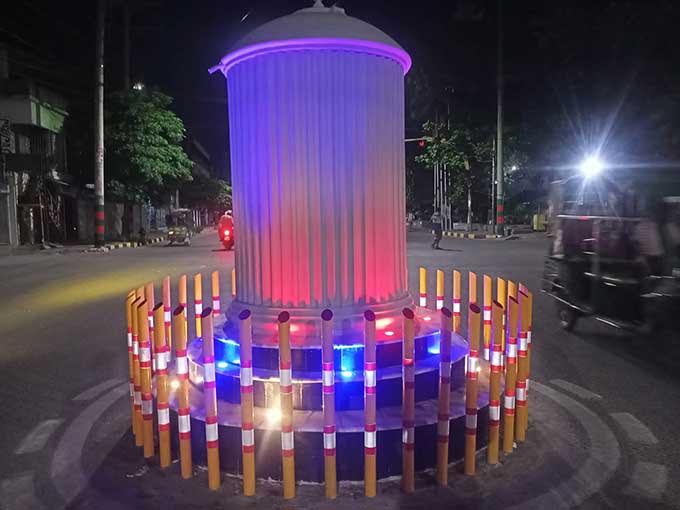
A historic Dhopkol-a manually operated public water pump once used to supply safe drinking water-installed at the square in front of the Rajshahi City Bhaban has become a new landmark, adding to the city's aesthetic appeal.
What was once an ordinary road intersection has now turned into a popular attraction for visitors. The large dome-shaped iron Dhopkol stands as a symbol of the history and heritage of the ancient city.
Painted white and enclosed by iron railings, the Dhopkol immediately catches the attention of passers-by. Red and blue decorative lights illuminate the structure at night, making the intersection even more attractive.
Visitors were seen taking photographs of the sculpture and posing for selfies beside it.
A pedestrian, Rifa Takia, said she uses the road regularly and that the intersection looks much more attractive at night following the installation of the Dhopkol.
She thanked the Rajshahi City Corporation authorities for preserving a piece of the city's heritage that had long remained neglected.
Another visitor, Labib Hasan, said he had visited the place before, but this time found the intersection more beautiful and well-maintained.
He also appreciated the initiative to preserve the city's heritage.
Beyond its aesthetic appeal, the Dhopkol carries a rich historical legacy.
In 1937, Rajshahi faced a severe shortage of safe drinking water. Waterborne diseases such as cholera and diarrhoea spread widely across the town, claiming many lives. The authorities struggled to contain the outbreak despite various initiatives, including the excavation of ponds.
To address the crisis, the Rajshahi Water Works was established based on a European-style water supply and purification system.
Rani Hemanta Kumari of the Puthia royal family made a substantial financial contribution to the project, which was named Rani Hemanta Kumari Water Works in her honour.
With the expansion of modern water supply systems over the years, the importance of the Dhopkols gradually declined. At one time, there were more than 150 Dhopkols across Rajshahi, but only a handful remain today, most of them no longer functional.
The Dhopkol now displayed at the intersection had long been lying abandoned beside a graveyard and was at risk of being demolished during road expansion work.
Instead of being scrapped, the Rajshahi City Corporation relocated it to the intersection as a heritage sculpture. Besides beautifying the area, it stands as a reminder of Rajshahi's rich past and is expected to help future generations learn about the city's history and heritage.