Sunday
09 August, 2026
News Flash
News Flash
By Moshtaq Ahmed
DHAKA, July 17, 2026 (BSS) - Although Bangladesh has yet to qualify for the
FIFA World Cup finals, the country's presence at the world's biggest football
tournament is becoming increasingly visible.
While the Bangladesh national team is absent from the pitch, the jerseys worn
by players from different countries bear the mark of Bangladeshi
craftsmanship, expertise, and manufacturing technology.
Bangladesh is producing official World Cup match jerseys and sports apparel
for leading international sports brands, helping elevate the country's ready-
made garment (RMG) industry to new heights in the global sportswear market.
According to the Bangladesh Garment Manufacturers and Exporters Association
(BGMEA), Bangladesh is currently one of the world's largest apparel
exporters.
More than 80 percent of the country's export earnings come from the RMG
sector, which directly employs over four million workers while supporting
several million more indirectly.
Over the past two decades, Bangladesh has significantly expanded its
capabilities beyond basic garments to include high-value sportswear,
performance apparel, and internationally standardized athletic clothing.
State Minister for Textiles and Jute Md Shariful Alam told BSS that
Bangladesh's garment industry has demonstrated its ability not only in
producing everyday clothing but also in manufacturing high-quality sports
apparel that meets international standards.
"The use of jerseys made in Bangladesh at a prestigious event like the FIFA
World Cup is a matter of great pride for the country's industrial sector," he
said.
The state minister added that such international orders would contribute to
higher export earnings, create new employment opportunities, and further
strengthen the global recognition of the 'Made in Bangladesh' brand.
He said the government aims to make Bangladesh more competitive in the global
apparel industry by increasing technology-driven and value-added garment
production.
Industry sources say globally renowned brands including Adidas, Nike, Puma,
Hummel, New Balance, Macron, and Capelli Sports have long sourced sportswear
from Bangladesh.
Through these companies, jerseys, training kits, shorts, jackets, and other
sports apparel are manufactured for national football teams, professional
clubs, and fans around the world.
However, the specific factories producing each country's jerseys are not
always publicly disclosed.
Nevertheless, industry insiders believe that a significant share of sports
apparel used in major international tournaments, including the FIFA World
Cup, is manufactured in Bangladesh.
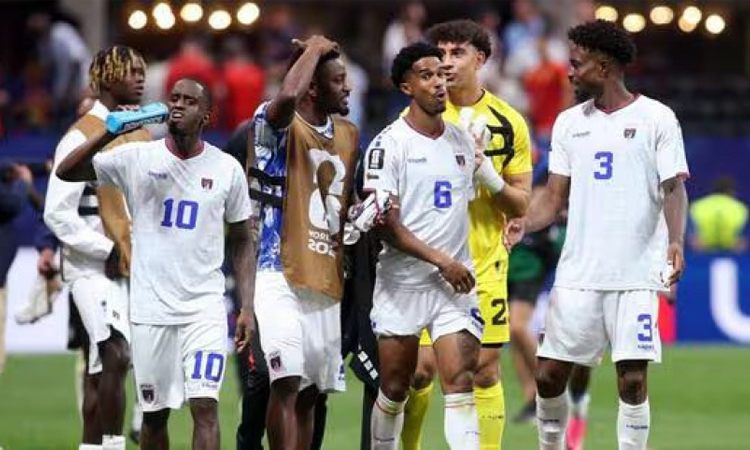
A notable and confirmed example has emerged during the 2026 FIFA World Cup.
Garments Manufacturing & Assembling Ltd. (GMA), located in Turag, Dhaka,
produced the official match jerseys for the Cape Verde national football team
under contract for New York-based sportswear brand Capelli Sports.
The company manufactured approximately 5,000 official match jerseys for
players and exported an additional 13,000 fan jerseys to supporters across
different countries.
The achievement is widely regarded as a significant endorsement of
Bangladesh's growing capabilities in sports apparel manufacturing and the
confidence international buyers have in the country's industry.
Industry experts say that having Bangladesh-made jerseys featured at a global
event like the World Cup represents more than just an export success-it is
also a powerful international branding opportunity.
As hundreds of millions of viewers watch World Cup matches, Bangladesh's
manufacturing expertise, quality control and industrial capabilities gain
indirect exposure in the global markets.
This, they say, enhances the confidence of foreign buyers and increases the
likelihood of securing new export orders.
The global sportswear market continues to expand rapidly. Rising health
awareness, the growth of professional sports, and the popularity of
athleisure have prompted international brands to increase production.
With competitive manufacturing costs, a skilled workforce, and
internationally compliant factories, Bangladesh is increasingly establishing
itself as a key production hub.
Experts note that before major sporting events such as the FIFA World Cup,
the UEFA European Championship, Copa América, and the Olympic Games,
international brands place massive orders for jerseys and sportswear.
Meeting these orders boosts production activities in Bangladeshi factories,
generating employment and economic activity across the value chain-from
factory workers and engineers to merchandisers, quality control officers,
packaging, transportation, ports, and logistics.
Economists said that long-term manufacturing agreements with international
brands play an important role in Bangladesh's foreign exchange earnings.
Although there are no separate official statistics on revenue generated
specifically from World Cup jersey production, high-value sports apparel
contributes greater value addition than conventional garments.
As a result, expansion of this segment is helping increase export earnings
while strengthening Bangladesh's position in the global apparel market.
According to the BGMEA, Bangladesh currently exports garments to more than
150 countries. Supported by environmentally friendly factories,
internationally recognized production standards, and a skilled workforce, the
country has emerged as a major global producer not only of conventional
apparel but also of high-value sportswear.
Industry stakeholders believe Bangladesh can further expand its share of the
global sports apparel market through technology-driven manufacturing,
research and development, innovation, and continued investment in skilled
human resources.
They also emphasize that strengthening long-term partnerships with
international brands will further increase export earnings, employment
opportunities, and the global prestige of the 'Made in Bangladesh' label.
BGMEA President Mahmud Hasan Khan told BSS, "The use of Bangladesh-made
jerseys at the world's biggest sporting event reflects both the capability of
our garment industry and the confidence international buyers place in
Bangladesh. This is not merely a commercial success-it also strengthens the
global acceptance of the 'Made in Bangladesh' brand."
He said international brands now regard Bangladesh not only as a destination
for basic garment production but also as a reliable partner for manufacturing
high-quality sports apparel.
This is creating new opportunities for export orders, production of higher-
value products, and increased foreign exchange earnings.
Mahmud Hasan Khan further said that growing orders in the sportswear sector
are also contributing positively to employment expansion.
The benefits extend across the entire value chain, including manufacturing,
quality control, packaging, transportation, and supply chain management.
If Bangladesh continues to enhance technology-driven production and workforce
skills, its position in the global sports apparel market will become even
stronger, he added.