Thursday
16 July, 2026
News Flash
News Flash
By Mohammad Hedayet Ullah
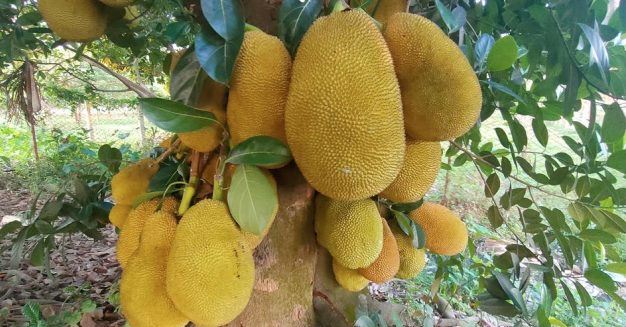
GAZIPUR, July 16, 2026 (BSS) – Farmers and traders in Gazipur, home to Bangladesh's GI-recognised jackfruit, are upbeat over the government's move to export the country's national fruit to China, expecting the initiative to open up a vast new market and significantly boost their incomes.
The government's plan to export Bangladeshi jackfruit to international markets, particularly China, announced by Prime Minister Tarique Rahman in parliament, has raised hopes among growers and traders that Gazipur's geographically indicated (GI) jackfruit will secure a sustainable position in the global market.
Bangladesh and China signed an bilateral memorandum of understanding (MoU) during the Prime Minister's visit to facilitate jackfruit exports.
Tarique Rahman told parliament that, in response to growing demand for Bangladeshi jackfruit in China, large-scale exports would begin soon through coordinated public and private sector initiatives with value-added processing.
The initiative has generated enthusiasm across Gazipur, widely known as the country's ‘jackfruit capital’, where trading activities are already at their peak during the ongoing harvesting season.
A visit to different parts of the district found harvesting underway in villages across Sreepur, Kapasia, Kaliganj, Kaliakair and Gazipur Sadar upazilas.
Jaina Bazar in Sreepur, the district's largest traditional jackfruit market, has become a bustling trading hub, with thousands of farmers, wholesalers and traders gathering there daily from early morning until late at night.
Local traders said the market is now witnessing the peak harvesting season, resulting in abundant supplies and relatively lower prices for consumers.
They said jackfruit worth around Tk 25 lakh to Tk 30 lakh is currently traded daily at the market. At the beginning of the season, when prices were higher, daily transactions reached between Tk 7o lakh and Tk 80 lakh.
Talking to BSS, wholesale trader Hamidur Rahman said Jaina Bazar supplies the largest quantity of jackfruit to the Noakhali region.
“Of the 20 large trucks leaving the market every day, at least 10 head to different areas of Noakhali. Besides, large consignments are also transported daily to Sylhet, Cumilla, Chattogram and other districts,” he said.
Ali Akbar, a farmer in his sixties from Sreepur, brought 45 medium and large-sized jackfruits harvested from five trees planted in the yard of his house.
He said each tree produces between 30 and 200 jackfruits. At the beginning of the season, depending on size and quality, each fruit sold for Tk 50 to Tk 400, while prices have now declined to between Tk 30 and Tk 100.
“Cultivating jackfruit requires relatively little effort. Once a sapling is planted on suitable high land, it begins bearing fruit after four to five years and can continue producing for 70 to 80 years," he added.
According to the Department of Agricultural Extension (DAE), jackfruit is cultivated on 9,125 hectares of land in Gazipur district as its geographical characteristics make it highly suitable for commercial jackfruit cultivation.
Gazipur Deputy Commissioner Md Nurul Karim Bhuiyan told BSS that efforts are underway to expand exports of jackfruit and jackfruit-based products.
“The existing market is worth nearly Tk 500 crore. Through proper processing and marketing, it has the potential to grow to around Tk 2000 crore,” he said.
Sreepur Upazila Agriculture Officer Sumaiya Sultana Bonna told BSS that the upazila produces around 78,000 tonnes of jackfruit annually.
Following the Prime Minister's landmark visit to China, the DAE has intensified efforts to introduce Gazipur's jackfruit to the Chinese market alongside existing export destinations in Europe and the Middle East, she added.
She also said that the Prime Minister's directive to establish long-term fruit preservation facilities and modern processing industries is now being implemented on a priority basis.
Agriculture officials said jackfruit is not only a seasonal fruit but also a major economic crop supporting the livelihoods of thousands of farmers and small rural entrepreneurs in the district.
They said the ongoing harvesting and marketing season has also created employment opportunities for several thousand seasonal workers.
However, farmers also pointed out several challenges.
Kabir Hossain, a farmer from Singhashree village in Kapasia, said the absence of adequate cold storage facilities results in significant post-harvest losses every year.
He also said that the lack of permanent sheds and modern marketing facilities at the 32 seasonal fruit markets across Kapasia's 11 unions often forces farmers to sell their produce at very low prices during periods of excess supply.
Welcoming the government's export initiative, local farmers urged authorities to establish cold storage facilities and set up modern processing industries to produce value-added products such as jackfruit juice, jam and chips.
They said such investments would help ensure better preservation, improve export quality and enable farmers to receive fair prices in the domestic market.
DAE Officials expressed hope that the combined impact of Gazipur jackfruit's GI recognition and the government's export strategy would significantly strengthen the country's fruit export sector and establish Bangladesh's national fruit in the global market.