Sunday
06 September, 2026
News Flash
News Flash
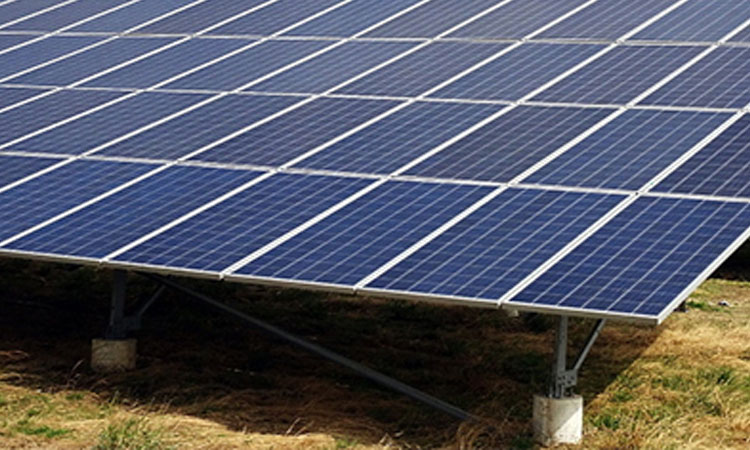
DHAKA, June 27, 2026 (BSS) - The BNP government, led by Prime Minister Tarique Rahman, is prioritizing the renewable energy sector to reduce import dependence in power generation, strengthen energy security and ensure environment-friendly energy.
To this end, the proposed budget for the 2026-27 fiscal has proposed a zero-percent tariff on the import of solar power equipment. This is being regarded as a groundbreaking policy step in the country's energy sector.
According to experts, if this initiative is implemented, the country's dependence on fossil fuels for power generation will decrease. At the same time, foreign currency will be saved and the path to ensuring long-term energy security will become smoother.
According to government data, currently over 40 percent of the country's total power generation capacity is gas-based. However, as production from domestic gas fields is gradually declining, the government has to rely on importing liquefied natural gas (LNG). At the same time, the cost of importing coal and fuel is also continuously increasing. The rise in fuel prices in the international market has emerged as a major risk for the country's power sector.
In the budget speech for the 2026-27 fiscal, Finance and Planning Minister Amir Khosru Mahmud Chowdhury said that the government has set a target of generating 20 percent of the country's total electricity demand from renewable sources by 2030, considering renewable energy as one of the main pillars of the future energy strategy. There are thoughts of increasing this to 30 to 50 percent by 2050.
According to the government's plan, a target of generating about 10,000 megawatts of electricity from solar power has been set by 2030. To this end, alongside large solar power plants, the government is encouraging the increased use of solar power in rooftop, industrial and agricultural sectors.
According to industry stakeholders, the high cost of equipment is one of the main barriers to the expansion of solar power. Most solar equipment used in the country, such as solar panels, inverters, battery systems, charge controllers and mounting structures are import-dependent. As these imported products face tariffs, VAT, and taxes of up to 67 percent at various levels, project costs increase.
As a result, many individuals, institutions and small entrepreneurs lose interest in investing in solar power. In this context, the proposed budget has proposed a zero-percent tax rate on solar equipment imports until 2035 and a 5 percent tax rebate for consumers paying solar electricity bills. As a result, this cost is expected to decrease significantly.
Not just tariff benefits on equipment imports, but the government is also considering various incentives for investors in the domestic production of solar panels, batteries, inverters, and other renewable energy equipment.
Economists and energy analysts say that if this policy is implemented, private investment in the solar power sector will increase. The use of solar power will expand in industrial factories, commercial buildings, educational institutions, hospitals and residential sectors. At the same time, as the cost of installing rooftop solar decreases, general consumers will also benefit significantly.
Moshiur Rahman, a resident of Mohammadpur in the capital, told BSS, "Currently, the cost of installing solar in homes is very high. If taxes are reduced, it will become more accessible for ordinary people. Many will then turn to solar power to reduce electricity bills and protect against load shedding."
Successful use of small-scale solar power systems is already being seen in various parts of the country. A solar system installed at a mosque in Brahmanbaria is simultaneously running 20 fans and 10 lights. The cost of the project was only one and a half lakh taka. Such initiatives have made the potential of renewable energy in rural areas even more visible.
According to the latest data from the Sustainable and Renewable Energy Development Authority (SREDA), currently about 1,805 megawatts of electricity is being generated from renewable energy in the country. Of this, the highest, about 1,512 megawatts, comes from solar power. However, this is still a small fraction of the total electricity.
Experts say that if a solar equipment manufacturing industry develops in the country, new employment will be created. New opportunities will emerge for engineers, technicians, installers, maintenance personnel, and manufacturing sector workers. At the same time, opportunities for technology transfer and local industrial development will also arise.
Beyond energy security, this initiative is also considered important from an economic perspective. If the use of solar power increases, the pressure on importing LNG, coal and other fuels for power generation will decrease each year and foreign currency will be saved.
However, traders and importers related to the sector believe that the tax benefits in the proposed budget need to be broader.
According to them, the residential, agricultural and small business sectors will be deprived of these benefits. Therefore, they have demanded equal opportunities and benefits for all.
Engineer Ataur Rahman Sarkar Rozel, Secretary General of the Bangladesh Sustainable and Renewable Energy Association (BSREA), told BSS, "While the proposed budget recognizes the importance of the renewable energy sector, it does not reflect the expectations and demands of all stakeholders. To accelerate the expansion of rooftop solar, taxes need to be reduced to zero on all products for investors, importers and small users alike and financial incentives need to be provided."
Energy experts believe that for Bangladesh to succeed in the solar sector, it must follow Pakistan's model in this area. In recent years, Pakistan has made significant progress in the solar power sector through tax and tariff benefits, easy financing, and the expansion of rooftop solar.
Dr. Ijaz Hossain, a retired professor from Bangladesh University of Engineering and Technology (BUET) and energy expert, told BSS, "Reducing taxes and tariffs on solar equipment is a highly positive decision. This type of policy support has long been demanded, which no previous government implemented. If this is implemented, investment in the solar power sector will increase, and the use of renewable energy will expand rapidly."
He said, "The expansion of renewable energy is directly related not only to power generation but also to the country's energy security, environmental protection, and sustainable economic development." He emphasized following Pakistan's model in the solar sector.
According to experts, if the government can ensure easy loans, expansion of net metering, incentives for domestic production, and fast project approvals alongside tax and tariff benefits, then a visible change will come in the country's solar power sector within the next few years.