Saturday
05 September, 2026
News Flash
News Flash
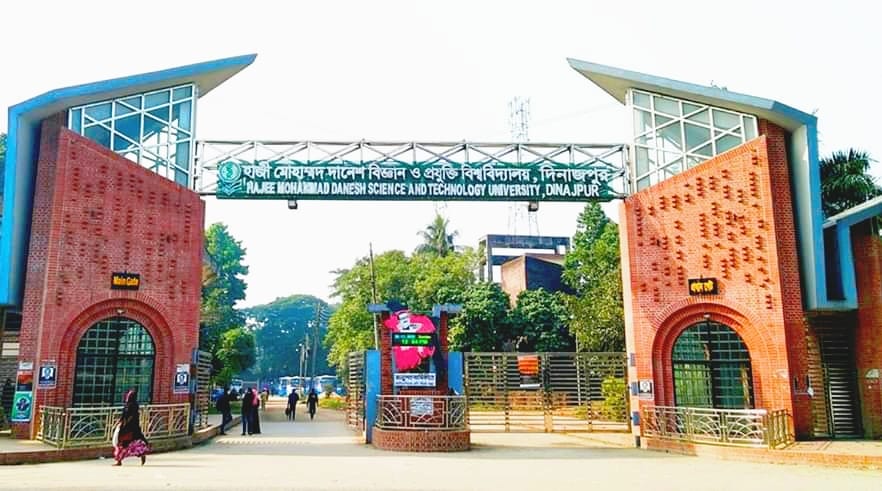
DINAJPUR, June 23, 2026 (BSS) - Researchers at Hajee Mohammad Danesh Science and Technology University (HSTU) in Dinajpur have achieved a significant breakthrough in food safety research by developing a rapid detection technology for the foodborn bacterium Bacillus cereus, a major cause of food poisoning and diarrheal diseases.
According to a press release issued on Monday night by HSTU's Director of Public Relations, Md. Khademul Islam, the research team, led by Associate Professor Dr. Md. Atikul Haque of the Department of Microbiology, has developed a diagnostic method based on Loop-Mediated Isothermal Amplification (LAMP) technology. The new technique can accurately identify the harmful bacterium within just 90 minutes.
Researchers describe Bacillus cereus as a serious threat to Bangladesh’s food supply chain due to its ability to contaminate a wide range of food products and cause significant public health concerns.
Analysis of field-level samples revealed that nearly 80 percent contained at least one toxin-producing gene associated with the bacterium. The highest level of contamination was found in animal feed, while notable levels were also detected in milk and eggs. These findings suggest that Bacillus cereus may be far more widespread in Bangladesh’s food system than previously estimated.
Conventional Polymerase Chain Reaction (PCR) testing methods generally require three to five hours to produce results and depend on expensive laboratory equipment. In contrast, the newly developed LAMP-based technique can deliver reliable results within 90 minutes and can be performed using simple equipment such as a water bath or heating block.
The cost of each test is comparatively low, estimated at approximately US$2.50, making it more accessible for routine food safety monitoring.
The study further demonstrated that the new method is about 10,000 times more sensitive than conventional testing approaches and achieved a diagnostic sensitivity rate of 96.1 percent.
Speaking to BSS, Dr. Atikul Haque said that bacterial detection can often be completed within 40 minutes, while fully confirmed results are obtained within a maximum of 90 minutes. He said that the technology is particularly suitable for resource-limited settings and has the potential to play a vital role in protecting public health and ensuring food safety.
He added that the innovation could strengthen Bangladesh’s food safety infrastructure and open new opportunities for safer food production nationwide.
The research was conducted in collaboration with Noakhali Science and Technology University and has been published in the internationally recognized journal Frontiers in Cellular and Infection Microbiology, earning international recognition for Bangladeshi scientific research.
According to the researchers, the technology could be highly effective for government food testing laboratories, veterinary diagnostic centers, dairy and poultry industries, and mobile outbreak investigation teams.
The team plans to expand the research through large-scale nationwide sample collection and surveillance studies. They are also working on developing multiplex LAMP technology, which would enable the simultaneous detection of multiple toxin genes in a single test. In addition, efforts are underway to create portable field-testing kits for direct on-site use.
However, members of the research team said that limited funding has constrained the scope of the project. They emphasized that greater financial support would allow the technology to be implemented across more regions and food products, further strengthening Bangladesh’s food safety monitoring system and supporting the production and marketing of safer food.