Friday
28 August, 2026
News Flash
News Flash
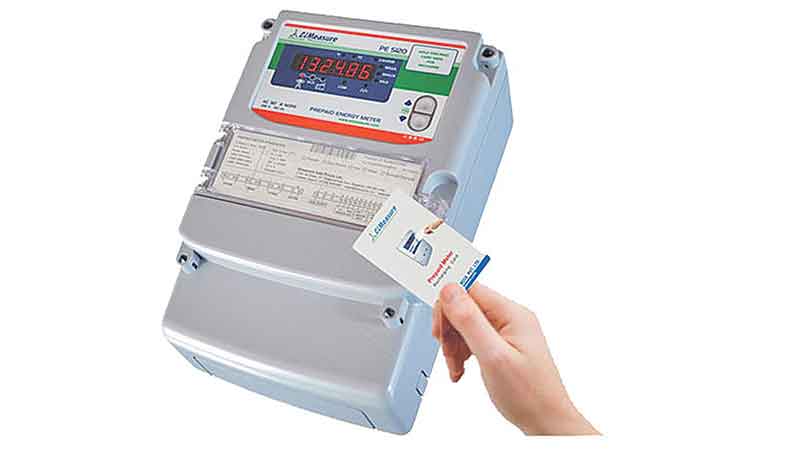
DHAKA, July 14, 2026 (BSS) - As part of the government's campaign to reduce non-technical system losses and ensure smooth revenue collection, power distribution entities installed 87.50 lakh electricity prepaid metres till June, and the installation is ongoing for the remaining consumers.
"We have a plan to bring all consumers under smart prepaid metres aimed at reducing non-technical system losses and revenue collection," chairman of Bangladesh Power Development Board (BPDB) Engineer Rezaul Karim told BSS here today.
He said some 10 to 15 percent consumers might not be brought under the smart prepaid metering system but the target is to bring maximum consumers.
Official familiar with the process said the Ministry of Power, Energy and Mineral Resources is executing a phased master plan to bring 100 percent of the country's over 5 crore power subscribers under the smart prepaid metering umbrella.
He said there is a 5-7 percent loss due to non-technical reasons at the customer level, such as metre tampering, illegal connections, and other irregularities. Prepaid metres would make an effective contribution to the economical use of electricity.
According to BPDB statistics, six distribution entities have been installing the smart prepaid metres across the country in phases, while it installed 87,50,823 metres across the country.
According to power cell, per consumer received 661 kilowatt hour electricity during the 2024-25 financial year, while power generation capacity reached to 33,092 megawatt (MW) till July 13, 2026. The highest electricity generation was 17,201 MW on May 20, 2026.
Talking to BSS Director of BPDB Md Shamim Hasan said the BPDB has set up 35,37,126 smart and traditional single and three-phase prepaid metres till June 30 this year.
"Process for installation of remaining prepaid metres is underway," he said.
According to The BPDB information, Bangladesh Rural Electrification Board (BREB) installed so far 18,00,000 metres while Dhaka Power Distribution Company Limited (DPDC) 10,79,184, Dhaka Electric Supply Company Limited (DESCO) 9,16,910, West Zone Power Distribution Company Limited (WZPDCL) 9,12,233 and Northern Electric Supply Company Limited (NESCO) 9,39,303 across the country till June 2026.
The BPDB serves approximately 44.49 lakh direct retail consumers across urban zones, specifically focusing on Chittagong, Sylhet, Mymensingh and Khulna areas.
The DPDC has been serving around 19.9 lakh consumers under Dhaka City Corporation and surrounding areas, while the BREB approximately 3.03 to 3.62 crore consumers across the country.
The DESCO has been serving around 10.2 lakh. Its distribution network primarily covers the northern parts of Dhaka City, Tongi Town in Gazipur district, and the Purbachal Model Town.
The state-owned utility NESCO serves around 20.11 lakh consumers to domestic, agricultural, and commercial consumers across 16 districts in Rajshahi and Rangpur divisions of the country.
The WZPDCL has been serving 10.68 lakh in Khulna and Barishal divisions, as well as the greater Faridpur region.
The BPDB information said the power distribution companies launched a project to install 8.5 lakh smart prepaid meters in 2022, while it introduced the smart metering system and launched prepaid meter vending through machines in 2018.
The smart prepaid metering system also eliminates hassles related to bill payment, disconnection, or reconnection, as it requires no minimum charge or deposit and results in no disputed bills.
In addition, a smart prepaid meter user receives a 2 percent discount on the standard electricity billing rate. The system also provides warnings for low or negative credit during off-peak hours and holidays.
The smart prepaid metering system allows users to obtain emergency credit and helps prevent abnormal voltage fluctuations. It also maintains automated records, according to the information provided.
There is also a 5-7 percent loss due to non-technical reasons at the customer level, such as meter tampering, illegal connections, and other irregularities. Prepaid metres would make an effective contribution to the economical use of electricity and gas.