Tuesday
30 June, 2026
News Flash
News Flash
By Delowar Hossain Akaid
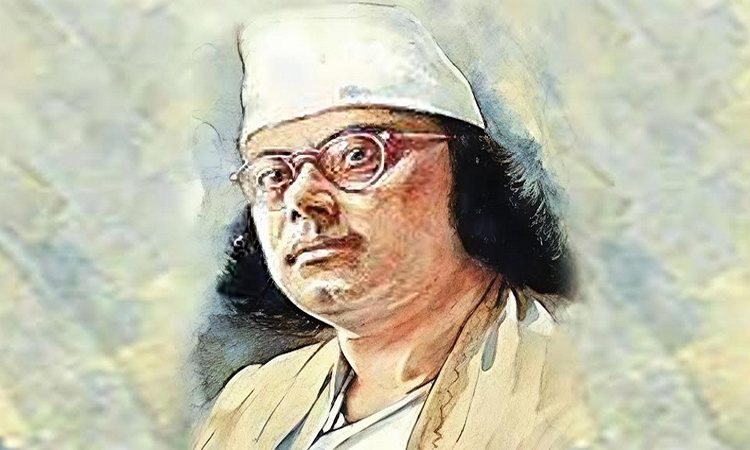
CUMILLA, May 22, 2026 (BSS) - Although National Poet Kazi Nazrul Islam was born in Churulia of India’s West Bengal, an important chapter of his life-love in Cumilla remains deeply connected with his literary achievements.
Despite staying in Cumilla for a relatively short period, the Rebel Poet secured a permanent place in the hearts of the district’s people.
Even today, various places in Cumilla carry memories of his footsteps, romance, rebellion, and literary legacy.
As the nation prepares to celebrate the 127th birth anniversary of the national poet, renewed demands have emerged for preserving Nazrul’s memory-associated sites in Cumilla.
Marking the occasion, the Cumilla district administration and Muradnagar upazila administration have arranged a three-day programme from May 23 to 25 in Cumilla city and Daulatpur, widely revered as "Kabitirtha" (Pilgrimage of Poetry) due to its profound historical connection to poet Nazrul.
Researchers, writers and cultural activists told BSS that the people of Cumilla consider Nazrul not only as the national poet, but also as one of their own.
According to them, the soil, people and culture of Cumilla opened a new horizon in Nazrul’s creative life. Many of his timeless poems and songs were composed during his stay in the district.
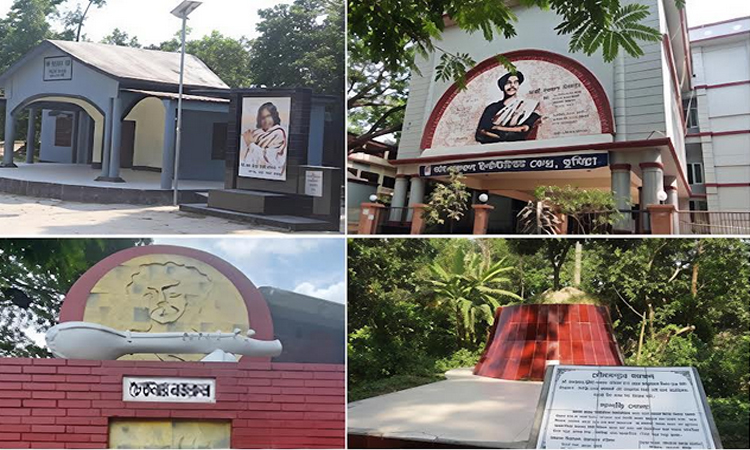
Several places in Cumilla still preserve the poet’s memories, including Indrakumar Sen’s house at Kandirpar, Dharmasagar par, Rani’s Dighi, Maheshangan, Darogabari, Town Hall maidan, the Chartha Rajbari of legendary musician Sachin Dev Burman and Nawabbari.
Nazrul researcher Dr Ali Hossain Chowdhury told BSS that a highly significant part of Nazrul’s life and literary works is closely linked with Cumilla.
"The experiences, love and political realities of Cumilla transformed Nazrul into not only the poet of rebellion but also a poet of humanity and love,” he said.
He said Nazrul stayed in Cumilla for nearly 11 months in five phases between April 1921 and January 1924, which researchers consider a turning point in his life.
According to research findings, Nazrul joined a protest procession at Rajganj in Cumilla during a strike called by the Indian National Congress on November 21, 1921, protesting the arrival of the Prince of Wales in Kolkata.
Carrying a harmonium around his neck, Nazrul sang protest songs during the procession and was later arrested. Researchers believe the experience deeply influenced his iconic poem “Bidrohi”.
Cumilla also played a major role in Nazrul’s personal life. His romantic and marital memories are associated with Nargis Asar Khanam of Daulatpur in Muradnagar and Ashalata Sengupta, later known as Promila, of West Kandirpar in Cumilla city.
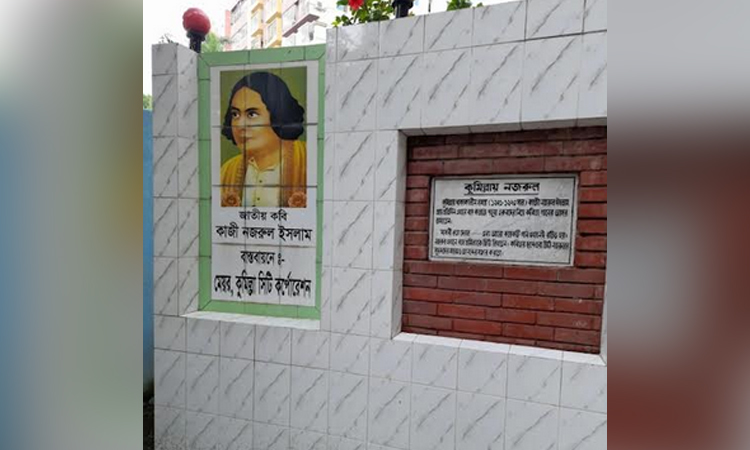
Over the decades, various initiatives have been taken to preserve the poet’s memories in Cumilla. “Kabi Nazrul Hostel” was established at Cumilla Victoria Government College in 1960, while “Nazrul Avenue” was named in 1962.
A monument titled “Chetanay Nazrul” was also built in front of the Cumilla Shilpakala Academy, while several memorial plaques were installed at sites associated with the poet.
However, local cultural activists and researchers expressed concern that many of Nazrul’s memory-associated sites are gradually facing the risk of disappearance due to inadequate maintenance.
Additional Deputy Commissioner Mohammad Saiful Islam said extensive preparations have been taken in Cumilla and Daulatpur marking the 127th birth anniversary of the national poet.
He said the three-day programme will include discussions, cultural functions, poetry recitations and memorial events highlighting Nazrul’s life and contributions.