News Flash

DHAKA, July 06, 2026 (BSS)- State Minister for Fisheries and Livestock Sultan Salauddin Tuku today laid utmost importance on exercising highest caution to ensure that no date-expired medicine is used in hospitals under any circumstances.
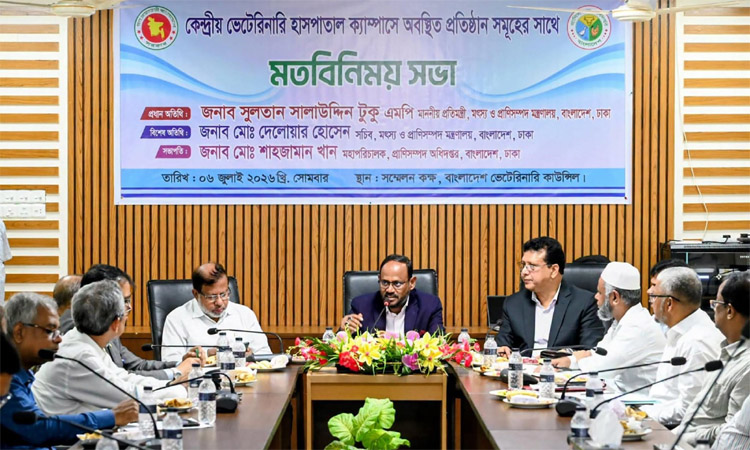
Quality medicines and modern services must always be ensured in animal treatment, he said while addressing an exchange of views meeting with officials of the institutions at the Central Veterinary Hospital campus, said a ministry press release.
Tuku said the number of pet animals has increased significantly. Central Veterinary Hospital is one of the most trusted institutions for animal treatment in the country, he said calling for further expanding and modernising healthcare services for livestock.
He said the government is ready to provide due importance to enhancing the hospital's capacity, ensuring quality treatment services and expanding the necessary infrastructure to make animal healthcare services more time-befitting, effective and people-friendly.
Considering the growth of pet animals, he said number of veterinary hospital and the scope of its services should be expanded to provide advanced and modern treatment services to animals across the country.
Chaired by Director General of the Department of Livestock Services Shahjaman Khan, the meeting was addressed among others by Fisheries and Livestock Secretary Delwar Hossain as the special guest.
Director of the Department of Livestock Services Dr Boyzar Rahman, Director of the Central Veterinary Hospital Dr Abdul Aziz Al Mamun, Director of the Central Livestock Medicine Store Dr Rafiqul Islam Talukdar, Chief Scientific Officer of the Toxicology and Jurisprudence Sub-Division Dr Abu Sufian, Registrar of the Bangladesh Veterinary Council Dr Gopal Chandra Biswas, among other, were present.
Sultan Salauddin Tuku inaugurated the distribution programme of medicines, chemicals, equipment and surgical instruments procured by the Livestock Medicine Store during the fiscal year 2025-2026 for field-level use.
On the occasion, 90 types of medicines and chemicals and 40 types of modern equipment and surgical instruments were handed over to field-level livestock offices.