Tuesday
08 September, 2026
News Flash
News Flash
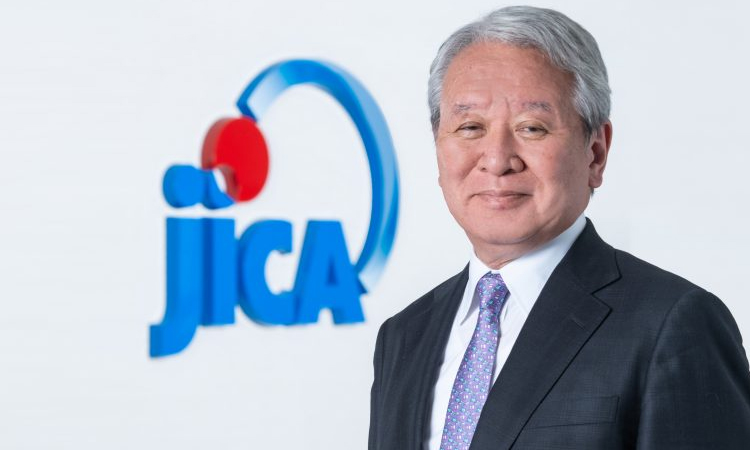
DHAKA, July 6, 2026 (BSS) - President of the Japan International Cooperation Agency (JICA) Dr Tanaka Akihiko has concluded a five-day official visit to Bangladesh, reaffirming the enduring Japan-Bangladesh Strategic Partnership and JICA's continued commitment to the country's sustainable and inclusive development.
During the visit from July 1 to 5, Dr Tanaka attended the 10th memorial ceremony honouring the seven Japanese nationals who were killed in the Holey Artisan Bakery terrorist attack in July 2016, according to a JICA press release.
The ceremony served as a moment of reflection and reaffirmed the shared values of peace, resilience and cooperation between the people of Japan and Bangladesh.
Dr Tanaka also held a high-level meeting with Prime Minister Tarique Rahman, during which both sides reaffirmed the strength of bilateral relations and discussed ongoing and future areas of cooperation.
Their discussions focused on major Japanese-supported development initiatives, including the Dhaka Metro Rail, the expansion of Hazrat Shahjalal International Airport (HSIA), the Moheshkhali-Matarbari Integrated Infrastructure Development Initiative (MIDI) and the Bangladesh Special Economic Zone (BSEZ).
The two sides also acknowledged the significance of the JPY 50 billion emergency support package under the POWERR Asia initiative aimed at strengthening regional energy security.
Throughout his visit, Dr Tanaka met senior government leaders, including Foreign Minister Dr Khalilur Rahman, State Minister for Foreign Affairs Shama Obaed Islam, Local Government, Rural Development and Cooperatives Minister Mirza Fakhrul Islam Alamgir, Finance and Planning Minister Amir Khosru Mahmud Chowdhury, Power, Energy and Mineral Resources Minister Iqbal Hassan Mahmood, and Roads, Transport and Bridges Minister Shaikh Rabiul Alam, who also oversees the Shipping and Railways ministries.
The meetings reaffirmed shared priorities in infrastructure, industrial development, regional connectivity and capacity building for sustainable and inclusive growth.
As part of his itinerary, Dr Tanaka visited several flagship projects supported by JICA and the Government of Japan.
On July 1, he visited Terminal 3 of Hazrat Shahjalal International Airport, a landmark infrastructure project financed through JICA's concessional loans. Once operational, the terminal is expected to transform Bangladesh's principal international gateway by enhancing passenger services while boosting trade, tourism and investment.
On July 3, he visited project sites under the Moheshkhali-Matarbari Integrated Infrastructure Development Initiative, including the power plant and the deep seaport. The projects are expected to play a vital role in strengthening Bangladesh's energy security and trade connectivity while supporting Japan's vision of the "Updated Free and Open Indo-Pacific."
During his July 4 visit to Cox's Bazar, Dr Tanaka observed humanitarian operations in the Rohingya camps. He toured a World Food Programme (WFP) e-voucher outlet, a UNHCR vocational training centre, an IOM clinic and JICA-supported livelihood projects.
He also met the Refugee Relief and Repatriation Commissioner (RRRC) to exchange views on the humanitarian situation and ongoing support efforts.
On the same day, he visited the construction site of the Fish Landing Center in Cox's Bazar, being built with JICA grant assistance to improve post-harvest handling and quality management.
He also toured the Fisheries Livelihood Enhancement Project along the Bay of Bengal coast, reaffirming JICA's support for sustainable livelihoods through seafood processing technologies, alternative income-generating activities and nutrition awareness programmes.
On July 5, Dr Tanaka and his delegation visited a JICA-supported solid waste management initiative and observed the Japanese private-sector technological solution, J-Drum, being introduced for Dhaka North City Corporation (DNCC), highlighting JICA's comprehensive approach to development cooperation in Bangladesh.
After his visit, Dr Tanaka reiterated JICA's long-term commitment to Bangladesh's development. "Our partnership with Bangladesh is very strong. We would like to continue this course in the years ahead," he said.