Tuesday
08 September, 2026
News Flash
News Flash
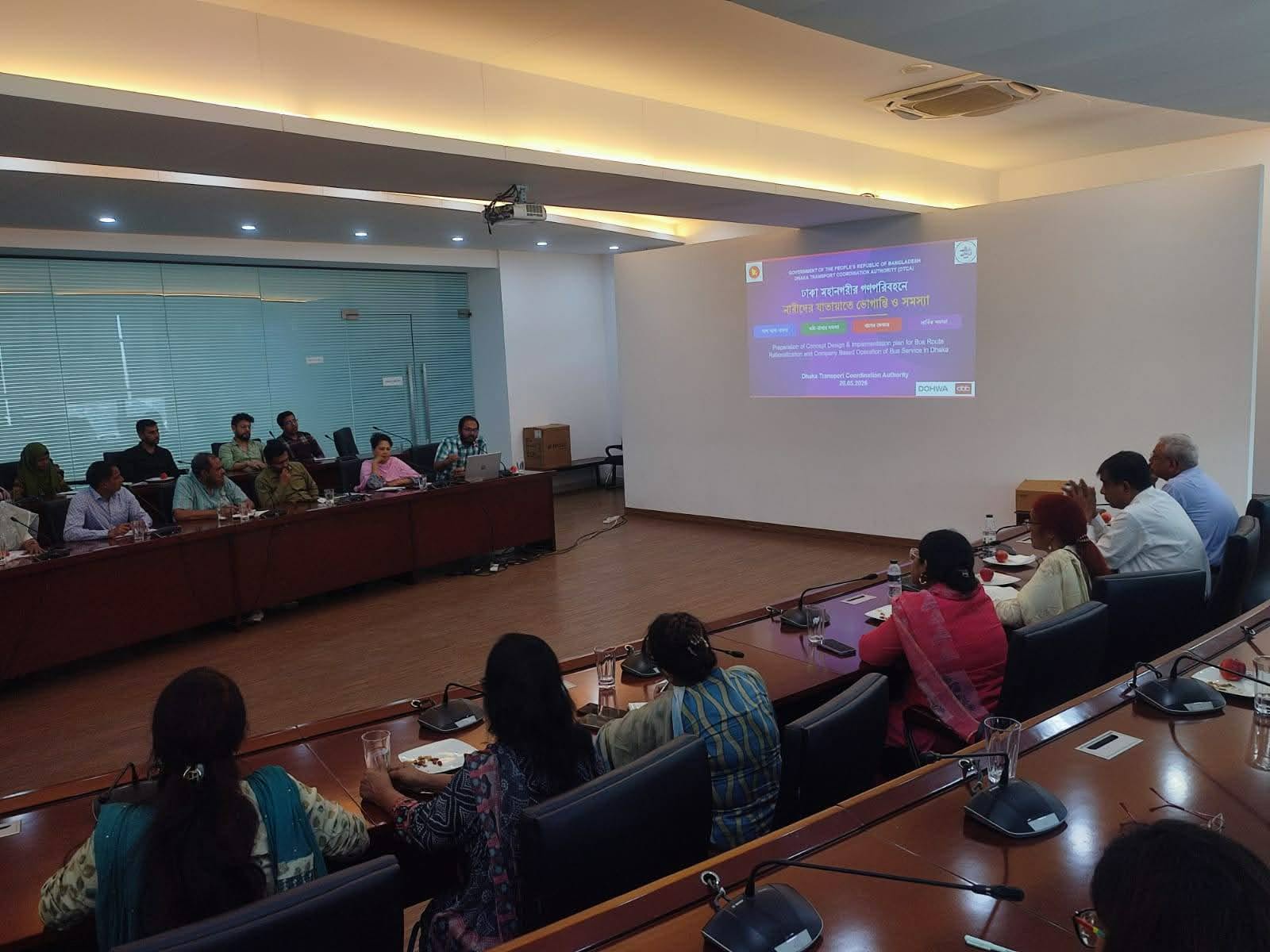
DHAKA, May 20, 2026 (BSS) - Speakers at a discussion today said women in the capital still face insecurity, discomfort and harassment while using public transport, stressing that launching separate buses alone would not solve the problem unless a comprehensive safe, humane and women-friendly transport system is ensured.
They came up with the observations at a discussion titled "Women's Safety and Experience in Public Transport", jointly organised by the Dhaka Transport Coordination Authority (DTCA) Bus Route Rationalisation Project and the Bangladesh Nari Sangbadik Kendra at Tejgaon in the capital today.
DTCA Deputy Transport Planner and Project Director Dhruba Alam presented findings of a research survey at the event. Women passengers and journalists taking part in the discussion said most working women still depend on buses for commuting, but they face various forms of harassment and insecurity throughout the journey, from boarding buses to reaching destinations.
Nasimun Haque Ara Minu said although public transport is meant for everyone, in reality women have to endure frightening experiences every day.
She said incidents of inappropriate touching, deliberate physical contact and sexual harassment regularly occur taking advantage of overcrowded buses.
"Many women cannot even share such experiences with their families, creating psychological pressure on them," she added.
Minu said safe public transport is essential to ensure the country's development and women's economic participation.
She demanded visible display of complaint hotline numbers, codes of conduct and punishments for harassment against women on every bus.
DTCA Executive Director (additional charge) Dr Md Mashiur Rahman said the government is working to develop a safe and comfortable public transport system for women.
He said initiatives are being taken to increase the number of women drivers and conductors, though the shortage of skilled female bus drivers and prevailing social attitudes remain major challenges.
Former DTCA Executive Director Nilima Akhter said an integrated data-based plan is needed focusing on women passengers' mobility patterns, problems and passenger pressure to establish a women-friendly transport system.
Professor Dr Asif-Uz-Zaman Khan said women remain vulnerable not only inside buses but also on the way to bus stops, while boarding and getting off buses and returning home.
He proposed installation of CCTV cameras on buses, effective reserved seating, separate entry and exit doors, and safe footpaths and bus stops.
Md Saiful Alam said separate buses for women could be a temporary solution, but ensuring safe and humane public transport for all is the permanent answer.
He also stressed regular training and accountability of drivers and helpers.
Women counter workers participating in the discussion also highlighted humiliating behaviour at workplaces and the lack of necessary toilet facilities.
Speakers said all stakeholders, including police, law enforcement agencies, transport owners and workers' organisations, city corporations and other relevant authorities, must work in a coordinated manner to ensure women's safety in public transport.
They also emphasised the need for awareness campaigns and behavioural changes in society.