Monday
24 August, 2026
News Flash
News Flash
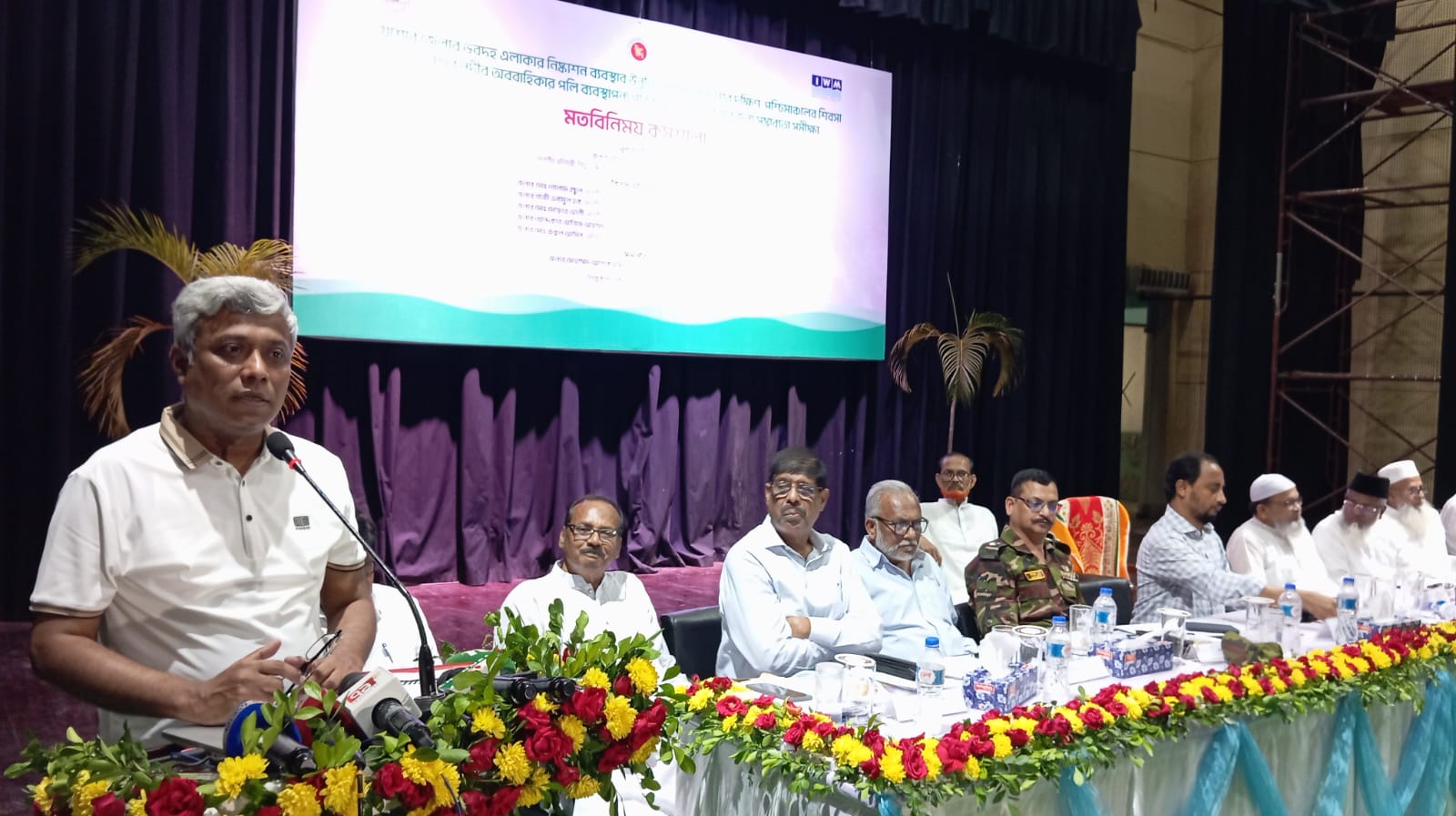
JASHORE, May 16, 2026 (BSS): State Minister for Power, Energy and Mineral Resources Anindya Islam Amit today said the current government is committed to finding a permanent solution to the longstanding waterlogging problem in the Bhabodah area.
He said affected people would be compensated properly and the problem would be resolved at the earliest, adding that it is a commitment of the government.
The state minister made the remarks while speaking as the chief guest at an exchange of views workshop at Jashore Shilpakala Academy auditorium on improving drainage management in the region and formulating a sustainable agricultural and environmental plan for the south-western region of Bangladesh.
He said people of Monirampur, Keshabpur, Abhaynagar, Sadar upazilas of Jashore and Dumuria and Phultala upazilas of Khulna would be freed from long-standing waterlogging.
Previous governments did not take effective initiatives to solve the problem, he added.
Members of Parliament Golam Rasul from Jessore-4, Gazi Enamul Haque from Jessore-5 and Mostafa Ali from Jessore-6 also spoke as special guests at the programme.
At the workshop, Sheikh Nahiduzzaman, Senior Specialist of the consulting firm Institute of Water Modelling (IWM), presented a paper on the feasibility study project undertaken by the Water Development Board.
The feasibility study aims to prepare a sustainable plan for resolving long-standing waterlogging in the Bhabodah area and ensuring improved livelihood management for agriculture-dependent communities in the south-western region.
Sheikh Nahiduzzaman said under the study, surveys were conducted in Monirampur, Keshabpur, Abhaynagar and Sadar upazilas of Jessore, as well as Dumuria and Phultala upazilas of Khulna.
The project covered an area of around 98,000 hectares, including surveys of rivers, canals and beels, mathematical modelling, and assessments of agricultural, social, environmental and economic impacts.
He said the study has proposed short-, medium- and long-term solutions for the Bhabodah and Bil Dakatia areas. These include excavation of rivers and connecting canals, installation of additional drainage pumping stations, construction of pilot channels, revival of Tidal River Management (TRM) by reconnecting beels with rivers, removal of encroachments from floodplains, and replacement of the Bhabodah regulator with a bridge to ensure natural tidal flow.
Experts, public representatives, officials from various government departments, stakeholders involved in water management, and leaders of the district BNP, attended the workshop.