Tuesday
30 June, 2026
News Flash
News Flash
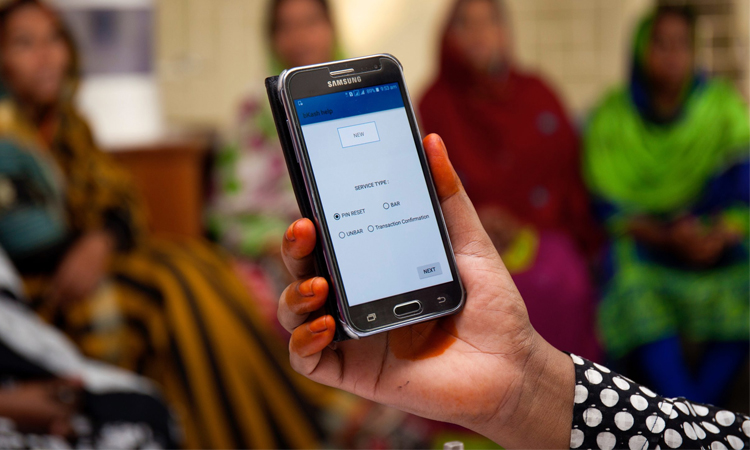
DHAKA, May 14, 2026 (BSS) - Women's access to mobile phones and internet use has increased significantly across Bangladesh, but major disparities in smartphone ownership and digital inclusion still persist in several regions, according to the ICT Access and Use by Households and Individuals Survey 2024-25.
The survey findings showed that although a large number of women are now using mobile phones, ownership of devices, particularly smartphones, remains comparatively low in many divisions, highlighting continuing barriers to full digital participation.
The data revealed that women's mobile phone ownership was highest in Dhaka division at around 66 percent, followed by Chattogram at 64 percent and Khulna at 60 percent. The rates were lower at 57 percent in Barishal, 55 percent in Rajshahi, 53 percent in Rangpur, 52 percent in Sylhet and 51 percent in Mymensingh.
Despite the lower ownership rates, women's actual use of mobile phones was substantially higher across the country. Around 89 percent of women in both Dhaka and Chattogram divisions reported using mobile phones, while the rates stood at 88 percent in Khulna, 85 percent in Rajshahi, Rangpur and Barishal, 83 percent in Sylhet and 82 percent in Mymensingh.
The survey also identified a narrower gender gap in mobile phone use compared to ownership. The gap in usage was lowest in Chattogram at only 0.6 percent, while Mymensingh recorded the highest usage gap at 7.1 percent.
The survey said the trend indicates that many women are using shared or family-owned devices despite not owning phones personally.
"Women's access to mobile connectivity has clearly expanded across divisions, which is an encouraging sign for digital inclusion," it added.
"However, ownership matters because it determines privacy, independence and the ability to fully benefit from digital services," it noted.
The report showed that smartphone ownership among women remained significantly lower than basic mobile phone ownership nationwide.
Chattogram recorded the highest rate of women's smartphone ownership at approximately 40 percent, followed by Dhaka at 34 percent. The rates dropped sharply in Khulna at 23 percent, Sylhet at 22 percent, Barishal at 20 percent, Rajshahi at 19 percent, Mymensingh at 13 percent and Rangpur at only 10 percent.
The gender divide in smartphone ownership was also more pronounced than for general mobile phones. Rangpur experienced the widest ownership gap at 22 percent, while Chattogram recorded the narrowest gap at 6.5 percent.
The survey further highlighted a direct connection between smartphone use and internet access among women.
Women's smartphone use reached around 56 percent in Chattogram and 50 percent in Dhaka. The rates were lower in Khulna at 41 percent, Sylhet at 33 percent, Rajshahi and Barishal at 29 percent each, Mymensingh at 27 percent and Rangpur at 22 percent.
The gap in smartphone use was highest in Rangpur at 18.8 percent and lowest in Chattogram at 2.7 percent, reflecting major regional inequalities in digital access.
Digital inclusion specialists believe that unequal access to smartphones may limit women's opportunities in education, online services, financial inclusion and employment.
"The data suggests that women in some divisions are still facing considerable barriers in accessing smartphones and internet-enabled services," said the survey.
It added, "Reducing these disparities will be important for ensuring equal participation in the country's growing digital economy."
The survey also presented national ICT benchmarks for individuals aged five years and above. Nationwide, 65.5 percent of people own a mobile cellular phone, while 88.4 percent use mobile phones. About 33.3 percent own smartphones and 45.3 percent use smartphones, whereas only 11.3 percent reported using computers.
The findings showed that women in Dhaka and Chattogram divisions generally enjoy higher digital access and smaller gender gaps, while women in Rangpur and Mymensingh continue to face comparatively greater challenges in mobile and smartphone ownership and use.