Tuesday
08 September, 2026
News Flash
News Flash
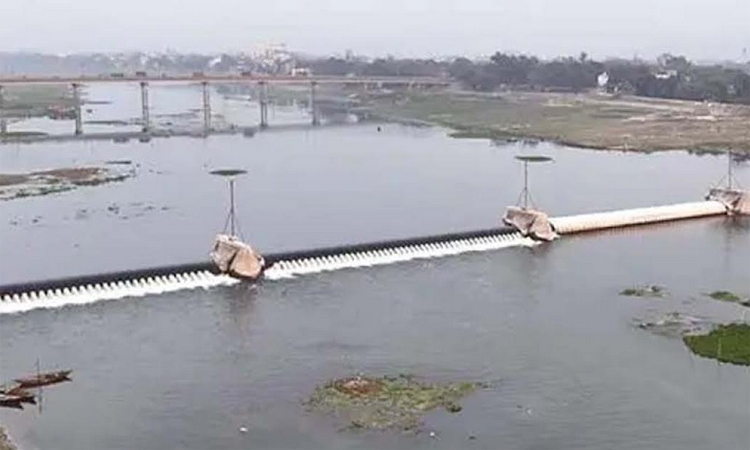
RAJSHAHI, April 17, 2026 (BSS) - Where vast stretches of land once lay barren due to water scarcity, the agricultural landscape in Chapainawabganj is now changing.
Thanks to the rubber dam project built on the Mahananda River, irrigation opportunities have emerged even in the dry season, bringing a wave of greenery across the fields. Farmers say this project has breathed new life into their farming.
A field visit revealed that farmers previously had to rely on deep tube wells and diesel-powered pumps for irrigation during the dry season. This increased costs, and often land remained uncultivated due to insufficient water.
Now, with water conserved in the river because of the rubber dam, irrigation has become easier, reducing production costs and increasing crop yields.
Gopal Chowdhury, a farmer from Jadupur village in Baliyadanga Union of Sadar Upazila, said, "We used to struggle a lot for water. This time I could easily irrigate using river water, and the cost was also lower."
Rahmat Ali, a farmer from Nayagola area, shared, "We used to face a water crisis as soon as the dry season arrived. Now irrigation is easy. Costs are down, yields are good - this is a huge relief for us."
According to farmers, irrigation security has allowed them not only to grow crops but also to bring more land under cultivation. Seasonal fallow land is now being used.
Locals say the benefits of the rubber dam aren't limited to agriculture. Retaining water in the river during the dry season has slightly improved groundwater levels in surrounding areas. As a result, getting water from tube wells has become easier, and the drinking water crisis has largely eased.
One local resident said, "Earlier, we couldn't get water from tube wells in summer. The situation is much better now."
However, experts emphasize the need for cautious and proper river flow management to prevent reduced water availability in some areas.
SM Ahsan Habib, Executive Engineer of the Chapainawabganj Water Development Board, stated that the benefits of the Mahananda rubber dam have spread across about 70 km of farmland. This has increased production and reduced irrigation costs.
According to the District Agriculture Department, the project has brought at least 7,000 hectares of new land under cultivation.
The project began on November 11, 2021, at a cost of about Taka 270.69 crore. Though some work remains, it is expected to be completed by June this year.
Analysts say that while the rubber dam project has brought positive changes to agriculture in Chapainawabganj, ensuring water flow to downstream areas, assessing environmental impact, and adopting integrated irrigation management plans are essential for long-term sustainable benefits.
It should be noted that while the Mahananda Rubber Dam project has created new agricultural potential in Chapainawabganj, its full benefits depend on equitable water distribution and effective management.