Tuesday
08 September, 2026
News Flash
News Flash
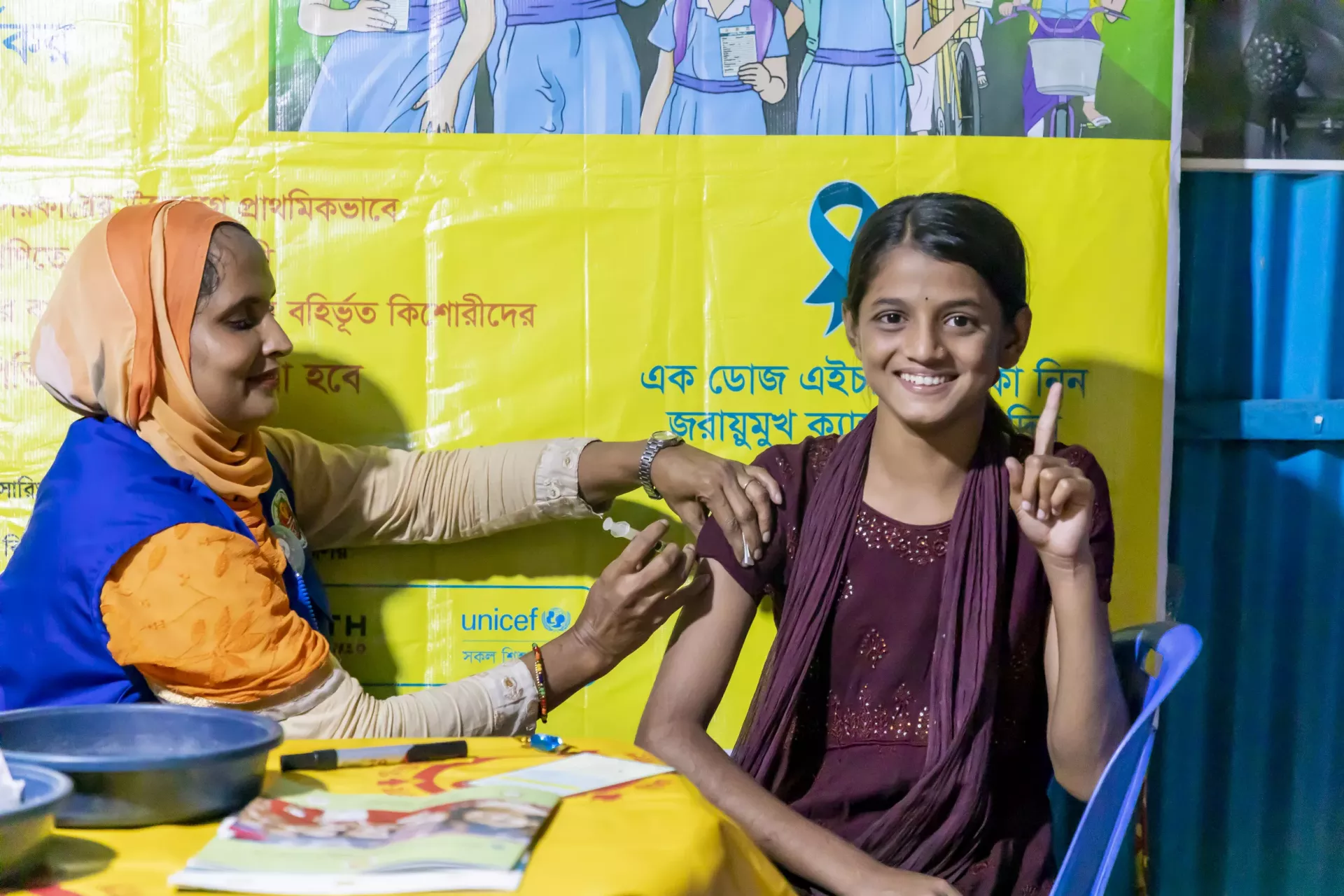
DHAKA, April 16, 2026 (BSS)- Health experts have urged women to complete essential vaccinations before and during pregnancy to prevent life-threatening diseases such as congenital rubella, neonatal tetanus and HPV-related conditions.
Twenty-five-year-old Samia Akhter, a resident of Dhaka's Green Road area, recently gave birth to a baby boy. While her family life appeared stable, financial hardship prevented her from following recommended health guidelines during pregnancy.
She later developed complications and, after childbirth, visited a family doctor. Medical evaluation revealed that she had missed several key vaccinations during pregnancy.
"Good health is essential for everyone, but it is especially important for women, as it directly affects the next generation," said Professor Rahela Akhter, a gynecologist. "A healthy mother is crucial for delivering a healthy child."
Community medicine specialist Prof Dr. Md. Shahidullah said, "Some vaccines are especially necessary for unborn children and newborns to protect from various diseases in addition to ensuring women's good health. The only vaccine to prevent measles and rubella, and the TT vaccine to prevent tetanus are among these vaccines."
"The measles vaccine is very important for a pregnant woman. If a woman is infected with the rubella virus during pregnancy, the baby may be born with serious health problems, such as cataracts, small head, and deafness. This is called congenital rubella syndrome. Any child should receive the first dose of the MR vaccine when they are nine months old and the second dose when they are 15 months old," he said.
He said girls who have not been vaccinated in childhood should get measles, mumps and rubella vaccine before becoming mothers to prevent rubella.
MR or MMR vaccine should be completed at least one month before pregnancy, he added.
Regarding TT vaccine, Dr. Shahidullah said that to prevent tetanus, girls should get the first dose of TT vaccine as soon as possible when they are 15 years old. The second dose should be taken four weeks after this, the third dose after six months, the fourth dose after one year, and the fifth or final dose of TT vaccine should be taken one year after the last dose. If these five doses of TT vaccine have been taken before pregnancy, there is no need to take TT vaccine again during pregnancy, he added.
He said if two doses of vaccine have been taken before pregnancy, the third dose should be taken during pregnancy and the fourth and fifth doses should be taken after childbirth. If three doses have been given before pregnancy and one year of pregnancy has not passed, there is no need to take the fourth dose at this time. The fourth and fifth doses of the vaccine should be taken after delivery, he added.
However, the doctor said, if the TT vaccine has not been taken before, two doses of the TT vaccine should be taken during pregnancy. The last dose should be taken at least one month before delivery, he added.
He said a woman should receive a total of three doses of the vaccine to prevent hepatitis B. If a pregnant mother has hepatitis B, the virus can enter the baby's body during childbirth. Therefore, it is important for a woman to receive three doses of the hepatitis B vaccine before pregnancy, he added.
The doctor said cervical cancer is a common problem for women. But there are some reasons for the problem. "However, if you are aware, you can get rid of this problem. One of the causes of cervical cancer is the human papilloma virus. There are multiple vaccines to prevent this virus. These vaccines should be taken from the age of 9 to 13 or 15. The second dose of this two-dose vaccine should be taken six months after the first dose. If you do not take this vaccine by the age of 15, you should take three doses between the ages of 15 and 26," he added.
In that case, he said the second dose should be taken one month after the first dose and the third dose should be taken six months later. That is, a woman should take a total of three doses of the vaccine to prevent cervical cancer.